- sales@hot-mining.com +86 28 8331 1885 +86 15196677188
-

-

-


08 Determination of External Dilution and Distinction from Internal Dilution
The study at Gohar Zamin primarily focuses on internal dilution, which is controlled by geological factors. In contrast, external dilution involves additional operational or engineering factors, including:
●In open-pit mining, overbreak at orebody boundaries may occur due to equipment geometry and operational errors.
●In underground stopes, overbreak from blasting can result in hanging wall or footwall rock being incorporated into the ore.
●Ore and waste may be mobilized and mixed as a result of pre-loading blasting.
●Minimum mining width or safety factor requirements can enforce the extraction of waste in contact zones.
Many previous models considered these factors but often typically fail to incorporate detailed geological data and lithological information into dilution estimates.
Practical distinction in block models:
●Internal/Geological Dilution: Predicted using SIS + MAF, representing ore-waste mixing within the geological orebody
●Contact and Operational (External) Dilution: Estimated through geometric proximity analysis of ore and waste, blasting motion models, or empirical relationships, and applied as an additional correction factor or as a separate attribute.
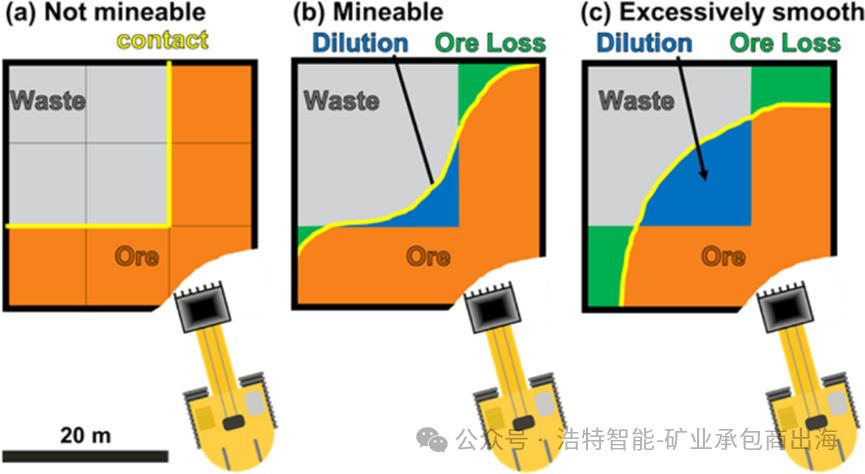
Figure 2: Evaluation of dilution, ore loss, and profit differences under various hand-drawn pit limits and optimal ore–waste boundaries.
09 Incorporating Dilution into Block Models
Representation Options
Dilution-aware block models can store:
●Undiluted grade estimates (geological resources)
●Block-level internal dilution percentage (Dint)
●Internal diluted grade (gT,int)
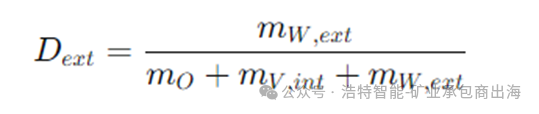
●Optional external dilution percentage (Dext)
●Fully diluted grade including internal and external (gT,full)
This structure allows undiluted grades to be used in geological reports while dilution grades inform pit optimization, reserve reporting, and mining scheduling. The Gohar Zamin approach effectively populates DInt and gT,int at block scale (Masoumi, Kamali, & Asghari, 2019).
Mathematical Description
Undiluted grade (geological resource)
gO
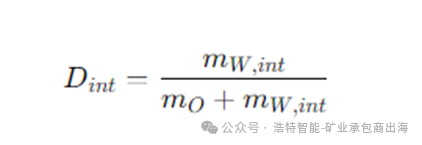
Internal dilution percentage per block:
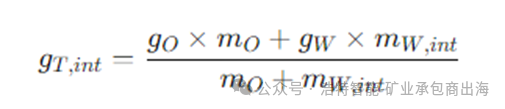
Diluted grade after internal mixing:
External dilution percentage (optional):
Fully diluted grade (internal + external):

10 Block Size and Boundary Effects
Fixed grid size (10 x 10 x 15 m) means blocks near orebody edges inevitably straddle ore and waste, contributing significantly to internal and contact dilution. Mapping these high-dilution blocks allows the identification of design improvements to reduce geological and external dilution, such as reducing block size or introducing sub-blocks. The study clearly indicates that, due to fixed block dimensions, dilution at boundary blocks is significantly increased.
In a broader context, careful selection of the mining unit (SMU) size, guided by stope effect analyses and economic criteria, helps balance grade smoothing (internal dilution) with operational selectivity. In narrow orebodies or in scenarios dominated by complex boundaries, using smaller blocks or variable-sized models can reduce both internal and external dilution, although this increases computational complexity.
11 Validation
Robust dilution modeling must be validated against operational data:
a. Compare with assumed mine dilution factors
Simulated average internal dilution (~10%) aligns with actual operations (7.5–8%). Slightly higher due to independent block-by-block calculations propagated in grade.
b. Blast hole lithology comparison
For each bench layout, empirical dilution rates are calculated from ore and waste lengths recorded in blast holes (e.g., 612 m ore vs. 137 m waste → approximately 11% dilution) (Masoumi, Kamali, & Asghari, 2019), and then compared with the corresponding block model dilution, showing strong agreement.
c. Lithology pattern consistency
The model indicates that blocks with low ore occurrence probability (<25%) typically correspond to waste recorded in blast hole lithology, demonstrating consistency in internal dilution predictions. Minor discrepancies can be attributed to differences in data resolution (2 m compositing versus actual variability) and the spacing between exploration and blast holes (Masoumi, Kamali, & Asghari, 2019).
Ongoing validation of the model against measured dilution supports the iterative optimization of internal and external dilution models throughout the mine life.
12 Practical Guidelines for Modeling Dilution
Based on case studies and broader geostatistical principles, a practical framework for internal and external dilution in block models is as follows:
Define objectives:
Determine whether the block model is used to represent undiluted geology, pit ore, plant feed, or all three through separate attributes. This choice dictates the extent to which dilution is embedded in the model.
Simulate internal dilution using geological data:
Encode ore/waste categories from high-resolution lithological records. Apply Sequential Indicator Simulation (SIS) to model lithology and obtain ore/waste occurrence probabilities for each block. Combine with density differences to calculate internal dilution as the waste proportion per block. Use multivariate methods, such as Minimum/Maximum Autocorrelation Factor (MAF), to co-simulate grades, preserving cross-correlations and deriving the final block grades.
Quantify contact and external dilution separately:
Analyze blocks at ore-waste boundaries to determine internal plus contact dilution caused by block geometry. Overlay operational constraints (pit limits, stope outlines, safety allowances) to quantify additional waste and distinguish the external dilution component.
Capturing Scale Effects:
Generate grade-tonnage and metal-tonnage curves at various support sizes to understand internal dilution variation with block or SMU size, adjusting block design accordingly.
Validation with Operational Data:
Compare model dilution with blast hole lithology, grade control, and reconciliation; adjust waste grades, densities, and ore probability assumptions if necessary.
Planning and Economic Assessment
Use diluted grades and tonnage for pit optimization and scheduling while retaining undiluted models for resource reporting. Quantify the impact of dilution on NPV, cutoff selection, and plant feed variability.
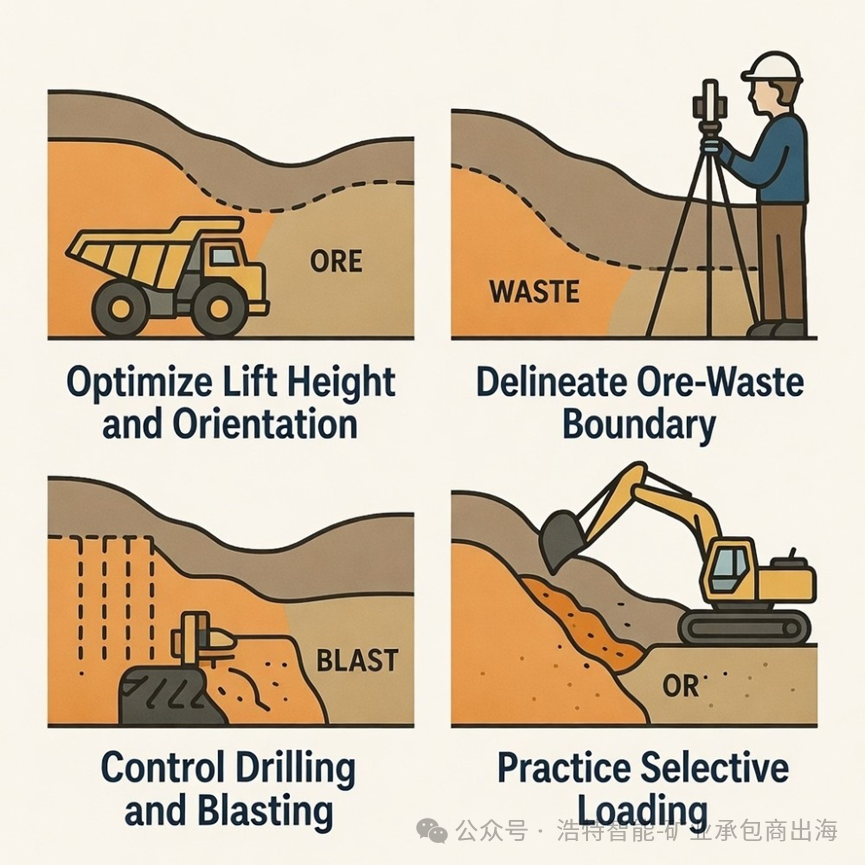
Figure 3: Methods to minimize dilution and ore loss during mining.
Conclusion
Internal and external grade dilution are closely related to geology, block size, and mining practices. The SIS + MAF workflow at Gohar Zamin demonstrates that internal dilution can be estimated block-by-block from drill and lithology data, correcting grades to obtain actual Fe and FeO grades (Masoumi, Kamali, & Asghari, 2019).
Average internal dilution of ~10% reduces Fe and FeO grades by ~10%, validated by blast hole data, showing significant internal dilution even before considering external and operational dilution. Incorporating such modeling into block models supports more reliable long-term mine planning, stockpile and plant feed optimization, and better quantification of project risk.
If needed, the framework can be extended to explicitly include external dilution modules, such as blast movement simulation, ore-waste boundary over-excavation, or mining overbreak predictors, to generate a fully realistic, dilution-aware block model that bridges the gap between geological resources and actual plant feed.
Author: Join Damanik (CEO, Acala; responsible for gold acquisition; expertise in GEOVIA optimization and sustainability).
Reference: Masoumi, I., Kamali, G., & Asghari, O., 2019. Assessment of an ore body internal dilution based on multivariate geostatistical simulation using exploratory drill hole data. Journal of Mining and Environment.