- sales@hot-mining.com +86 28 8331 1885 +86 15196677188
-

-

-

At the beginning of this series, we introduced KoBold Metals and its partnership with Zambia’s state-owned investment holding company, ZCCM-IH. We also reported on a series of announcements surrounding the remarkable mineral discovery at the Ming’omba area in Chililabombwe, Zambia.
We argued that coverage of KoBold’s discovery in Zambia’s mainstream media had been distorted, creating a gap between what had actually happened and how the public understood it—a case of information being lost in translation.
We believe these misleading reports contributed to widespread public anxiety in Zambia. We also presented evidence that KoBold had indeed used historical geological exploration data that already existed and belonged to the people of Zambia.
We then examined the geological uncertainty that had kept Ming’omba from advancing for decades. It was this uncertainty that had prevented the project from progressing, until KoBold’s involvement brought a new approach to the challenge.
We begin the final chapter of the KoBold mystery by returning to the story that introduced this series.
Remember The Book of Knowledge and Wisdom? This is how the story ends...
“Activate AI?” the elderly keeper asked, frowning in confusion. “What is AI? Is it your magic, dear wizard?”
“My name is Josh, not wizard,” Josh replied. “AI is not magic. It stands for Artificial Intelligence. Although it may look like magic, it is really just a set of intelligent technological tools. We can use AI to restore this great Book of Knowledge and Wisdom and put it to work for our country.”
“Really?” The old man looked at Josh with curiosity. “But how exactly does this technology work?”
“I have an idea,” Josh said. “Why don't you come with me to the laboratory? We can use AI to restore the book together.”
“But I don't know anything about AI,” the old man replied. “How could I possibly help?”
“You know something far more valuable,” Josh answered. “You know the book.”
In Part Two, we described how geological uncertainty had kept Ming’omba at a standstill for decades. It was as though an invisible hand had its throat in a vice, preventing the project from putting forward a convincing, commercially viable mining plan.
This raises an important question: Was there no way to resolve these uncertainties, change the project's prospects and finally unlock Ming’omba's potential?
The answer was straightforward: more exploration.
In other words, Ming’omba needed substantial additional exploration work to connect the geological clues that remained unresolved and build a more accurate picture of the mineral deposit's underground structure and distribution.
However, that is easier said than done.
Ming’omba had been constrained by a problem even more challenging than geological uncertainty itself: a severe shortage of exploration funding.
The success of any mining project begins with exploration. Without a viable pipeline of exploration projects, mining companies cannot establish the foundations for sustainable operations.
If someone were to ask, “What is the secret to success in mining?” the most fitting answer might be: “Exploration, stupid!”
That is why major mining countries invest billions of dollars in mineral exploration every year.
Consider Canada. Since 2013, its annual mineral exploration investment has averaged approximately US$3.1 billion. Australia has followed, with an annual average of around US$1.7 billion.
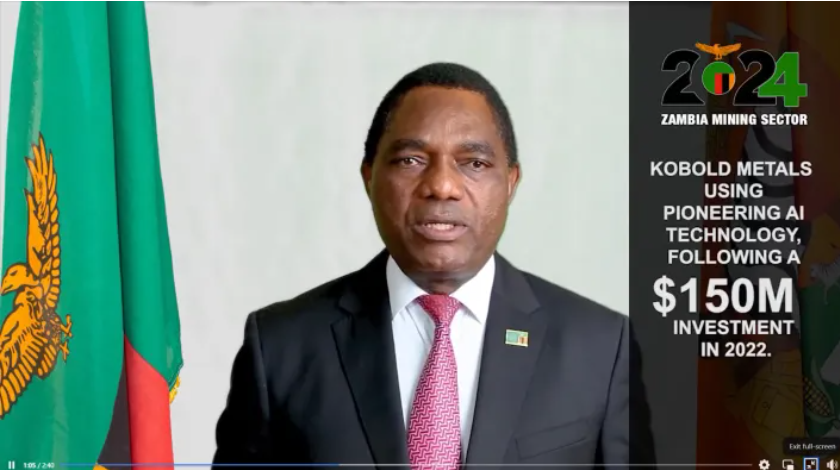
Now consider Zambia. Over the same period, KoBold's investment of US$150 million in a single project reportedly exceeded the combined exploration investment of all other projects in the country over the preceding decade.
It seems that Zambia had forgotten one of the mining industry's most important lessons: exploration is often the key to unlocking the future of mining.
But Zambia is not alone. Across the world, investment in mineral exploration has faced persistent constraints for years.
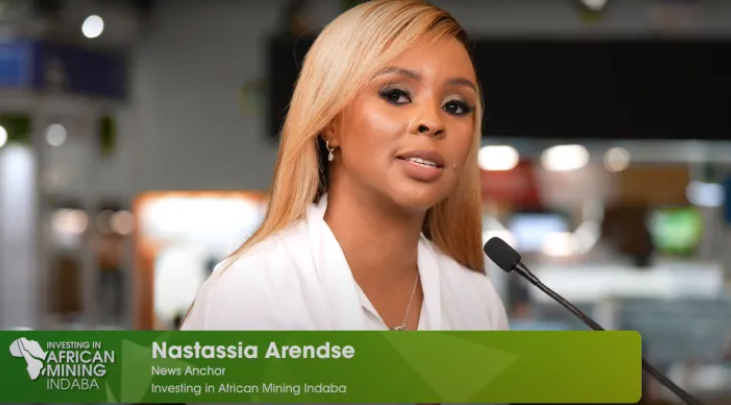
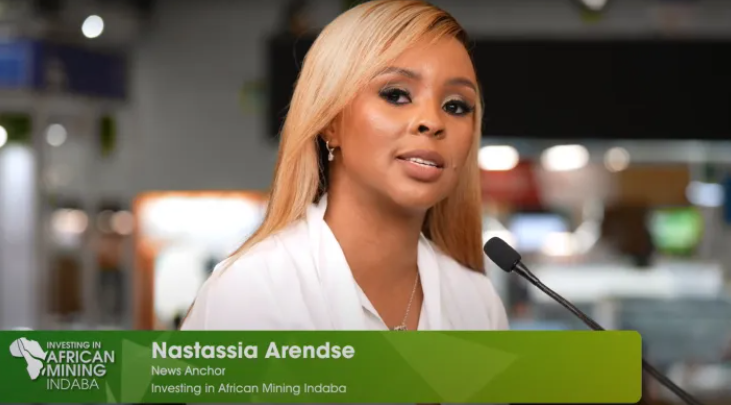
On the second day of the 2024 Mining Indaba conference, Nastassia Arendse, a news presenter for Mining Indaba TV (MITV), discussed this issue with Dr Josh Goldman, co-founder and President of KoBold Metals.
“We are certainly seeing underinvestment in mineral exploration,” Arendse observed. “Could you explain why activity in this area has been so limited?”
“Underinvestment in mineral exploration is a global problem. We have not invested enough to build a pipeline of high-quality projects, which are essential sources of the raw materials needed for the global electric vehicle industry and the transition to renewable energy.
“We need to see a substantial increase in exploration investment worldwide. Exploration success rates are currently too low. That is the key issue: more than 99% of projects fail to become economically viable mineral resources. If we can improve exploration success rates, capital will naturally flow into the sector,” Dr Goldman replied.
And so, we arrive at the heart of the matter: why Ming’omba remained undeveloped for so many years.
Put simply, the problem was a lack of money.
Geological uncertainty was part of the challenge, but resolving it required further exploration—and further exploration required capital.