- sales@hot-mining.com +86 28 8331 1885 +86 15196677188
-

-

-


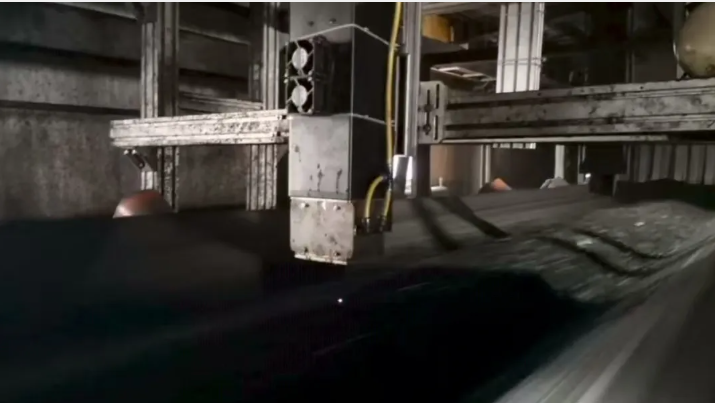
As competition for global lithium resources intensifies, conventional detection methods continue to present challenges for efficient mineral processing. X-ray-based techniques have limitations when detecting lithium directly, while handheld instruments are not necessarily designed for continuous, high-throughput analysis on industrial production lines.
HOT Industrial is developing an industrial dual-pulse LIBS system to address these challenges. By combining laser-induced breakdown spectroscopy, enhanced lithium signal detection and intelligent spectral analysis, the technology aims to bring faster and more responsive elemental analysis to lithium ore sorting.
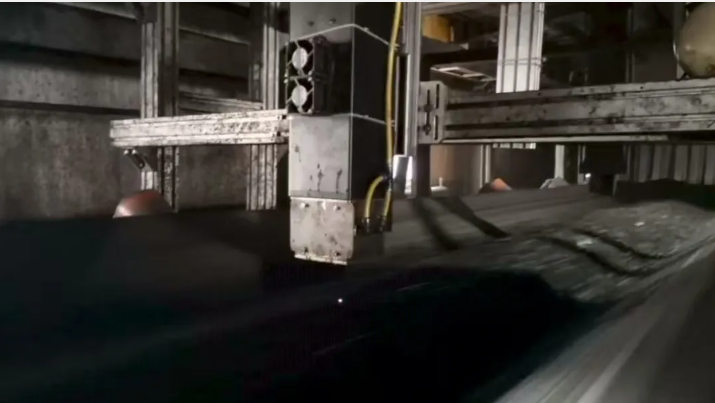
Lithium ore sorting presents a number of analytical challenges. In particular, reliable lithium identification requires techniques capable of detecting a relatively light element in complex mineral matrices.
As the original article puts it, selecting lithium-bearing material can be like trying to identify a diamond while blindfolded.
1. Limitations of conventional X-ray detection
Lithium has a low atomic number, making direct detection difficult for conventional X-ray-based sorting technologies. This limits their ability to identify lithium itself and can make it difficult to distinguish lithium-bearing minerals from surrounding gangue solely through X-ray measurements.
2. Limitations of handheld instruments
Handheld analytical devices are useful for spot measurements and field investigations, but they may not provide the scanning speed, automation and continuous coverage required for high-throughput industrial sorting.
The source cites a detection limit of approximately 500 ppm for the handheld equipment under discussion. This figure should be understood as a claim relating to specific instruments and test conditions, rather than a universal limitation of handheld analysers.
3. Delays associated with laboratory analysis
Conventional laboratory workflows generally involve sampling, sample preparation and off-line analysis. Depending on the analytical method and laboratory arrangements, the process can take hours or longer.
For real-time sorting applications, this delay can limit the ability to make immediate separation decisions based on material composition.
HOT Industrial's proposed solution is based on dual-pulse Laser-Induced Breakdown Spectroscopy (LIBS), which uses laser pulses to generate plasma from a material surface and analyses the emitted light to identify its elemental composition.
The system uses two laser pulses to improve the detection of weak elemental emission signals.
First pulse: A 532 nm laser pulse strikes the mineral surface, generating plasma and exciting atoms and ions within the ablated material.
Second pulse: A subsequent laser pulse re-excites the plasma under controlled conditions, with the aim of enhancing the lithium emission signal.
The original technical description claims that the dual-pulse configuration can increase lithium signal intensity by more than ten times compared with a single-pulse approach.
The actual enhancement depends on pulse timing, laser energy, plasma conditions, sample composition and the selected measurement wavelength. The tenfold figure therefore requires confirmation through comparative testing.
LIBS identifies elements by analysing the characteristic emission lines generated by laser-induced plasma.
HOT's proposed spectral analysis approach includes:
Lithium spectral identification: Analysing the relevant lithium emission lines within the system's spectral acquisition range.
Interference analysis: Comparing lithium signals with selected aluminium and silicon spectral features.
Ratio-based analysis: Using Li/Al or Li/Si signal ratios to support identification and compensate for variations in sample composition.
Adaptive algorithms: Applying algorithmic corrections to account for changing measurement conditions and plasma-related interference.
The source specifies a lithium analysis window of 450–670 nm and an aluminium/silicon reference wavelength around 390 nm. These wavelength assignments should be checked against the actual emission-line selection and spectrometer configuration before publication.
The original article also claims an improvement in analytical accuracy to 5%. To avoid ambiguity, the final technical specification should state whether this refers to relative error, absolute error, prediction accuracy or another statistical measure.
The proposed system is built around an industrial dual-pulse laser and an optical detection configuration intended for continuous mineral analysis.
The key specifications provided in the source are:
| Component | Stated Specification |
|---|---|
| Laser system | Dual-pulse Nd:YAG laser |
| Laser wavelength | 532 nm |
| Spectral acquisition range | 380–800 nm |
| Spectral resolution | <0.2 nm |
| Detection approach | Dual-pulse LIBS |
| Intended application | Online lithium ore analysis and sorting |
The broad spectral acquisition range is intended to capture the emission features required for elemental identification. The stated spectral resolution is designed to help distinguish nearby spectral features and reduce the impact of spectral interference.
In an industrial setting, however, reliable performance also depends on optical stability, laser repetition rate, sample presentation, dust protection, vibration resistance, calibration and automated data processing.
The original article reports field trials at a site identified as the Liatam mining area. Three operational capabilities are highlighted.
1. Millisecond-level response
The system is described as supporting dynamic scanning synchronised with conveyor-belt movement.
This is important for industrial sorting because the analytical system must identify material quickly enough for the downstream separation mechanism to act on the correct particle.
2. Automated sorting control
The proposed system combines intelligent threshold-based analysis with a rejection mechanism.
Once the detected material meets the configured sorting criteria, the control system can send a signal to the separation equipment to remove the selected particle or material stream.
This creates a potential closed-loop process linking elemental detection, decision-making and physical separation.
3. Resistance to industrial operating conditions
The source reports stable operation under dusty and high-vibration conditions during field testing.
For industrial deployment, this capability is essential. Optical systems operating in mineral processing plants must maintain reliable measurements despite changes in ambient conditions, material flow and equipment vibration.
The reported field performance should ultimately be supported by operating records covering test duration, feed characteristics, system availability and analytical consistency.
The development of industrial LIBS does not end with elemental detection. Its longer-term value will depend on the ability to connect accurate spectral analysis with reliable quantitative modelling and automated sorting decisions.
HOT's stated development priorities include three areas.
1. Building a lithium reference-material database
HOT is developing a database of lithium reference materials to support calibration and quantitative analysis.
The stated target is to keep quantitative error within 3%. Achieving this will require representative reference samples, reliable laboratory benchmarks, matrix-specific calibration and validation across different ore types.
2. Accumulating cloud-based spectral data
The accumulation of spectral datasets could support the development of a broader mineral spectral library.
Over time, this could help improve spectral interpretation, facilitate comparisons between deposits and support faster preliminary assessments of mineralisation characteristics.
However, spectral data alone cannot establish the economic value of a deposit. Geological context, mineralogy, grade distribution, processing characteristics and representative sampling remain essential.
3. Exploring autonomous sorting plants
HOT is also exploring applications in unmanned mineral processing facilities.
By connecting online LIBS analysis with automated material handling and sorting equipment, the system could contribute to more autonomous mineral processing operations.
The original article forecasts a potential 40% reduction in sorting cost per tonne. This remains a projection that requires validation through full-scale operational and economic assessments.
As lithium demand continues to drive the development of mineral processing technologies, faster and more reliable elemental analysis is becoming increasingly important.
HOT Industrial's dual-pulse LIBS development combines laser-induced plasma generation, lithium spectral identification, adaptive data analysis and the potential for real-time sorting integration.
Its central objective is to move elemental analysis beyond the laboratory and closer to the point where sorting decisions are made.
If successfully validated and deployed at industrial scale, this approach could help mineral processors identify lithium-bearing material more effectively, improve sorting decisions and make better use of valuable mineral resources.
The next step in intelligent ore sorting is not simply to detect what is in the rock. It is to understand its composition quickly enough to make the right decision in real time.