- sales@hot-mining.com +86 28 8331 1885 +86 15196677188
-

-

-

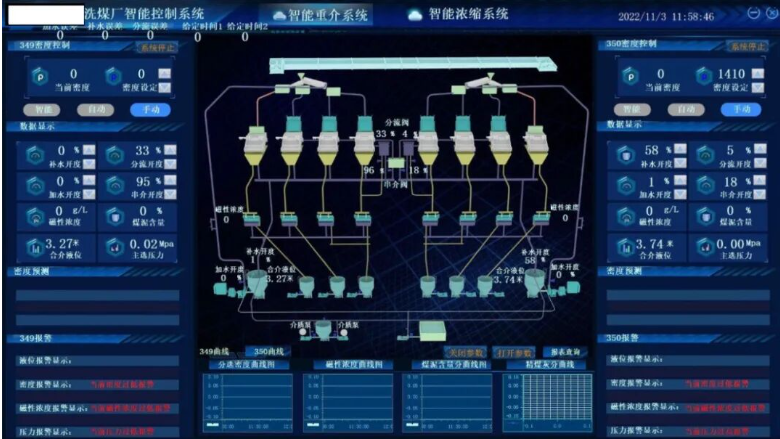
Dense medium separation (DMS) is one of the principal coal preparation technologies used in China. The consumption of dense medium, particularly magnetite powder, has a direct impact on the economic and environmental performance of coal preparation plants.
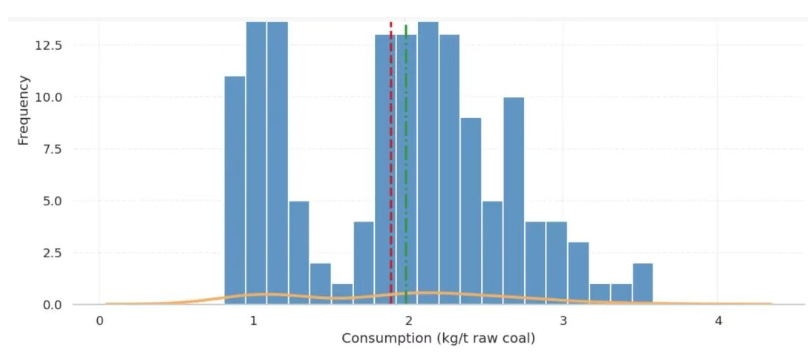
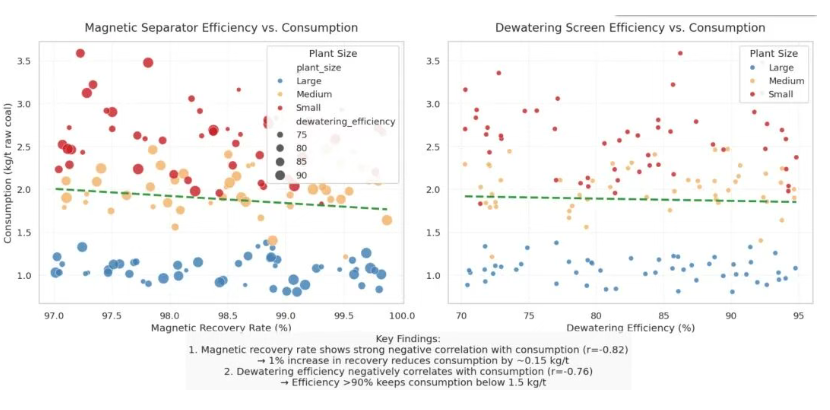
Dense medium consumption is commonly expressed as the kilograms of magnetite consumed per tonne of raw coal processed (kg/t). Industry data presented in this analysis indicate considerable variation among Chinese coal preparation plants, reflecting differences in plant scale, equipment configuration, coal characteristics and operational management.
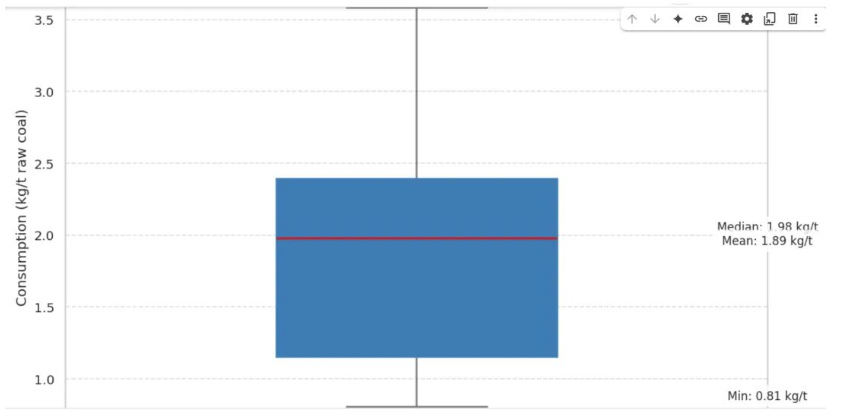
The reported average dense medium consumption of Chinese coal preparation plants ranges from approximately 0.5 to 3.0 kg/t of raw coal.
Plants with advanced equipment and well-managed recovery systems can achieve consumption levels of around 0.8–1.2 kg/t, while plants with less sophisticated equipment or less effective operational management may consume 2.5–3.0 kg/t or more.
This variation highlights the significant influence of equipment performance, process design and management practices on magnetite consumption.
Large, modern coal preparation plants with annual processing capacities exceeding 4 million tonnes generally benefit from advanced equipment, automated control systems and more integrated process management. Their average dense medium consumption is reported to be approximately 1.0–1.5 kg/t.
Small and medium-sized plants, particularly those with older equipment and more limited investment in automation, tend to have higher consumption levels, typically around 1.8–2.5 kg/t.
The experience of Wuju Coal Industry (五举煤业), which reportedly reduced its medium consumption following intelligent upgrading, illustrates the potential benefits of combining plant-wide automation with process optimisation.
Regional differences are also evident across China's coal preparation industry.
Coal-producing regions such as Shanxi, Inner Mongolia and Shaanxi are reported to have relatively low average consumption levels of approximately 1.2–1.8 kg/t, supported by larger-scale operations and accumulated technical experience.
By comparison, plants in southwestern and northeastern China may experience higher consumption, generally around 2.0–2.8 kg/t, partly due to ageing equipment and more complex coal characteristics.
In Xinjiang, reported consumption levels are approximately 1.5–2.2 kg/t. As coal transportation capacity expands and advanced processing technologies are introduced, the gap between plants in Xinjiang and those in China's established coal-producing regions is expected to narrow.
| Plant Type | Average Consumption (kg/t) | Advanced Level (kg/t) | Main Technical Characteristics |
|---|---|---|---|
| Large intelligent coal preparation plants | 1.0–1.5 | 0.8–1.2 | Closed-loop process control and high-efficiency magnetic separation |
| Medium-sized plants | 1.8–2.3 | 1.3–1.7 | Partial automation and intermittent monitoring |
| Small plants | 2.2–3.0+ | 1.8–2.2 | Manual operation and basic equipment |
Coal characteristics can have a substantial impact on dense medium consumption. High gangue content and coal that is prone to degradation and slimes generation can make separation more difficult and increase medium carryover with the products. According to the figures presented in this analysis, these conditions may increase consumption by approximately 15–30%.
For example, the Zhaolou Coal Mine preparation plant reportedly reduced its dense medium consumption from approximately 1.8 kg/t to below 1.3 kg/t following process optimisation, despite the challenges associated with difficult-to-wash coal.
Process configuration is another important consideration. Plants using two-stage dense medium cyclone separation may experience consumption approximately 0.3–0.5 kg/t higher than plants using a single-stage separation configuration, due to the greater complexity of the medium circuit. However, improvements to the medium recovery system, including additional magnetic separation stages, can help reduce this difference.
In 2025, China's coal industry faced relatively loose supply-demand conditions and downward pressure on coal prices. The Qinhuangdao Port price of Q5500 thermal coal was reported at RMB 658 per tonne, representing a year-on-year decrease of RMB 173 per tonne.
Under these market conditions, coal preparation plants have stronger incentives to control operating costs. Dense medium expenses are estimated in the source material to account for approximately 25–35% of the operating cost structure of dense medium coal preparation, second only to electricity consumption.
For a plant processing 4 million tonnes of raw coal annually, reducing medium consumption by 0.1 kg/t could save more than RMB 1.2 million per year, based on the cost assumptions used in the original analysis.
This demonstrates why even relatively small improvements in magnetite recovery can deliver significant economic benefits.
Equipment performance and process optimisation are fundamental to controlling dense medium consumption. They directly influence medium recovery efficiency, process stability and the amount of magnetite lost from the system.
Improvements to critical stages of the production process can substantially reduce medium losses and improve overall operating performance.
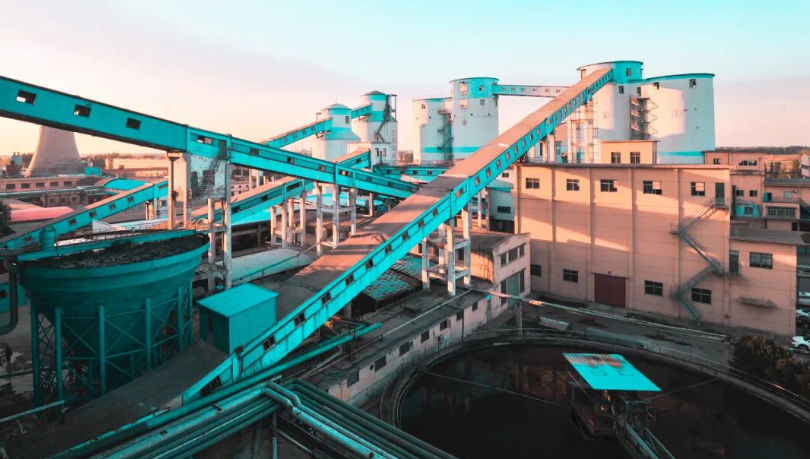
Magnetic separators serve as a key recovery stage in dense medium circuits. Their performance directly affects the amount of magnetite lost through the tailings stream.
Selecting suitable magnetic separators and optimising their operating conditions are therefore important measures for reducing medium consumption.
Magnetic field strength and recovery efficiency
According to the source data, high-performance magnetic separators can operate at magnetic field strengths of approximately 0.15–0.20 T, with magnetite recovery rates exceeding 99.8%. Under the stated operating conditions, medium losses in the tailings can be controlled below 0.3 kg/t.
Conventional magnetic separators, by comparison, are reported to achieve recovery rates of approximately 98.5–99.0%, with tailings losses of around 1.0–1.5 kg/t.
The Xiaojihan Coal Mine preparation plant reportedly reduced annual magnetite consumption by more than 800 tonnes and saved over RMB 2 million following an upgrade to high-gradient magnetic separation equipment.
Optimising equipment configuration
Using two-stage magnetic separation or a three-stage magnetic separation arrangement can improve recovery efficiency.
The Baodian Coal Mine preparation plant reportedly added a secondary scavenging stage to its original single-stage magnetic separation circuit. This increased the medium recovery rate by 1.2 percentage points and reduced annual medium consumption by approximately 15%.
Such configurations may be particularly useful when processing difficult-to-wash coal or where high separation accuracy is required.
Controlling feed concentration
Maintaining an appropriate feed concentration is essential for magnetic separator performance. The source material identifies 20–25% as a preferred feed concentration range. Excessively high concentrations can reduce separation efficiency.
The Wangpo Coal Preparation Plant reportedly installed automatic concentration monitoring and dilution equipment, improving magnetic separation efficiency by 8% and saving approximately 300 tonnes of magnetite annually.
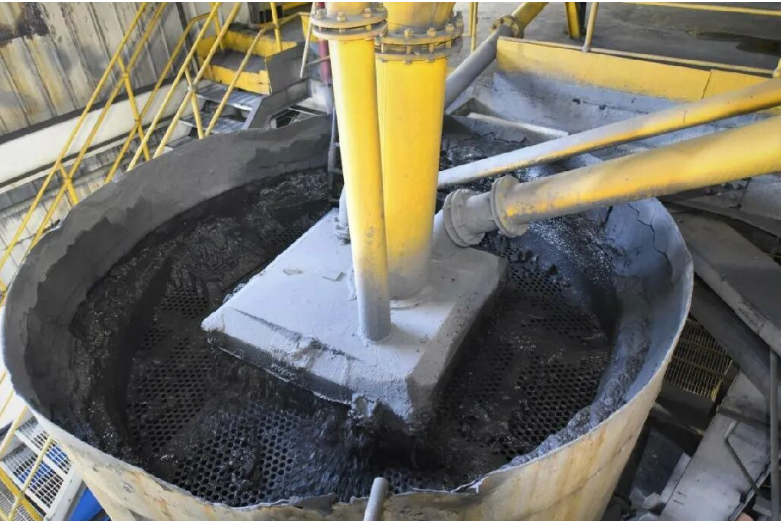
Drain-and-rinse screens are central to medium recovery. Their performance affects both the amount of medium carried away with clean coal and refuse products and the load placed on downstream recovery equipment.
Screen panel design and operating parameters
High-efficiency polyurethane screen panels with an open area exceeding 75% can provide improved drainage performance compared with conventional stainless-steel panels, which are reported to have open areas of approximately 60–65%.
The Heicaogou No. 2 Mine coal preparation plant reportedly replaced its conventional panels with high-efficiency screen panels, reducing medium carryover with the products by 0.15 kg/t and saving approximately 450 tonnes of magnetite annually.
Upgrading the spray-water system
High-pressure atomised spray systems can improve the removal of adhering medium from product surfaces. The source material specifies a spray pressure range of approximately 0.3–0.5 MPa and reports potential improvements in medium removal efficiency of 15–25%, together with a reduction in water consumption of around 30%.
At the Tunlan Coal Preparation Plant, optimisation of spray pressure and nozzle orientation in the fine-coal circuit reportedly reduced medium consumption by 0.25 kg/t, generating annual economic benefits of approximately RMB 1.5 million.
Screen layout and vibration adjustment
Different feed size fractions may require different screen operating conditions. The source material suggests vibration amplitudes of approximately 4–6 mm for coarse coal and 2.5–4.0 mm for fine coal.
The Changping Coal Preparation Plant reportedly improved its medium recovery rate by 2.5% through vibration parameter optimisation, generating annual savings of approximately RMB 800,000.
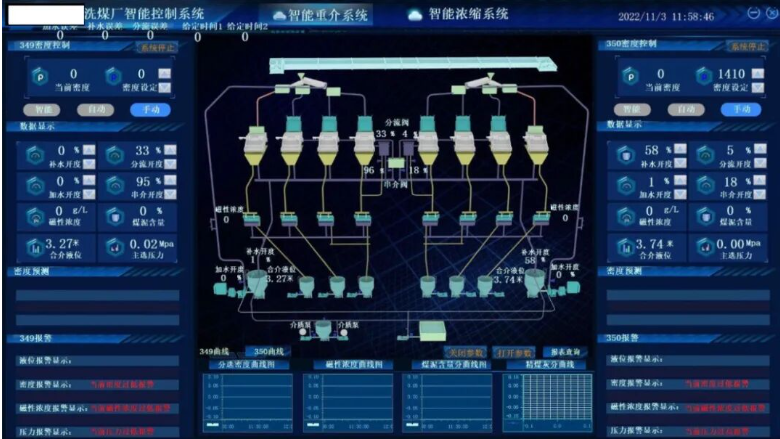
Intelligent control systems use real-time monitoring and automatic adjustment to optimise medium consumption dynamically. They represent an important development direction for modern coal preparation plants.
Precise control of suspension density
The intelligent coal preparation system at Wuju Coal Industry uses PID control linked to online density meters. The system reportedly maintains suspension density fluctuations within ±0.005 g/cm³, improving density stability by 60%.
More stable suspension density helps reduce unnecessary medium adjustments and losses associated with process fluctuations.
Intelligent regulation of medium split flow
Based on changes in coal characteristics and the measured slime content of the suspension, the control system can automatically adjust the medium split flow.
This helps maintain the magnetic separator feed concentration within the desired operating range. The source material reports that this approach can reduce medium consumption by 10–15% while reducing the load on magnetic separators by approximately 13%.
Stabilising dense medium cyclone inlet pressure
Variable-frequency pumps linked to pressure sensors can help maintain stable inlet pressure at dense medium cyclones.
The source material specifies a target pressure fluctuation range of ±0.005 MPa. Stable inlet pressure supports consistent separation performance and helps reduce medium losses associated with unstable cyclone operation and incorrect underflow conditions.
| Technical Measure | Reported Reduction in Medium Consumption | Payback Period | Key Performance Improvement |
|---|---|---|---|
| Closed-loop suspension density control | 12–18% | 8–12 months | Density fluctuation below ±0.005 g/cm³ |
| Magnetic separation system optimisation | 15–20% | 10–14 months | Recovery rate above 99.8% |
| Drain-and-rinse screen upgrading | 10–15% | 12–18 months | Medium removal efficiency improved by 20–30% |
| Integrated intelligent process control | 20–30% | 18–24 months | Coal processing cost reduced by 15% |
In addition to equipment and process technology, effective production management and system optimisation are essential to controlling medium consumption.
Advanced equipment can only deliver its full potential when supported by disciplined operating procedures, effective maintenance and continuous performance monitoring. Differences in management practices are often a major reason why plants with similar equipment configurations achieve different consumption levels.
Equipment maintenance directly affects process stability and the amount of medium lost during operation. It is one of the most fundamental elements of medium consumption management.
Preventive maintenance programmes
A preventive maintenance system should be established for critical equipment, including drain-and-rinse screens, magnetic separators and centrifuges. Regular inspections and condition monitoring can help identify developing faults before they cause unplanned shutdowns or medium losses.
The source material indicates that equipment malfunctions or unexpected failures may increase medium consumption by 30–50% during an individual incident.
The Wobei Coal Preparation Plant reportedly introduced an equipment health management system, reducing unplanned downtime by 70% and lowering medium losses by 0.15 kg/t.
Pipeline and equipment integrity management
Medium transport pipelines, pump bodies and storage tanks should be inspected regularly for wear, corrosion and leakage. Particular attention should be paid to elbows, valves and other components exposed to high wear.
In one reported case, a small hole in a pipeline resulted in a loss of more than 20 tonnes of magnetite over one month.
A management system combining daily inspections with intelligent leakage monitoring can help prevent similar losses.
Magnetite quality control
The quality of magnetite powder has a direct influence on separation performance and medium recovery.
The source material recommends controlling the following parameters:
Magnetic material content: at least 95%.
Particle size distribution: at least 85% passing 325 mesh.
Moisture content: no more than 8%.
Consistent quality control helps ensure that magnetite performs as required in the dense medium circuit. Poor-quality material may increase consumption and negatively affect separation efficiency.
The Tunlan Coal Preparation Plant reportedly introduced an incoming magnetite inspection programme, reducing medium consumption by approximately 0.1 kg/t.
Fine control of medium recovery operations is one of the most direct ways to reduce magnetite losses.
The recovery strategy should follow three principles:
Maximise the recovery of qualified dense medium suspension.
Maximise magnetite retention throughout the process.
Maximise the recovery and reuse of magnetite.
Controlling the level and stability of the correct-medium sump
The source material recommends maintaining the correct-medium sump level at approximately 60–70%. This helps avoid pump starvation caused by low liquid levels and overflow losses caused by excessive levels.
The Wangpo Coal Preparation Plant reportedly reduced medium losses by more than 50 tonnes annually through improved level control.
Optimising sieve bends
Sieve bends should receive a uniform feed distribution, and their screen panels should be inspected and replaced when worn.
The source material suggests a screen angle of approximately 45–55° as an operating reference, subject to equipment design and process conditions.
The Heicaogou No. 2 Mine coal preparation plant reportedly improved medium retention by 15% and reduced medium carryover with products by 0.2 kg/t through improved sieve bend management.
Improving centrifuge effluent treatment
Additional recovery equipment, such as high-frequency screens or magnetic separators, can be installed in the centrifuge effluent circuit to recover magnetite that would otherwise be lost.
The Zhaolou Coal Mine preparation plant reportedly added magnetic separation to its centrifuge effluent circuit, recovering more than 300 tonnes of magnetite annually and generating direct economic benefits of approximately RMB 750,000.
Intelligent systems integrate operating data and process controls to support more precise management of medium consumption throughout the production process.
Data-driven medium consumption monitoring
The intelligent management platform at Wuju Coal Industry integrates DCS and PLC systems to monitor key operating indicators in real time, including:
Dense medium consumption per tonne of raw coal.
Magnetic separator efficiency.
Medium carryover with clean coal and refuse.
Key process operating parameters.
The platform can generate consumption trends and warning reports, helping operators identify abnormal losses and respond more quickly.
Following implementation, the system reportedly reduced medium consumption by 15–20% and generated monthly savings of approximately RMB 125,000 in electricity, medium and reagent costs combined.
Full life-cycle equipment management
Electronic equipment records can be used to track operating parameters, maintenance history and performance degradation.
This information supports condition-based maintenance and helps maintenance teams schedule interventions before equipment deterioration affects production.
The source material reports that this approach reduced equipment failure rates by 40% and lowered unplanned downtime from approximately 55 minutes per day to less than 10 minutes per day.
Digital twins and process optimisation
Digital twin systems, such as those developed by Tuopu Software, use three-dimensional modelling and real-time data mapping to visualise dense medium circuits.
By simulating different operating conditions, these systems can help operators identify suitable process parameters and understand how changes may affect medium consumption.
One coal preparation plant reportedly improved dense medium suspension density control accuracy by 30% and reduced annual medium costs by 8% following implementation.
The intelligent upgrading programme at Wuju Coal Industry provides an example of how integrated process control can improve dense medium consumption management.
System architecture
The platform uses a four-layer architecture consisting of:
Data acquisition layer.
Infrastructure layer.
Integrated management and control layer.
Decision-support and application layer.
It covers data acquisition, process control, equipment management and energy optimisation, helping address the information silos commonly found in conventional coal preparation plants.
Medium consumption performance
Through precise suspension density control, with reported fluctuations maintained within ±0.005 g/cm³, and improvements to the medium recovery circuit, the plant reportedly reduced medium consumption per tonne of raw coal by 15–20%.
The fluctuation range of clean coal ash content was also reportedly controlled within ±0.5 percentage points.
Savings from medium consumption alone exceeded RMB 80,000 per month, according to the source material.
Overall operational improvements
The plant implemented an unmanned operation and remote centralised control model. The number of operators required per shift reportedly decreased from 15 to 6, while labour productivity reached 139 tonnes per worker.
The proportion of continuous production time increased from 65% to more than 90%, accompanied by a substantial reduction in equipment failures.
The Zhaolou Coal Mine preparation plant faced challenges associated with high-ash, difficult-to-wash coal. It adopted a combination of process modifications, equipment upgrades and more rigorous operational management.
Process optimisation
The plant modified its medium recovery circuit by adding magnetic separation to the centrifuge effluent loop, reportedly recovering more than 300 tonnes of magnetite annually.
It also upgraded the drain-and-rinse screen spray system with high-pressure atomised spraying. This reportedly improved medium removal efficiency by 20% and reduced product medium carryover by 0.15 kg/t.
Equipment upgrading
High-efficiency magnetic separators with reported recovery rates exceeding 99.8% replaced conventional equipment with recovery rates of approximately 98.5%.
The upgrade reportedly reduced medium losses in the tailings by 60%.
The plant also introduced polyurethane screen panels with an open area of 78%. Their service life reportedly increased threefold, while medium removal performance improved by 25%.
Refined operational management
The plant established a medium consumption management system based on daily statistics, weekly analysis and monthly reviews. Medium consumption indicators were also linked to shift-team performance.
Magnetite quality requirements were tightened, with the specified magnetic material content increased from 92% to more than 95%.
Following the combined measures, medium consumption reportedly decreased from 1.8 kg/t to below 1.3 kg/t, generating annual economic benefits exceeding RMB 4 million.
The Wangpo Coal Preparation Plant focused on stabilising feed coal quality and improving process control to address significant variations in incoming coal characteristics.
Feed coal homogenisation
A raw coal buffer storage system and automatic blending equipment were introduced to improve feed consistency.
The fluctuation in raw coal ash content reportedly decreased from ±5% to ±2%, reducing the frequency of adjustments required in the dense medium circuit.
Automatic control of magnetic separator feed concentration
Online concentration meters and automatic water addition equipment were installed to maintain magnetic separator feed concentration within approximately 22–25%.
This reportedly improved magnetic separation efficiency by 8% and saved approximately 200 tonnes of magnetite annually.
Automation of the dense medium circuit
An automatic density adjustment system was introduced. Based on online clean coal ash measurements, the system automatically adjusts medium split flow and control valve openings, reducing delays associated with manual intervention.
Following implementation, suspension density stability reportedly improved by 40%, while dense medium consumption decreased by 0.2 kg/t.
Dense medium consumption management in Chinese coal preparation plants is determined by a combination of equipment performance, process configuration and operational management.
The examples discussed in this article demonstrate that reducing magnetite losses requires more than simply upgrading individual machines. Effective results depend on optimising the entire dense medium circuit, maintaining equipment reliability and using operating data to support timely process adjustments.
The source data indicate that dense medium consumption across Chinese coal preparation plants ranges from approximately 0.5 to 3.0 kg/t, with notable differences by plant scale and region.
Large plants generally report lower consumption levels than smaller operations, while regional variations reflect differences in equipment, coal characteristics and technical capabilities.
Against the background of market pressure and declining coal prices in 2025, improving magnetite recovery and reducing operating costs have become increasingly important priorities.
Equipment and process optimisation
The main technical priorities include:
Improving magnetic separator performance and configuring recovery stages appropriately.
Upgrading drain-and-rinse screens with suitable screen panels and optimised spray systems.
Implementing closed-loop control of suspension density and intelligent regulation of medium split flow.
Stabilising dense medium cyclone operating conditions.
Advanced plants are reported to achieve suspension density fluctuations below ±0.005 g/cm³, with intelligent upgrading programmes associated with medium consumption reductions of 20–30% in the source material.
Production management and system optimisation
Effective management measures include:
Establishing preventive maintenance programmes for critical equipment.
Implementing strict magnetite quality inspection and acceptance procedures.
Improving the recovery of qualified dense medium suspension and magnetite.
Introducing daily consumption statistics, weekly performance analysis and monthly management reviews.
Using intelligent platforms to monitor medium losses and identify abnormal operating conditions.
The Wuju Coal Industry example demonstrates the potential benefits of integrating process control, equipment management and production data within a single management platform.
1. Prioritise targeted technical upgrades
Coal preparation plants should prioritise improvements to magnetic separation systems, drain-and-rinse screens and automatic process control.
The most appropriate upgrade sequence should be determined by identifying the largest sources of magnetite loss in each plant.
2. Strengthen operational management
Plants should establish preventive maintenance systems, standardise magnetite quality requirements and introduce structured medium consumption management procedures.
Linking consumption indicators to shift-team performance can also help improve operational accountability.
3. Encourage industry collaboration
Large, technologically advanced coal preparation plants can support smaller operations through technical cooperation, knowledge sharing and the transfer of proven operating practices.
Industry organisations can also contribute by developing clearer technical guidance and performance benchmarks for dense medium consumption management.
4. Support technological upgrading
Policy support, including technical renovation funding and appropriate tax incentives, could encourage investment in intelligent coal preparation systems.
Including medium consumption indicators in green coal preparation plant assessment frameworks may further promote resource efficiency and emissions reduction.
With continued investment in equipment upgrades, process automation and refined operational management, Chinese coal preparation plants have significant opportunities to improve dense medium recovery and reduce operating costs over the 2025–2030 period.
The broader objective is to move towards coal preparation operations that are more efficient, resource-conscious and intelligent, supporting the cleaner and more effective utilisation of coal resources.