- sales@hot-mining.com +86 28 8331 1885 +86 15196677188
-

-

-


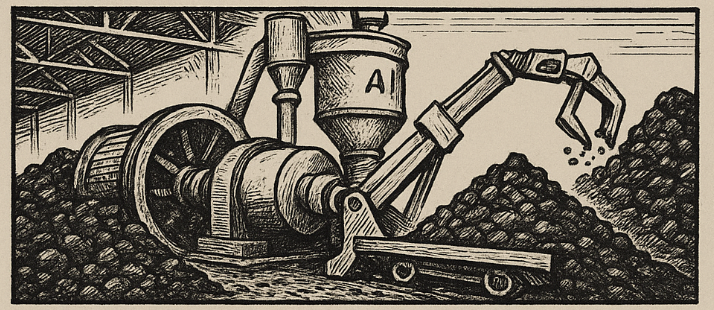
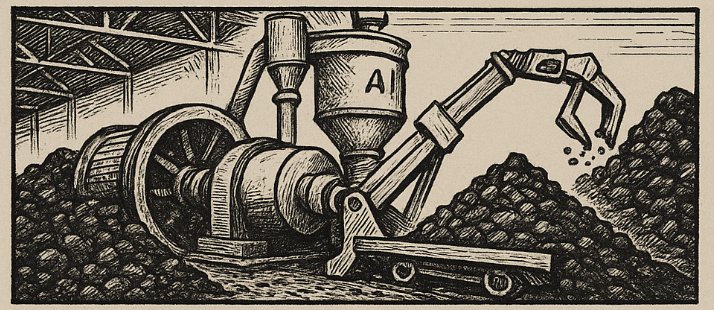
Deep beneath the coal mines, two streams have always flowed: one is the murky water of coal washing; the other, the sweat and toil of miners.
Those who march beneath the banners of “process innovation” have often done little more than replace the abacus of the nineteenth century with an electronic screen. They make the vibrating screens run faster and the centrifuges roar louder. Washed coal piles up like mountains, yet beneath those mountains lies an old ledger of human costs that has never truly been settled.
Until, amid the mist-shrouded hills of Panzhou, someone began feeding the wisdom of ancient Chinese engineering into the throat of the machine.
In the old days, coal preparation was little more than asking pieces of iron to judge the nature of gangue.
Experienced workers would narrow their eyes and prod a dark lump with an iron rod, relying on years of experience—and sometimes little more than instinct—to distinguish coal from waste rock.
Today, the scene is different.
X-ray systems examine coal with extraordinary precision. Laser sensors probe the internal characteristics of individual lumps. AI analyses the information and helps determine which material is suitable for power generation, which is better suited to coking, and which should be rejected as waste.
The process is beginning to resemble a skilled physician examining a patient: instead of relying solely on appearance, it draws on multiple signals to make a more informed judgement.
A mine owner in Zhaojiagou might well flash a golden-toothed smile and declare:
“This algorithm is worth more than twenty accountants!”
But the real value of intelligent coal preparation is not that it replaces twenty people. It is that it can help operators make more consistent decisions, improve separation efficiency and extract greater value from every tonne of raw coal.
In the boiler house, an iron raven sits on the beams. They call it the “intelligent control system”. It seems to feed on the restless spirits trapped inside temperature readings and pressure gauges.
The moment a pressure gauge trembles, the industrial Internet of Things begins to send signals throughout the coal-handling system.
Sensors, communication networks and monitoring platforms connect equipment that once operated in isolation. Temperature, pressure, vibration and other operating parameters can be collected and analysed continuously, helping operators identify abnormal conditions and respond before minor problems develop into major disruptions.
It is as though the bamboo stakes once planted in a watermelon field have learned to speak. Only now, they do more than mark the ground: they transmit warnings.
More unsettling still is the digital twin.
Inside a virtual representation of a mine or processing plant, engineers can simulate operating conditions, test process changes and examine potential risks without immediately exposing people or equipment to those conditions in the real world.
The virtual environment can be used to explore scenarios that would be costly, impractical or unsafe to reproduce in an operating facility.
In this strange new age, even the King of the Underworld's ledger seems to have acquired a digital counterpart. The purpose, however, is not to rewrite the record of death, but to prevent accidents before they happen.
With a simple smile, the old miner hands over a copy of The Intelligent Coal Preparation Register.
Its pages record the achievements of intelligent operations: one mine claims to have saved millions in electricity costs; another reports a remarkably low gangue content in its clean coal.
These figures are presented as evidence of progress, but they also invite a more important question: how were the savings measured, and under what operating conditions?
A genuine assessment of intelligent coal preparation should look beyond impressive numbers. It should examine product quality, separation efficiency, energy consumption, water use, equipment availability and operating safety.
The final page of the register contains an even stranger entry:
“On a winter day in the Year of the Earth Pig, nine golden fish were sustained by the water from the coal-washing plant.”
The image is absurd, almost fantastical. Yet it points towards a serious issue: the environmental responsibilities of coal preparation.
Coal washing generates process water and fine coal-bearing residues that require proper management. Water recycling, wastewater treatment and responsible disposal of solid residues are essential parts of a sustainable operation.
A truly intelligent plant should therefore account not only for the coal it produces, but also for the water it consumes, the waste it generates and the environmental impact it leaves behind.
After all, even the most sophisticated machine cannot make an industrial process sustainable simply by giving it a digital name.
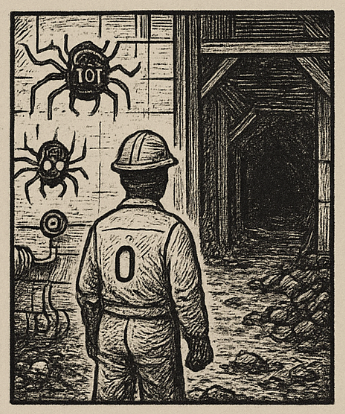
If you ask where the mystery of intelligent coal preparation lies, look not to the grand slogans, but to the workshop floor.
In the coal preparation facilities of Chengdu ReLi Industrial, algorithms are at work alongside centrifuges, data flows across vibrating screens, and intelligent systems are being brought into the practical world of coal processing.
The black coal that once seemed to carry only the weight of industrial history may yet become part of a more efficient and responsible production system.
But technology should never be mistaken for salvation.
The purpose of intelligent coal preparation is not simply to make machines faster, screens louder or control rooms more impressive. It is to make better use of resources, improve product quality, reduce unnecessary consumption, strengthen operational reliability and, above all, protect the people who work in the industry.
The true prescription for the future of coal preparation is therefore not a more complicated algorithm alone.
It is a better balance between machines and people, production and responsibility, efficiency and the environment.