- sales@hot-mining.com +86 28 8331 1885 +86 15196677188
-

-

-

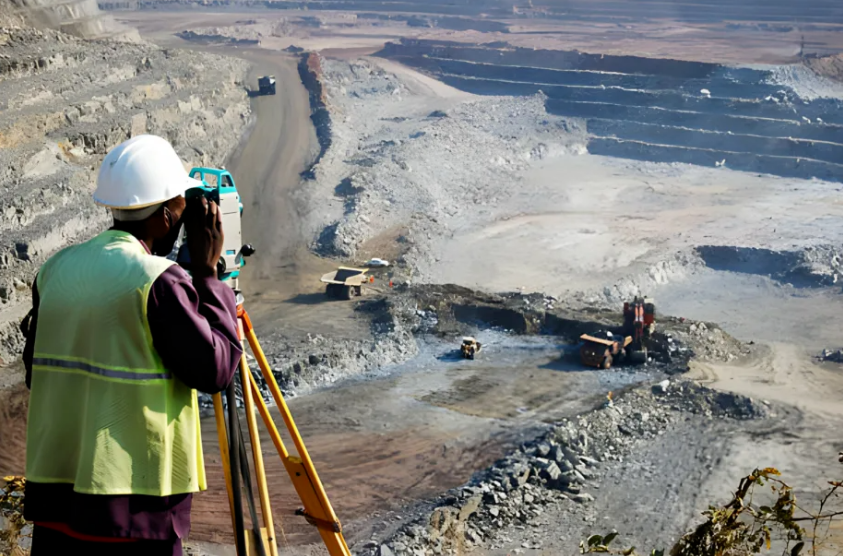
“To solve climate change, the only way forward is full electrification—and it must happen within the next 30 years.”
Kurt House, co-founder of KoBold Metals, believes the rapid growth in demand for electronic devices, from smartphones to electric vehicles, is accelerating the global transition to electrification. According to forecasts, annual electric vehicle sales were expected to exceed 10 million units in 2025.
But the challenge of electrification goes beyond manufacturing. It also depends on securing the mineral supply chains that underpin the transition. Lithium, nickel, cobalt and copper are increasingly in demand, while the mining industry is expected to require approximately US$1.7 trillion in investment over the next 15 years to support future supply.
The challenge is not simply a shortage of minerals. Supply chains are also vulnerable to geopolitical concentration. The Democratic Republic of the Congo, for example, accounts for a substantial share of global cobalt production, creating supply risks for industries dependent on the metal.
As countries seek to secure the raw materials needed for the energy transition, the search for new mineral deposits has become increasingly urgent.
This is where KoBold Metals comes in, tackling one of mining's biggest questions: Where are the next major mineral deposits?
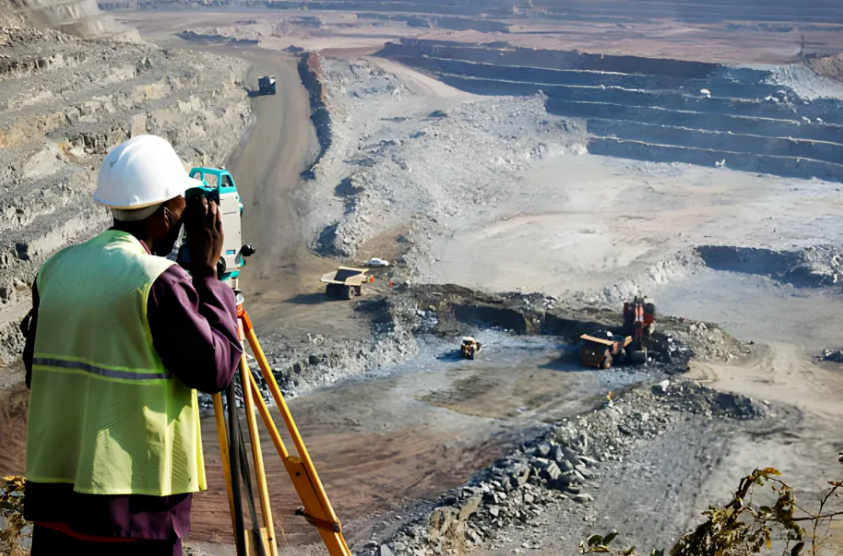
KoBold uses proprietary AI-powered geological exploration technologies to search for new mineral deposits worldwide. The company has approximately 60 exploration projects across four continents, covering a range of geological and geographical environments, with a particular focus on critical battery metals such as copper and lithium.
Its exploration ambitions and technology have attracted significant attention from investors.
One of the discoveries that brought KoBold into the spotlight was the Mingomba copper deposit in Zambia, which the company announced in 2024 as one of the country's most significant copper discoveries in a century.
KoBold is working with Zambia's state-owned mining company ZCCM-IH and Australia's EMR Capital through a joint venture. The partners plan to invest approximately US$2 billion in developing an underground mine, with production expected to begin in the early 2030s.
The project is expected to play a major role in Zambia's ambitions to expand copper production. According to statements by the Zambian president, the country's annual copper output could reach 3 million tonnes by 2032, potentially placing Zambia among the world's leading copper producers and approaching the scale of Chile's Escondida, currently one of the world's largest copper mines.
KoBold's co-founder Kurt House is not concerned about a lack of capital for mining projects.
“The problem is not a lack of money globally, but a lack of high-quality projects. Capital will naturally flow to opportunities that generate returns.”
KoBold has attracted an impressive group of investors, including Bill Gates, Jeff Bezos-backed Breakthrough Energy Ventures, Alibaba co-founder Jack Ma, Silicon Valley venture capital firm Andreessen Horowitz (a16z), and financial institutions such as T. Rowe Price.
This investor backing provides both capital and credibility for KoBold's large-scale mineral exploration programme.
The company is also reported to be raising funds through a Series D round. It had reportedly secured US$491 million, with the round expected to reach US$527 million. If completed as anticipated, the financing would rank among the largest climate-tech fundraising rounds of 2024.
But mineral exploration is hardly new. Companies have been searching for deposits for decades.
So how is KoBold gaining an edge in the exploration race—and how could it help meet the world's growing demand for critical minerals?
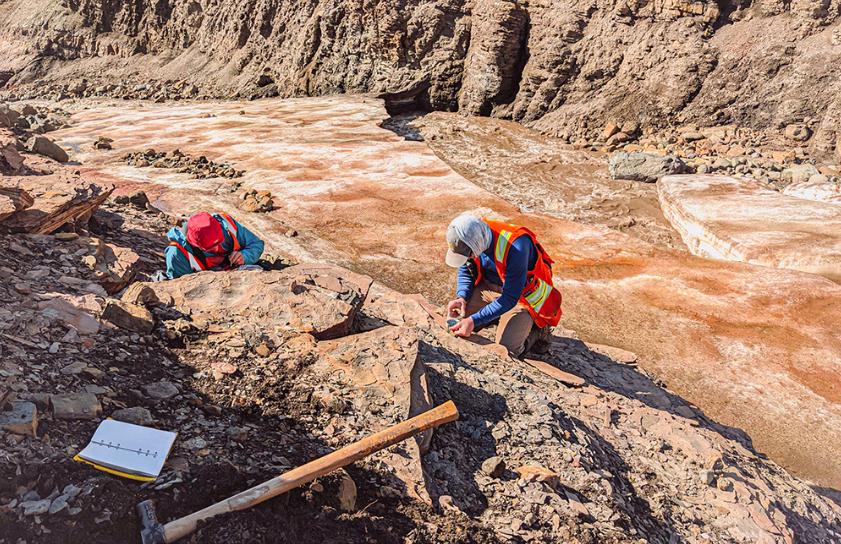
Traditional mineral exploration has long relied on geologists interpreting maps, reviewing historical records, conducting field surveys and analysing samples. Although these methods remain essential, they can be time-consuming, costly and inefficient, particularly when geological information is fragmented across different sources and formats.
KoBold's central ambition is to build a digital map of the Earth's crust—a “Google Maps for minerals”—that can help identify prospective deposits of critical metals, including cobalt.
Unlike conventional exploration workflows, KoBold's approach integrates scattered geological records, paper archives, digital datasets and maps. By combining geochemical, geophysical and geological information with large datasets and statistical models, its AI technology helps accelerate exploration and prioritise the areas with the greatest potential.
KoBold's exploration system consists of three interconnected components.
TerraShed℠ is a data platform designed to consolidate, organise and make global geological information searchable.
Using AI and machine learning, the system processes historical geological maps, satellite imagery, government archives and other datasets from around the world, addressing the longstanding problem of fragmented geological information in inconsistent formats.
According to Kurt House, the data includes everything from soil samples and spectral measurements to handwritten historical documents. Once digitised, structured and integrated, these records become a valuable foundation for modern exploration.
Machine Prospector is a collection of predictive models that uses data from TerraShed℠ to identify potential mineral deposits hidden beneath the surface, particularly areas with anomalous geological or geochemical characteristics.
Exploration teams can define specific target criteria. For example, they may search for areas with nickel concentrations exceeding 25,000 ppm.
By combining physical models with statistical algorithms, the system generates prospectivity maps that help identify promising drilling targets and estimate appropriate drill locations and depths. This enables exploration teams to focus their resources on areas with higher geological potential rather than relying solely on conventional target selection.
KoBold's field exploration teams consist of experienced geologists and technical specialists who validate AI-generated targets through real-world investigations.
Equipped with helicopters and drones, teams conduct geophysical surveys, collect samples and analyse their metal content. Promising results lead to further investigation and deeper exploration, while unsuccessful targets provide feedback that can be incorporated into the company's data and modelling workflows.
This creates a feedback loop between AI predictions and field observations, allowing the exploration process to continuously improve.
Through TerraShed℠ and Machine Prospector, KoBold reportedly aims to increase exploration success rates from around 1% under conventional approaches to as high as 20%, while improving the efficiency of exploration information (EOI) and reducing unnecessary field activity.
More accurate targeting could also reduce the environmental footprint of exploration by limiting unnecessary drilling, ground disturbance and field operations.
KoBold is currently conducting exploration projects in multiple regions worldwide. Rather than licensing its technology to third parties, the company primarily applies its AI platform to its own exploration activities and works with mining partners on drilling and project development.
KoBold's business model is centred on mineral discovery, project development and strategic partnerships.
Its commercial activities include:
Exploration and mineral project development: Identifying prospective deposits and advancing exploration projects through partnerships and development agreements.
Mineral supply: Developing resources such as nickel, lithium and copper to supply industries involved in battery manufacturing and electrification.
The company has also reportedly established partnerships with major mining companies, including BHP and Rio Tinto, providing opportunities to collaborate with established industry players.
KoBold's founders bring together expertise in geology, mineral exploration and data science.
Jeff Jurinak is a veteran exploration professional with approximately 35 years of industry experience, while Josh Goldman has a strong background in big data and machine learning.
The three founders initially worked together in an energy start-up in 2014, where they applied data science to oil and gas exploration and production. After leaving the company in the summer of 2017, they began looking more closely at the growing demand for battery raw materials as electrification accelerated.
In 2018, they co-founded KoBold Metals, which subsequently received investment support from Breakthrough Energy, the climate-tech investment initiative founded by Bill Gates.
Bill Gates has repeatedly emphasised the urgency of accelerating the green industrial revolution.
In 2015, he established Breakthrough Energy Ventures to invest in innovative technologies addressing climate change and environmental challenges. The initiative brought together prominent technology entrepreneurs and industry leaders, including Bill Gates, Jeff Bezos, Mark Zuckerberg and Jack Ma.
Breakthrough Energy has reportedly invested approximately US$2.2 billion across a range of climate-tech sectors, including low-carbon cement, zero-emission aviation and sustainable building materials.
However, deploying these technologies at scale will require substantially more capital and resources. Breakthrough Energy has therefore continued to develop new investment funds targeting five major areas of climate innovation:
Electricity
Transportation
Manufacturing
Buildings
Food and agriculture
KoBold Metals is demonstrating how artificial intelligence can transform the way the mining industry searches for mineral resources.
By integrating historical geological records, satellite imagery, geochemical data, geophysical information and machine learning, the company is moving mineral exploration towards a more predictive, data-driven approach. Rather than relying exclusively on conventional fieldwork, exploration teams can use AI to identify promising targets, prioritise drilling and allocate resources more efficiently.
Natural resources have long been a focus of technological innovation. Venture capital firm Andreessen Horowitz (a16z) has highlighted that the oil and gas industry adopted software and computational tools for exploration and production much earlier, while mining has been slower to embrace similar digital transformation.
KoBold's founders bring experience from the oil and gas sector into mineral exploration, combining geological expertise with modern data science.
Kurt House holds degrees from Harvard and has conducted research at MIT, focusing on the intersection of technology and natural resources.
Their ambition is clear: make mineral exploration more intelligent, more efficient and more predictive.
As the global energy transition accelerates, AI-powered mineral exploration may become a critical tool for identifying the resources needed to build the electrified future.