- sales@hot-mining.com +86 28 8331 1885 +86 15196677188
-

-

-

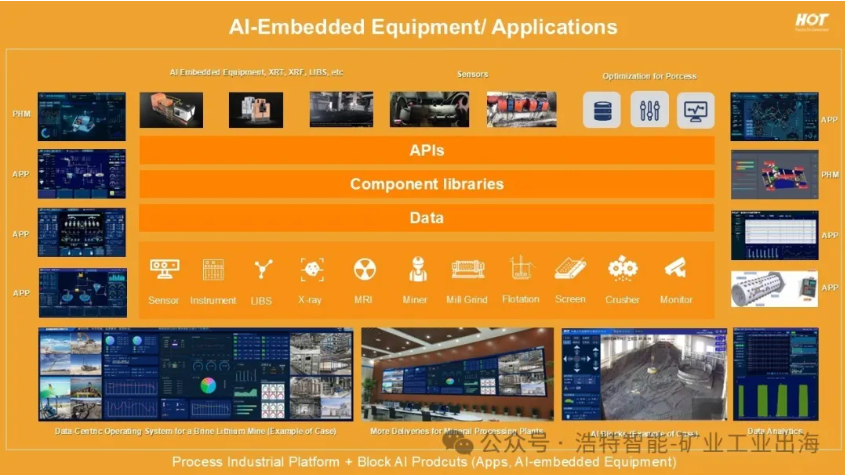
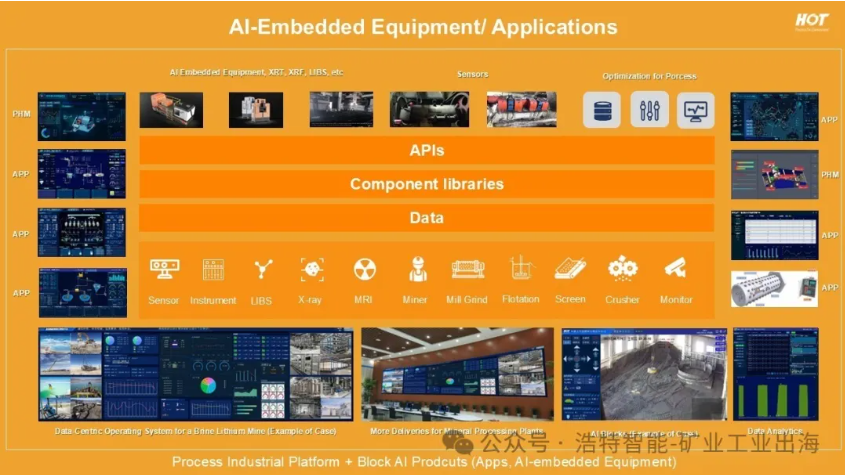
The age of artificial intelligence is not approaching; it is already here. As intelligent automation drives industrial transformation, HOT (Chengdu) Intelligent Technology Co., Ltd. is positioning itself at the forefront of this shift. Through AI-driven process optimisation, modular AI products and Industrial Internet of Things (IIoT)-enabled operations, HOT is working to reshape the mining industry.
High energy consumption, significant fluctuations in process performance and inefficient manual intervention continue to challenge mining operations.
HOT addresses these issues through data-driven methodologies, AI-enabled optimisation and intelligent mining equipment.
Two of HOT's key AI solutions — AI Density Dynamic Control and Modular AI Ore Sorting — are designed to deliver commercial benefits while supporting environmental, social and governance (ESG) objectives across mining operations worldwide.
In coal mining and preparation, precise ash-content control is about more than product quality. It has a direct impact on profitability.
Coal buyers often specify strict ash-content requirements. For example, a buyer may require coal with an ash content of 11%. Deviations can result in financial penalties if the ash content exceeds the specified limit. Conversely, excessive cleaning that reduces ash content unnecessarily — for example, to 10.5% when 11% is acceptable — may result in avoidable yield losses and reduced revenue.
The challenge is to consistently achieve the required product quality without over-processing the coal.
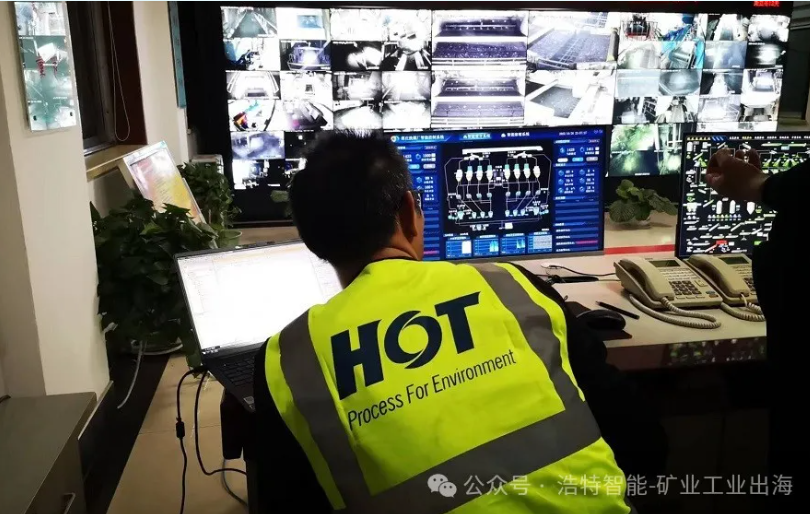
HOT's AI Density Dynamic Control System is designed to optimise coal preparation through three key capabilities:
1. Real-Time Monitoring
AI continuously monitors changes in density, enabling real-time adjustments to process parameters.
2. Adaptive Control Algorithms
The system dynamically fine-tunes dense-medium separation to maintain coal ash content within a target range of 10.95%–10.99%, helping coal producers maximise product value while meeting quality requirements.
3. Lower Operating Costs
By reducing the need for manual operator intervention, the system aims to minimise operating costs, reduce dense-medium consumption and improve production yield.
Profitability: By reducing unnecessary coal losses and improving yield, the system can help preserve revenue that would otherwise be lost through over-cleaning or inefficient separation.
Energy Efficiency: More precise separation can help reduce electricity and water consumption in coal preparation plants.
Sustainability: Improved process control supports compliance with environmental requirements while promoting more efficient resource utilisation.
Mining does not begin at the processing plant. It begins with the orebody itself.
HOT's modular AI ore sorting solutions bring intelligent pre-concentration into the earlier stages of mining. By rejecting waste material before it enters energy-intensive processing stages, the approach aims to improve efficiency, reduce costs and make better use of mineral resources.
1. Nuclear Magnetic Resonance (NMR) Sorting — Under Development
Designed without the conventional particle-size limitations associated with certain sorting technologies.
Intended to support large-scale initial sorting, with a proposed throughput capacity of 1,000–10,000 tonnes per hour.
Aims to reduce excessive crushing and avoid unnecessary energy consumption in downstream processing.
2. X-ray Sensor-Based Sorting
Designed for coarse ore particles ranging from 13 mm to 350 mm.
Processing capacity: 80–400 tonnes per hour.
Selectively rejects waste rock before fine grinding, reducing the amount of material that needs to undergo energy-intensive processing.
3. CCD Optical Sorting
Optimised for fine-particle ore sorting.
Processing capacity: 1–10 tonnes per hour.
Aims to improve resource recovery and reduce the amount of valuable material lost to tailings.
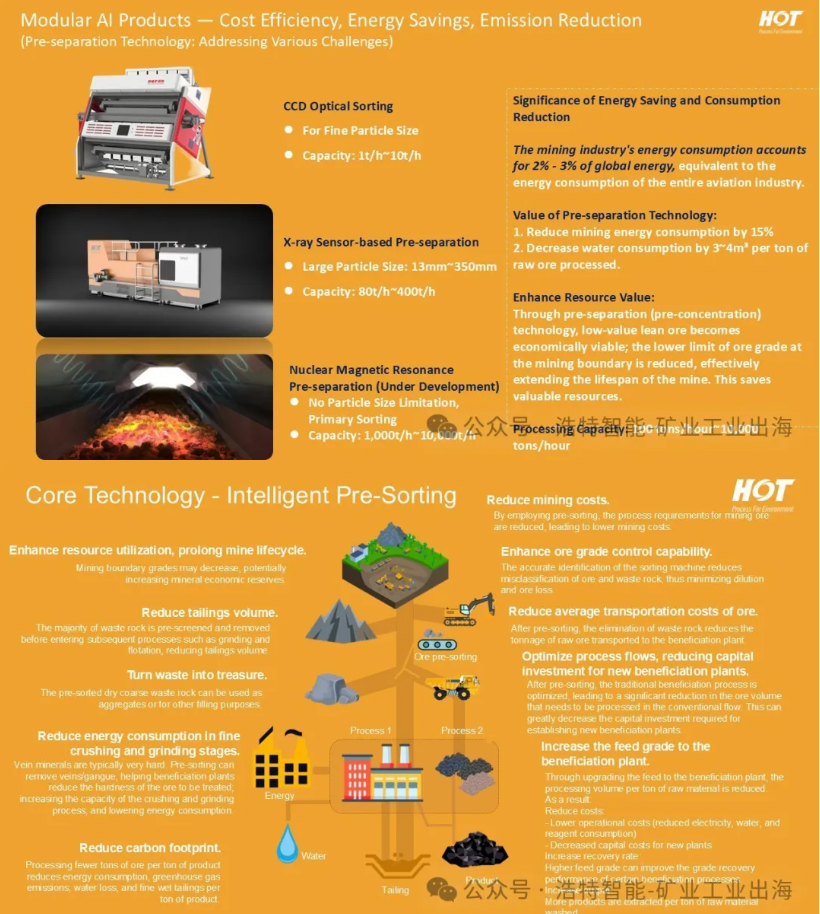
Cost Reduction: Early rejection of waste rock can reduce transportation, crushing and grinding costs.
Energy Savings and Emissions Reduction: Pre-concentration reduces the volume of material entering downstream processing, helping lower energy consumption and associated carbon emissions.
Water Conservation: Reducing the volume of material processed as slurry can help decrease water demand, with the potential to save millions of litres of water annually, depending on plant scale and operating conditions.
Circular Economy: Dry waste rock rejected during pre-concentration may be suitable for reuse as aggregate or backfill material, subject to material characteristics and relevant environmental requirements.
As part of its ongoing commitment to transforming mining through advanced technology, HOT (Chengdu) Intelligent Technology Co., Ltd. is actively exploring the integration of the open-source large language model DeepSeek into its localised operations.
With its deployment flexibility and open-source strategy, DeepSeek has attracted considerable attention across various sectors in China, including healthcare, local government, automotive manufacturing and state-owned enterprises.
HOT aims to apply these capabilities to mining workflows, strengthening the connection between AI models, operational data and intelligent process control.
By integrating DeepSeek into its AI Density Dynamic Control System, HOT aims to further improve the precision of coal preparation.
DeepSeek's data-processing and language-model capabilities are intended to complement real-time monitoring and adaptive control algorithms, supporting the system in maintaining coal ash content within the target range of 10.95%–10.99%.
This integration is expected to help improve profitability, reduce energy consumption and promote more sustainable resource utilisation.
DeepSeek's data analysis and machine-learning capabilities are also intended to support the optimisation of HOT's modular AI ore sorting technologies.
The proposed integration aims to improve the precision of ore pre-concentration, contributing to lower processing costs, reduced energy consumption and improved environmental performance.
This initiative reflects HOT's commitment to sustainable development and operational excellence.
The integration of DeepSeek into HOT's operational framework represents an important step in the company's broader AI development strategy.
By applying advanced AI technologies to mining processes, HOT aims not only to improve operational efficiency, but also to contribute to new approaches to sustainability and innovation across the mining industry.
HOT's commitment to industrial AI extends beyond individual applications. Its vision is to transform mining operations through an integrated, AI-first approach.
According to company-provided figures, HOT has:
Deployed more than 5,000 AI models.
Accumulated 750 million hours of machine-learning computation annually.
Operated 61,492 intelligent sensors.
These capabilities form part of HOT's vision for a new generation of mining operations, in which:
1. Process Automation Goes Beyond Manual Operations
AI-enabled systems support monitoring, analysis and process optimisation, reducing dependence on manual intervention.
2. AI-Driven Resource Prediction Optimises Orebody Boundaries
Data-driven geological analysis and resource prediction can help improve the understanding of mineralised zones and support more informed decisions about orebody boundaries.
3. AI-First Operations Maximise Economic Returns While Reducing Environmental Impact
By connecting intelligent equipment, process control and operational data, AI-first mining aims to improve productivity, resource utilisation and environmental performance.
HOT is not simply adapting to the changes brought by artificial intelligence. It is working to help shape the next stage of mining transformation — rethinking how mining operations are designed, managed and optimised.