- sales@hot-mining.com +86 28 8331 1885 +86 15196677188
-

-

-

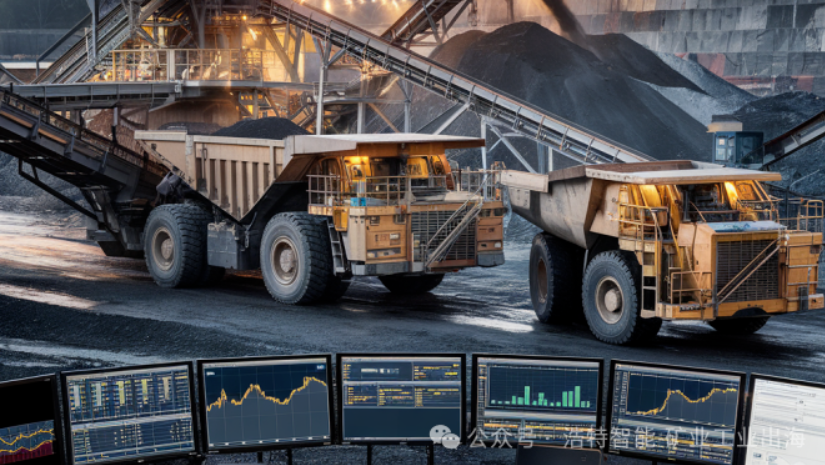
The mining industry is at a critical stage of transformation. Faced with resource constraints, rising operating costs and growing environmental concerns, mining companies are under increasing pressure to operate more sustainably, reduce greenhouse gas emissions and optimise resource utilisation.
As one of the world's most resource-intensive industries, mining must find ways to improve productivity while strengthening environmental responsibility. Artificial intelligence (AI) and data analytics are emerging as transformative technologies that can help address these challenges and enhance operational efficiency.
By applying advanced digital technologies, mining companies can unlock new opportunities to improve productivity, strengthen safety management and reduce their environmental footprint.
Modern mining involves a complex series of interconnected activities, from exploration and extraction to mineral processing and distribution. Each stage requires coordination across the entire mining value chain.
Historically, mining companies have relied heavily on conventional methods and manual processes. These approaches can limit their ability to respond quickly to fluctuations in demand, commodity prices and operational conditions.
Digital transformation is changing this landscape. New technologies enable companies to collect, integrate and analyse the vast quantities of data generated throughout their operations, providing valuable insights into performance and opportunities for improvement.
The industry's focus is increasingly shifting towards integrated operating models that combine sustainability objectives with economic viability.
AI and data analytics are central to this transition. They support data-driven decision-making, predictive maintenance and process optimisation, helping mining companies move towards more efficient and sustainable operations.
One of the key advantages of AI in mining is its ability to optimise resource utilisation.
AI-powered tools can help mining companies predict ore quality, identify potential mineralised zones and assess the economic viability of mineral resources. Predictive models can support ore-grade estimation and mining decisions, helping operators maximise operational value while controlling extraction costs.
By applying AI to resource management, mining companies can also reduce the environmental impact of their operations. More precise extraction planning can help avoid unnecessary excavation, reduce fuel consumption and lower greenhouse gas emissions, contributing directly to sustainability objectives.
Industry Example: China Coal Technology & Engineering Group
China Coal Technology & Engineering Group (CCTEG) applies AI and big data technologies to improve coal resource management.
By integrating geological exploration information with historical operational data, intelligent predictive models can help monitor changes in mine resources and estimate reserves and mining depths more accurately.
These capabilities are intended to improve resource utilisation, reduce operating costs and minimise environmental disturbance.
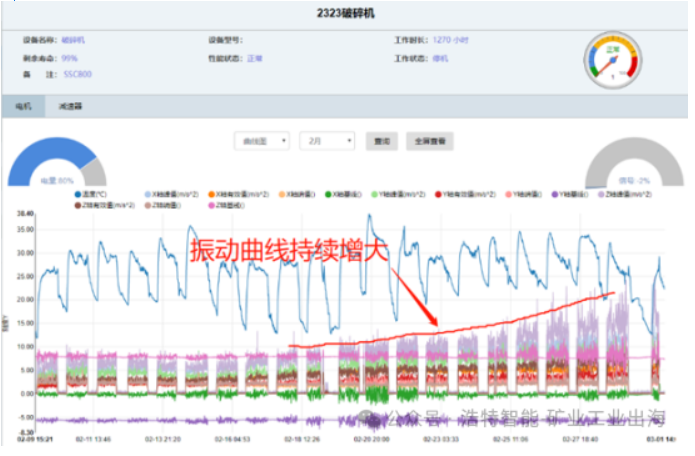
AI-driven predictive maintenance is changing how mining companies manage their equipment and machinery.
By combining sensor data with real-time analytics, AI systems can identify patterns associated with equipment deterioration and estimate when maintenance may be required. This allows operators to address potential problems before they develop into more serious failures.
The benefits include:
Reduced unplanned downtime.
Extended equipment service life.
More efficient maintenance planning.
Better utilisation of maintenance resources.
Improved operational continuity.
For example, predictive maintenance for haul trucks can help identify performance deterioration and potential mechanical problems at an early stage. Timely intervention may also help prevent unnecessary fuel consumption and emissions associated with inefficient equipment operation.
AI-supported maintenance can further reduce the costs associated with emergency repairs and production interruptions.
Industry Example: Chengdu Alpha Intelligent Control Technology Co., Ltd.
Chengdu Alpha Intelligent Control Technology Co., Ltd. (Alpha) has introduced its Alpha® Moving intelligent maintenance solution.
The system uses sensors to monitor equipment conditions in real time and applies machine-learning techniques to analyse operational data, identify potential failures and support maintenance planning.
The solution is designed for mining equipment such as rigid mining trucks and wide-body mining vehicles, helping operators improve equipment reliability and extend service life.
In addition, Alpha uses sensor-based monitoring and AI algorithms to analyse equipment performance trends, identify early warning signs and assess potential failure types.
The resulting insights can guide maintenance operations, helping reduce unplanned downtime, improve production efficiency and lower maintenance costs.
Data analytics enables mining companies to make more informed decisions based on continuously updated operational information.
With the growing adoption of Internet of Things (IoT) devices and industrial sensors, data can be collected across multiple stages of mining operations.
Advanced analytics platforms process this information and generate actionable insights that support improvements in areas ranging from logistics and equipment management to operational safety.
A comprehensive view of real-time operations allows companies to respond more quickly to unexpected conditions, reduce risks, manage energy consumption and improve productivity.
This also helps align day-to-day operational decisions with broader sustainability objectives.
Industry Example: Alpha's Smart Mine Operations and Control Platform
Alpha uses its independently developed Smart Mine Operations and Control Platform to support mining operations through industrial IoT sensors and real-time data analytics.
Sensors monitor haul truck locations, transportation routes and equipment health conditions. The collected data is processed by the platform to support resource allocation, operational monitoring and faster responses to emerging issues.
Industry Example: HOT Intelligent Density Control
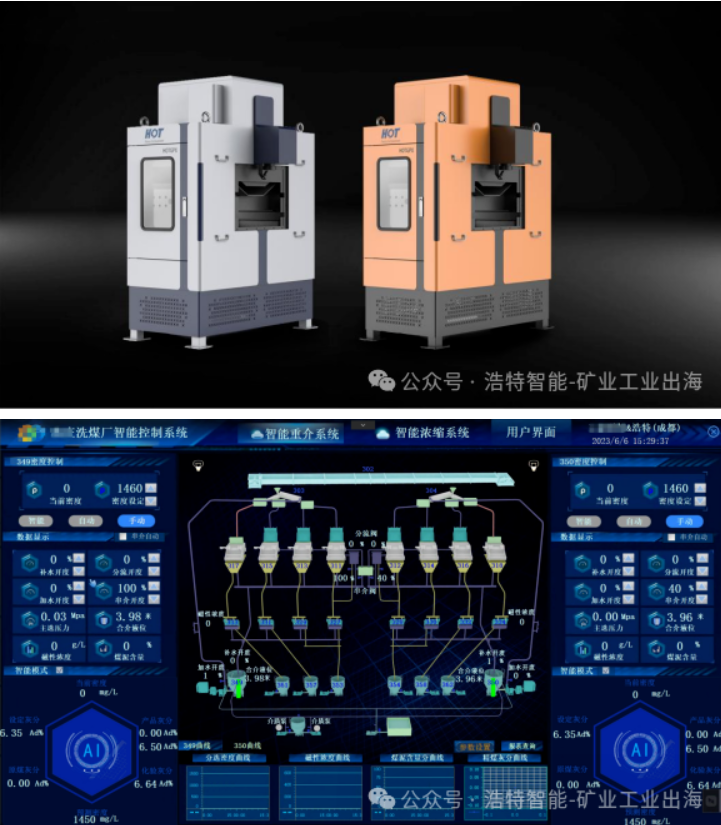
HOT (Chengdu) Intelligent Technology Co., Ltd. (HOT) applies an intelligent density control system to improve process precision and operational control in mining and mineral processing.
Using big data and machine-learning technologies, the system monitors key operating parameters such as density, flow rate and pressure in real time. It can then adjust relevant equipment parameters to support more consistent process performance.
According to HOT's description of the system, its application is intended to improve production precision and stability while reducing resource losses and energy consumption.
More consistent process control can also support operational safety, environmental performance and overall economic efficiency.
A digital twin is a virtual representation of a physical asset, process or system. By combining sensor information with simulation and operational data, digital twins allow mining companies to model real-world conditions and evaluate alternative operating scenarios.
This technology is particularly valuable for environmental assessment and sustainability planning.
For example, digital twins can be used to model the potential effects of mining activities on soil, water quality and air quality. By evaluating different operating scenarios, companies can identify approaches that may reduce environmental disturbance and support biodiversity protection.
When combined with real-time monitoring and historical data, digital twins can also help optimise production processes and improve operational efficiency.
Industry Example: China Baowu Steel Group
China Baowu Steel Group has applied digital twin technologies in mining-related activities and steel production to support operational optimisation and environmental management.
Digital simulation can help assess the potential environmental effects of mining and transportation activities, including their implications for water, soil and air quality.
In steel production, digital twin applications can support the analysis of energy consumption, emissions management and wastewater treatment, contributing to more efficient resource utilisation and industrial transformation.
Mining operations involve inherent risks, including equipment failures, hazardous working environments and unpredictable geological conditions.
AI and data analytics are creating new opportunities to strengthen safety management through real-time monitoring, early warnings and risk mitigation.
Machine-learning algorithms can analyse historical operational and incident data to identify patterns associated with accidents and hazardous conditions. These insights can support the development of more effective preventive measures.
AI-enabled safety systems can also monitor equipment conditions, environmental changes and relevant worker safety indicators, helping generate timely alerts and reduce the likelihood of operational disruptions.
Industry Example: Shanxi Coking Coal Group
Shanxi Coking Coal Group uses AI and data analytics to strengthen mine safety management.
Sensors monitor hazardous conditions, including coal dust and gas concentrations. AI-based analysis can process the collected information and support early warnings of potential explosion risks.
The group has also developed predictive maintenance systems to monitor equipment conditions and reduce equipment failures.
In addition, intelligent wearable devices can support the monitoring of workers' health-related indicators, while geological sensors track changes in underground mine conditions.
Together, these technologies are intended to improve risk management, equipment reliability and operational efficiency.
The implementation of AI and data analytics in mining relies on several interconnected technologies.
Machine-learning algorithms process large datasets to identify patterns, detect anomalies and generate predictions.
In mining, these capabilities support resource estimation, predictive maintenance, process optimisation and operational efficiency improvements.
Computing infrastructure provides the processing capacity required to train and run AI models.
Integrated computing and storage architectures can support efficient data processing and computational resource allocation. High-performance graphics processing units (GPUs) provide the computing capabilities needed for model training, equipment monitoring and real-time inference.
The source material cites an estimated daily computing demand of approximately 0.17 TFLOPS. This figure should be validated against the relevant workload and measurement methodology before being used as a general mining-industry benchmark.
Computing systems can support demanding applications such as intelligent density control and predictive maintenance, helping accelerate the digital transformation of mining operations.
Upcoming Initiative: Alpha, in collaboration with REII Industries Automation, plans to introduce a high-performance computing workstation based on an integrated computing-and-storage architecture for mining applications. Further details are expected to follow.
IoT devices and industrial sensors collect real-time data from mining equipment, infrastructure and operating environments.
This information can then be transmitted to data platforms and AI models for analysis, helping generate actionable insights and support operational decisions.
Platforms such as Apache Hadoop and Apache Spark support the storage and processing of large datasets.
They enable mining companies to analyse historical and real-time information, providing a foundation for advanced analytics and data-driven decision-making.
Cloud platforms provide scalable computing resources and storage for data-intensive applications and machine-learning workloads.
Services from providers such as Alibaba Cloud, Tencent Cloud, Amazon Web Services (AWS), Microsoft Azure and Google Cloud can help mining companies deploy and scale AI applications according to their operational requirements.
The integration of AI and data analytics into mining operations is still evolving, with several important developments expected to shape the industry's future.
AI-powered autonomous vehicles and robotic systems can perform selected tasks with reduced direct human intervention.
These technologies have the potential to improve productivity and safety while lowering operating costs, particularly in repetitive or hazardous working environments.
AI and data analytics can contribute to the transition towards lower-carbon mining by optimising energy consumption, identifying opportunities to reduce emissions and providing insights into more sustainable operating practices.
Although achieving carbon neutrality requires broader changes in energy supply, equipment, infrastructure and operational management, AI can serve as an important enabling technology.
Augmented reality (AR) and AI-powered interfaces can improve communication between workers and machines.
These technologies may provide operators with more accessible operational information, support remote assistance and improve the efficiency of human-machine collaboration, contributing to better safety and productivity.
As these technologies continue to advance, mining companies that adopt AI and data analytics will be better positioned to respond to the demands of a more sustainable future.
By integrating these tools into their operations, companies can build systems that are more efficient, responsible and resilient.
Despite their significant potential, the adoption of AI and data analytics in mining involves several practical challenges.
Mining companies typically manage data from numerous sources, ranging from geological surveys and exploration records to equipment sensors and production systems.
Ensuring data accuracy, consistency and interoperability is essential for generating reliable analytical results.
Without effective data integration, even advanced AI models may produce incomplete or misleading insights.
AI and data analytics require specialised technical knowledge that may not be widely available within traditional mining workforces.
Successful implementation therefore depends on recruiting skilled professionals, developing internal capabilities and providing appropriate training for existing employees.
The transition towards AI-driven operations requires more than installing new technologies. It also involves changes in organisational culture, workflows and decision-making processes.
Mining companies need effective change-management strategies to encourage employee adoption, build trust in digital systems and ensure smooth integration with existing operations.
AI implementation can require significant investment, particularly when technologies are deployed across large and geographically dispersed mining operations.
Companies must evaluate the total cost of ownership, expected operational benefits and potential return on investment.
Prioritising applications with clear operational value can help mining companies manage implementation costs and scale successful solutions more effectively.
Artificial intelligence and data analytics are becoming important catalysts for a new era in mining — one that places efficiency and sustainability at the centre of operational development.
By applying these technologies, mining companies can optimise resource utilisation, reduce environmental impacts, improve equipment reliability and strengthen safety management.
As the industry continues to innovate, AI and data analytics will play an increasingly important role in supporting sustainable growth and transforming mining operations.
Companies that invest in these capabilities today will be better prepared to build a more responsible, efficient and data-driven future for mining.