- sales@hot-mining.com +86 28 8331 1885 +86 15196677188
-
-

-


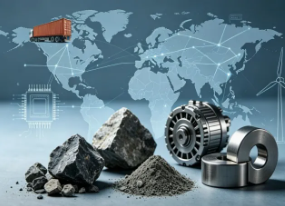
Recently, “critical minerals” has become one of the most frequently discussed terms in global economic and industrial policy. Governments and capital markets around the world are increasingly treating these resources as strategic priorities.
But what exactly are critical minerals? Why can they have such a profound impact on global industrial supply chains?
This article takes a closer look at the concept of critical minerals and the geopolitical, industrial and investment dynamics behind them.
Critical minerals are essentially a special category of raw materials. Their defining characteristic is not necessarily geological scarcity, but the vulnerability of the industries that depend on them.
A mineral may be considered critical when a disruption in its supply could seriously damage key industries much faster than new alternative production capacity could be developed and brought online.
Therefore, the assessment of criticality is not based simply on how much of a mineral exists in the Earth's crust. Instead, it focuses on the vulnerability of the industrial system and typically considers several key dimensions, including:
• Economic importance;
• Supply concentration;
• Availability of substitutes;
• Processing capacity;
• Exposure to international trade; and
• The time required to develop and bring new production capacity online.
This also explains why different countries have different critical mineral lists.
Countries investing heavily in power-grid expansion may consider copper a critical mineral.
Economies with strong semiconductor industries may place greater strategic importance on gallium.
Countries with major automotive, aerospace and defense industries may regard rare earth elements as particularly important.
Moreover, critical mineral lists are not static. New technologies can create new sources of demand, while changes in trade policies and supply channels can transform an ordinary industrial material into a strategic resource.
It is easy to assume that whoever controls the mines controls the market.
In reality, this is often not the case.
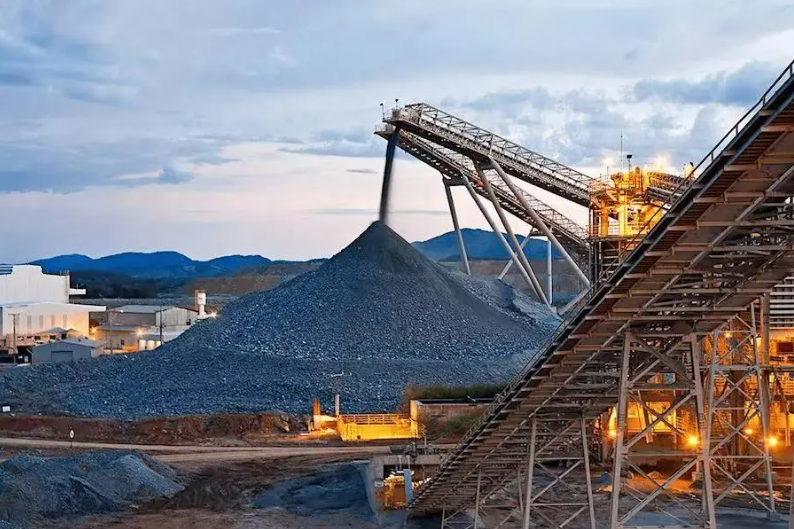
Mining primarily produces ore and concentrates. What modern industrial production actually requires are refined metals, alloys, permanent magnets and other highly processed materials.
The economic leverage within the supply chain is therefore concentrated in:
• Separation and purification;
• Refining and smelting;
• Advanced material processing;
• Component manufacturing; and
• The equipment and technologies required for these processes.
According to the International Energy Agency (IEA), in 2025, excluding rare earth elements, a single leading country controlled an average of around 72% of global refining capacity for major critical minerals.
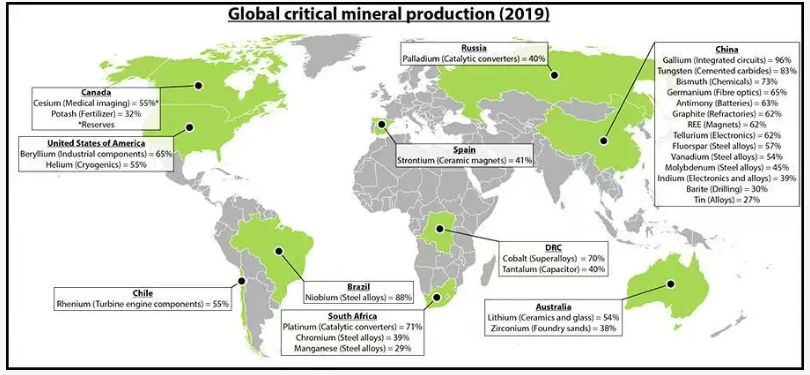
China holds a dominant position in the refining markets of many major minerals, while Indonesia has established a dominant position in nickel processing and smelting.
Over the past two years, these leading countries accounted for more than three-quarters of the global increase in refining capacity.
Even more importantly, expanding mining capacity across multiple countries does not necessarily eliminate supply-chain concentration. Ore may still ultimately flow into highly concentrated processing networks.
Some resource-rich countries therefore remain heavily dependent on overseas smelters, equipment suppliers and advanced processing facilities.
In other words, resource ownership does not automatically translate into industrial independence.
One of the unique characteristics of critical minerals is that relatively small mineral markets can support enormous downstream industries.
For example:
• Rare earth elements are essential for electric motors, wind power equipment and defense systems;
• Gallium and germanium support semiconductor and advanced electronics manufacturing;
• Graphite is a key anode material for lithium-ion batteries;
• Tungsten and antimony are widely used in advanced manufacturing and defense supply chains.
The value of these minerals may represent only a small proportion of the final value of a finished product. Yet they can be indispensable to the manufacturing process.
This creates a form of asymmetric economic leverage.
A relatively small restriction on exports can potentially disrupt industrial production worth hundreds of billions of dollars.
Since 2023, the number of mineral tariff lines subject to China's export controls has reportedly increased substantially.
In April 2025, controls covering seven heavy rare earth elements were implemented, directly affecting certain automotive manufacturers and contributing to production reductions or temporary shutdowns.
The IEA estimates that if rare earth restrictions were fully implemented, downstream industries outside China with an annual value of approximately US$6.5 trillion could face supply disruption. A disruption in the trade of battery-grade graphite could put more than US$300 billion of production capacity at risk.
Commodity prices have also demonstrated the growing sensitivity of these markets.
From January 2025 to April 2026, cobalt prices increased by approximately 130%, lithium prices doubled, and tungsten prices increased approximately sixfold.
In European markets, prices for gallium and heavy rare earth elements have reached as much as five times their domestic prices in China.
These developments highlight a fundamental reality:
A relatively small upstream market can exert disproportionate influence over a much larger industrial economy.
Today, critical minerals sit at the intersection of four major strategic areas:
• Energy security;
• Digital infrastructure;
• Advanced manufacturing; and
• National defense.
Governments and companies around the world are competing for access to many of the same raw materials.
However, the speed at which mining and processing capacity can be developed remains far slower than the pace at which industrial policies and technology requirements are evolving.
Developing a new mine requires a long sequence of steps, including:
Exploration → Permitting → Financing → Construction → Commissioning → Production
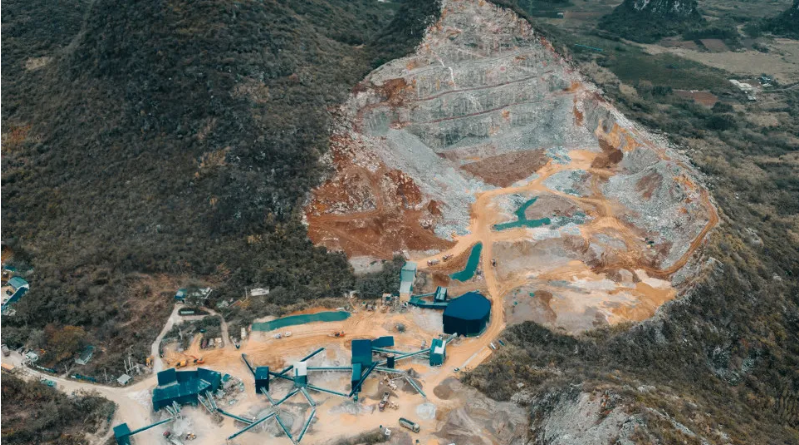
Processing and refining facilities face additional challenges, including feedstock volatility, environmental approvals and infrastructure requirements.
According to IEA projections, copper and lithium are expected to remain structurally undersupplied through 2035. The projected copper supply gap could reach approximately 25% of expected demand.
Capital flows also reflect the challenges facing the sector.
In 2025, global investment in critical minerals reportedly declined by around 9%, while capital expenditure in battery metals fell by more than 20% and investment by lithium companies declined by approximately 40%.
Copper was a notable exception.
Copper mining capital expenditure increased by around 8%, while the value of M&A transactions involving mature copper assets increased by approximately 20%.
Investors are therefore becoming increasingly selective.
Rather than indiscriminately investing across the entire critical minerals sector, capital is increasingly being directed toward minerals and assets with stronger long-term fundamentals.
Traditional commodity markets do not necessarily reward supply-chain resilience.
As a result, governments are increasingly intervening in the financing and development of critical mineral supply chains through:
• Grants and subsidies;
• Concessional loans;
• Long-term purchase agreements; and
• Other forms of public-sector financial support.
In 2025, public funding commitments from advanced economies toward critical minerals reportedly reached approximately US$65 billion, more than four times the level recorded in 2023.
However, from an investor's perspective, being classified as a “critical mineral” is only a starting point. It is not, by itself, a complete investment thesis.
Government support can reduce certain risks, but it cannot compensate for fundamental weaknesses such as poor orebody quality, unfavorable project economics or inefficient processing technology.
High-quality investment opportunities should ideally meet five core criteria:
1. Control of strategically important points in the value chain;
2. Products capable of passing downstream qualification and certification;
3. Long-term offtake agreements or customer commitments;
4. Operations located in policy-supportive jurisdictions; and
5. The ability to remain competitive even after government subsidies are reduced or withdrawn.
The opportunity therefore does not exist only in mining.
It also extends across the broader value chain, including:
• Mineral processing;
• Smelting and refining;
• Recycling;
• Specialized mining and processing equipment;
• Advanced materials; and
• Downstream manufacturing.
The critical minerals opportunity is increasingly becoming a value-chain opportunity, rather than simply a mining opportunity.
The global debate surrounding critical minerals ultimately highlights a fundamental reality:
Having mineral resources does not necessarily mean having control over industrial supply chains.
Processing capacity, technological expertise, specialized equipment and intellectual property are what transform raw mineral resources into industrial capability.
Critical minerals therefore reveal not only the vulnerabilities of the physical economy, but also the direction of the next phase of global competition.
The competition is no longer simply about who owns the mine.
It is increasingly about:
• Who controls processing capacity;
• Who possesses advanced technologies;
• Who owns critical equipment and intellectual property;
• Who can build resilient supply chains; and
• Who can convert mineral resources into high-value industrial products.
A new global race is already underway — one centered on supply-chain resilience, processing capacity and strategic control of the mineral value chain.
For mining companies, investors and governments alike, the key question is no longer simply:
“Where are the minerals?”
It is:
“Who can turn those minerals into secure, competitive and sustainable industrial capacity?”