- sales@hot-mining.com +86 28 8331 1885 +86 15196677188
-
-

-

In July 2026, HOT (Chengdu) industries Co., Ltd. and Chengdu Huapu Rongguang Technology Co., Ltd. officially signed a Strategic Cooperation Agreement for Equipment Development in Mineral Flotation Applications.
This is more than a conventional business partnership. It represents a milestone in the evolution of intelligent flotation technology, marking a transition from Automation 1.0 to Precision Sensing and Resource Recovery 2.0.
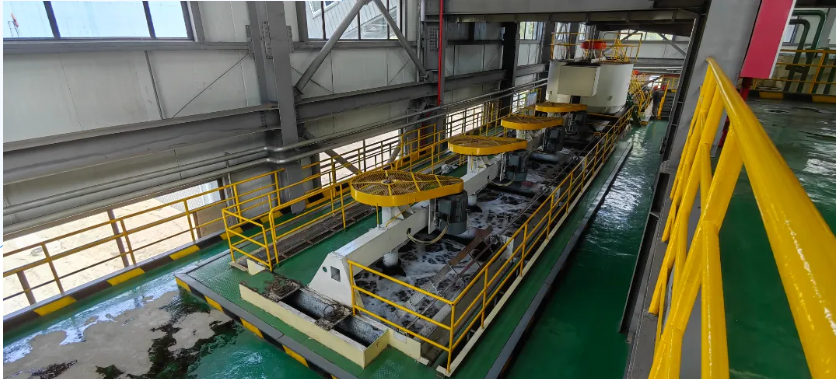
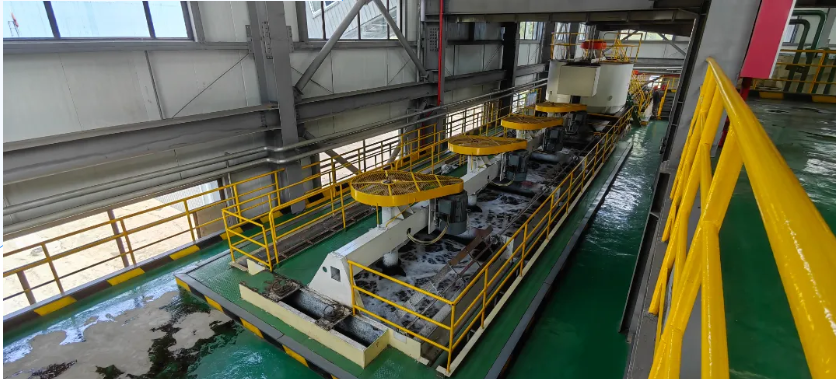
To understand the significance of this transition, it is important to look back at the development of intelligent flotation technology. After being validated and refined in coal preparation, its established sensing–decision-making–execution framework is now being extended to metal ore processing, where it is being further adapted to meet the industry's higher-value recovery requirements.
Coal preparation was one of the earliest and most mature application areas for intelligent flotation technology.
In the past, reagent dosing in coal preparation plants relied largely on manual control. Operators determined reagent dosages based on experience, resulting in high labor intensity and unstable flotation performance. This often led to excessive reagent consumption or losses of clean coal. Although some plants had installed automatic reagent dosing systems, their performance was often unsatisfactory due to limited instrument accuracy and insufficient adaptability of the control systems.
The rise of intelligent technologies has begun to change this situation.
Practical applications of intelligent flotation in coal preparation have demonstrated that a closed-loop technical framework combining intelligent sensing (online monitoring of feed concentration, flow rate, and ash content), intelligent decision-making (feedforward and feedback control models), and precision execution (automatic reagent dosing and process adjustment) can effectively stabilize clean coal quality, improve clean coal yield, and reduce reagent consumption.
These applications have validated the feasibility of intelligent flotation technology and generated valuable experience in sensing technologies, control algorithms, and engineering implementation.
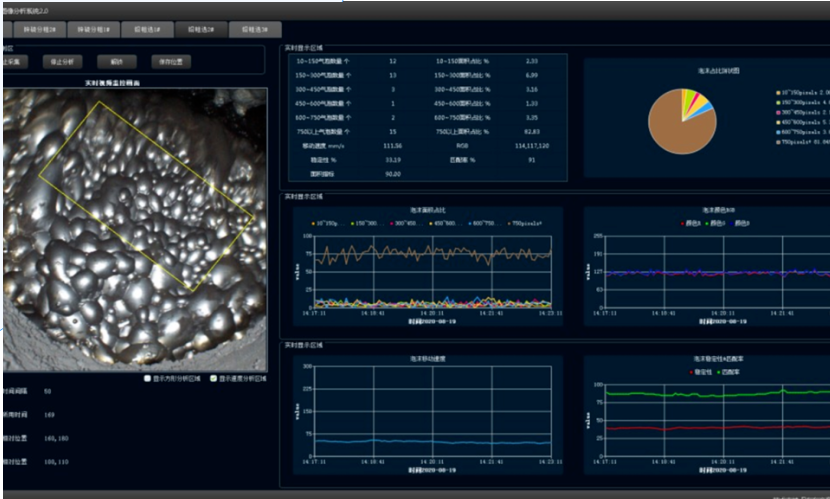
As a National High-Tech Enterprise, HOT Intelligent has been deeply engaged in this field for many years, with business operations covering both coal preparation and mineral processing.
The company has developed a portfolio of intelligent products and solutions covering the entire mineral processing workflow. These include XRT-based pre-concentration and waste rock rejection systems, intelligent flotation systems, intelligent medium density control systems, artificial intelligence solutions, and mill power optimization technologies, alongside other intelligent mineral processing equipment and process control systems.
HOT Intelligent has obtained nearly 100 patents and software copyrights, with more than 200 additional patent applications currently in progress.
The successful application of intelligent flotation in coal preparation has laid a solid technological foundation for its expansion into metal ore processing. However, the greater complexity of metal ore processing and the higher economic value of its products place significantly different demands on the technology.
Approximately 90% of non-ferrous metal ores and 50% of ferrous metal ores worldwide are processed using flotation.
Metal ores have complex compositions and high economic value. Even a 0.1% fluctuation in tailings grade can potentially translate into millions in economic losses.
Traditional post-process laboratory assay methods have a critical limitation: valuable elements that escape recovery may only be detected after the fact, when they have already entered the tailings storage facility. Recovering these lost resources later is often technically challenging and prohibitively expensive.
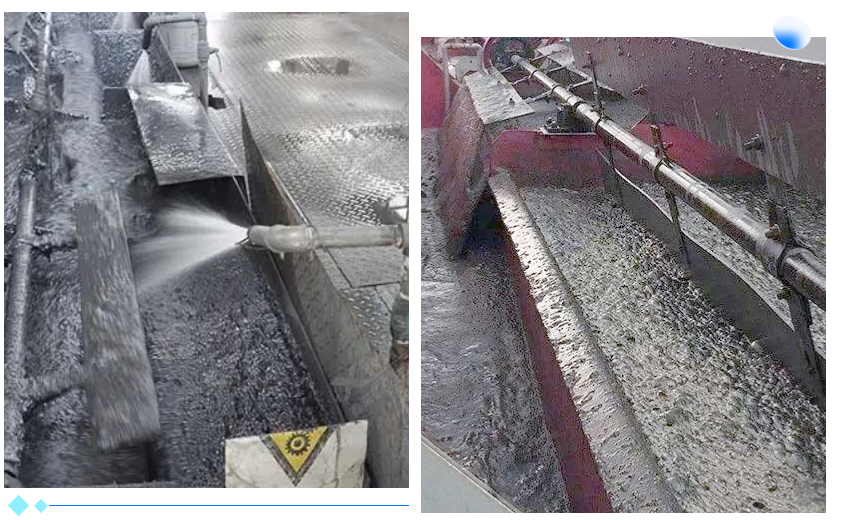
Consequently, the value of intelligent flotation in metal ore processing extends beyond the cost reduction and efficiency improvement objectives commonly associated with coal preparation. It evolves into resource preservation.
Intelligent flotation is no longer merely a tool for improving operational efficiency. It becomes an intelligent safeguard for protecting a mine's core assets and preventing the loss of valuable resources.
HOT Intelligent has already established a presence in the metal mining sector, serving operations involving iron, copper, gold, lead-zinc, and silver ores.
The company is also accelerating the implementation of its HOT 2.0 Internationalization Strategy. By leveraging advanced technologies such as artificial intelligence, Industrial Internet of Things (IIoT), and optoelectronic sensing, HOT aims to help drive a transformation in the global mining industry through cost reduction, efficiency improvement, energy conservation, emissions reduction, and sustainable resource development.
The strategic partnership with Huapu Rongguang represents an important technological initiative under HOT's 2.0 strategy and a key step in the company's expansion from coal preparation into advanced metal ore processing.
Huapu Rongguang focuses on developing high-performance, ultra-low-cost multidimensional spectral sensing technologies. Its innovations overcome traditional limitations in the performance, cost, and size of spectroscopic instruments, extending spectral analysis from laboratory environments into a wide range of industrial online monitoring applications.
By introducing Huapu Rongguang's optoelectronic detection and spectral analysis technologies into mineral processing workflows, HOT is effectively equipping flotation systems with a real-time window into the composition of the process stream.
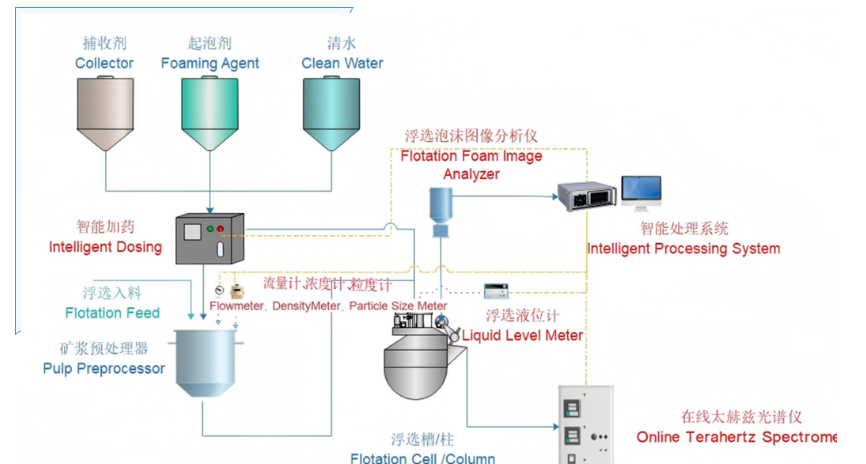
The core breakthrough of this system lies in its ability to perform online detection of specific elements, including copper, lithium, and gold, before the slurry enters the tailings storage facility.
When abnormal signals are detected, intelligent algorithms can immediately coordinate adjustments to reagent dosage and aeration rates, helping prevent valuable elements from being lost with the tailings.
HOT already possesses a range of core technologies, including XRT-based ore sorting, Laser-Induced Breakdown Spectroscopy (LIBS), and multi-source sensor fusion. LIBS technology, originally developed for applications such as planetary exploration and used in Mars rover instruments, represents an example of advanced sensing technology being adapted for mining applications.
The partnership with Huapu Rongguang marks another technological advancement built upon these existing capabilities.
Together, the two companies aim to establish a complete sensing–decision-making–execution–feedback data loop.
This means intelligent flotation will no longer be limited to executing predefined programs. Instead, it will be able to dynamically adjust mineral processing strategies based on real-time elemental measurements in the tailings.
The transition from experience-driven operation to data-driven closed-loop control gives intelligent flotation a new level of operational intelligence, enabling it to respond more effectively to changing ore characteristics and the demanding recovery requirements of metal ore processing.
The significance of this development extends beyond technology itself.
It marks the expansion of HOT Intelligent's product portfolio from the coal sector into non-ferrous and rare metal processing. It is also an important milestone in the company's transformation from a coal preparation specialist into a provider of intelligent solutions for the broader mineral processing industry.
The evolution of intelligent flotation technology reveals a clear development pathway:
Coal preparation serves as the testing ground for the technology, while metal ore processing represents a major arena for realizing its economic value.
In coal preparation, intelligent flotation has completed the technological validation process from automation to intelligent operation, accumulating valuable experience in sensing technologies, control algorithms, and engineering implementation.
As these technologies are transferred to metal ore processing, their value proposition undergoes a fundamental transformation—from pursuing operational efficiency to safeguarding resource value.
The partnership between HOT Intelligent and Huapu Rongguang reflects a clear understanding of this development pathway and a proactive commitment to advancing it.
Through cross-industry technological integration, the partnership aims to equip flotation systems with advanced sensing capabilities, enabling them to identify valuable elements before they are lost to tailings. In this way, tailings storage facilities can move beyond being repositories of potentially recoverable resources and become part of a more efficient, resource-conscious mineral processing system.
Looking ahead, continued integration of technologies from different fields will further expand the role of intelligent flotation.
It will become a key enabler for mining companies seeking to maximize resource utilization and minimize valuable mineral losses, as well as an indispensable component of intelligent mine development.
Ultimately, this is the shared objective of HOT Intelligent and Huapu Rongguang: to protect the value of every mineral resource through technological integration and provide sustainable momentum for the high-quality development of the mining industry.