- sales@hot-mining.com +86 28 8331 1885 +86 15196677188
-
-

-

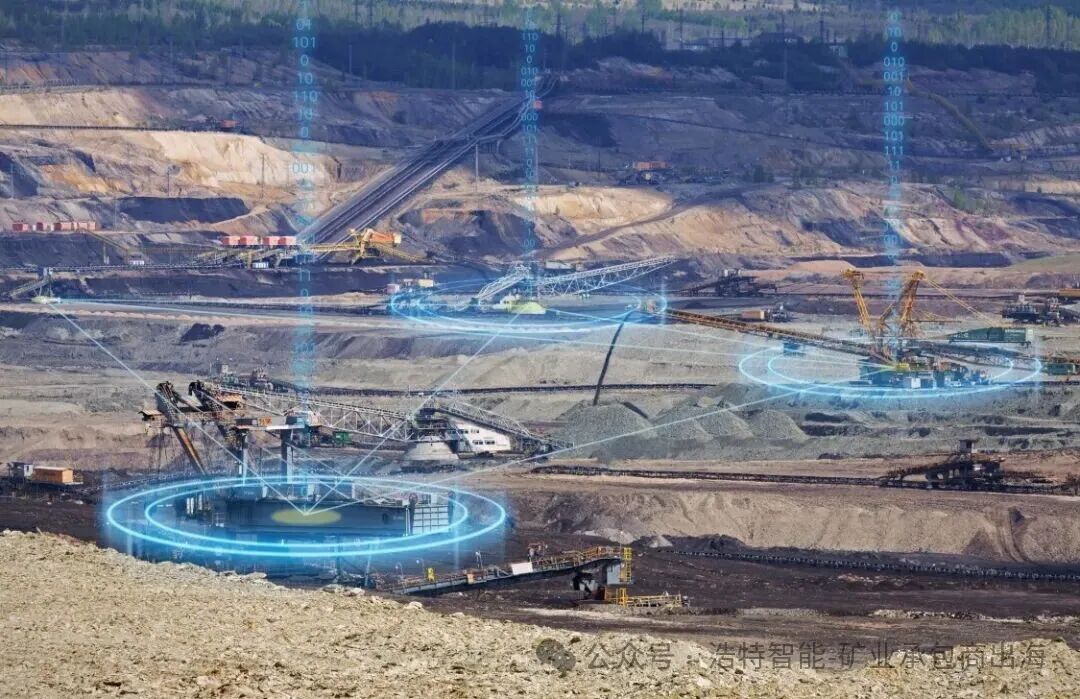
People often ask me a question: after graduating from Harvard Business School, why did I continue to stay rooted in mining? And why “AI + Mining”?
To most people, this is not a glamorous industry.
It is asset-heavy, cyclical, globally distributed, complex, and highly non-standardized—almost the complete opposite of everything the internet industry considers an advantage.
But precisely because of that, we believe:
Mining is one of the few industries that has not yet been truly systematized at an industrial level.
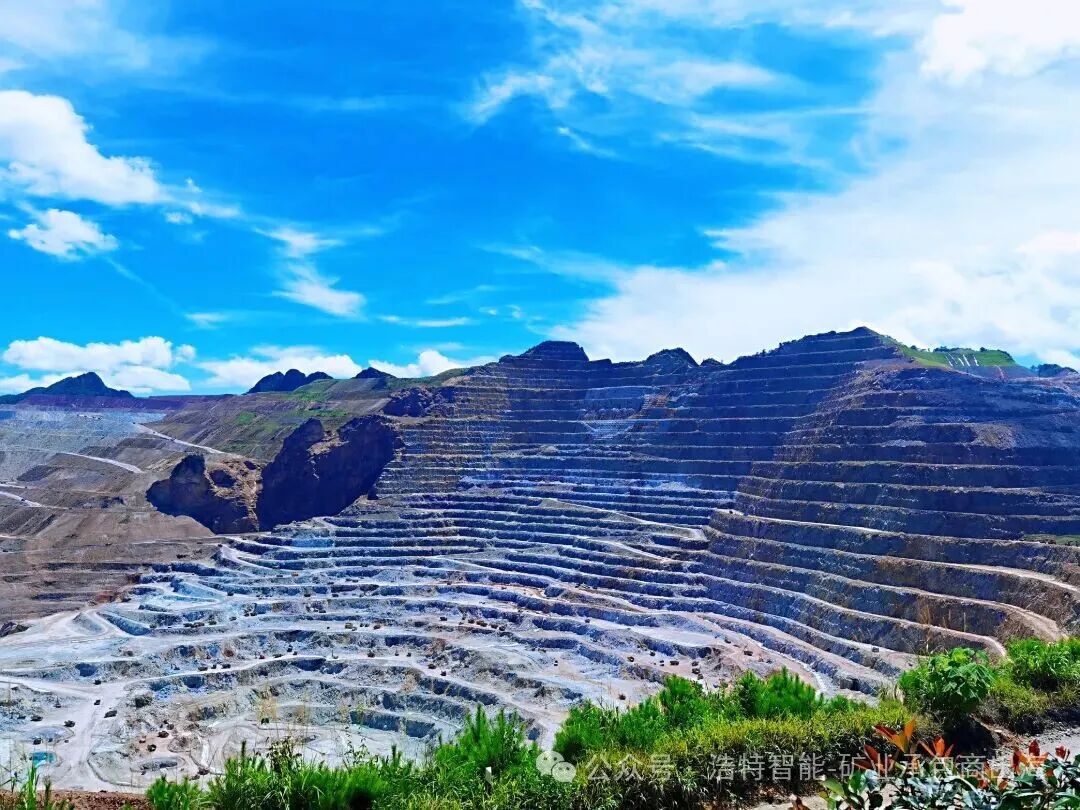
Over the past few years, I've kept returning to one question:
In this trillion-dollar mining industry, why hasn't a truly system-level technology company emerged yet?
Compared with other industries, this is actually quite unusual.
In manufacturing, there is Siemens.
In automation, there is Schneider.
In data platforms, there is Palantir.
But in mining, this kind of platform-driven company is still missing.
And behind that gap lies a major opportunity.
I. Mining’s Core Problem: It Lacks More Than Resources—It Lacks "Computability"
If you actually spend time at a mine site, you notice something interesting: Many critical decisions still depend heavily on experience.
● To what particle size should the ore be ground?
● How much reagent should be added?
● Why do recovery rates fluctuate?
● Why is production stable today, but lower tomorrow?
The issue is not a lack of data.
The issue is that the data has never been turned into a system—and the system has never developed decision-making capability.
That is the fundamental challenge in mining: it has not yet been made "computable."
II. AI Does Not Lack Algorithms—It Lacks the Ability to Operate On-Site
Over the past few years, AI has become incredibly popular.
But in mining, many AI projects ultimately remain stuck in PowerPoint presentations.
The reason is simple:
AI struggles to penetrate real-world operations.
A mine is not an internet-based environment. It is:
● A highly physical system (equipment, processes, ore)
● A highly constrained system (safety, production, cost)
● A highly non-standardized system (every mine is different)
Without:
● Engineering capability
● Process expertise
● Control over equipment
AI cannot truly create value.
That is why, from the very beginning, we never defined ourselves as an AI company.
Instead, we chose to do something harder—and far less flashy:
First enter the mine, then make AI work.
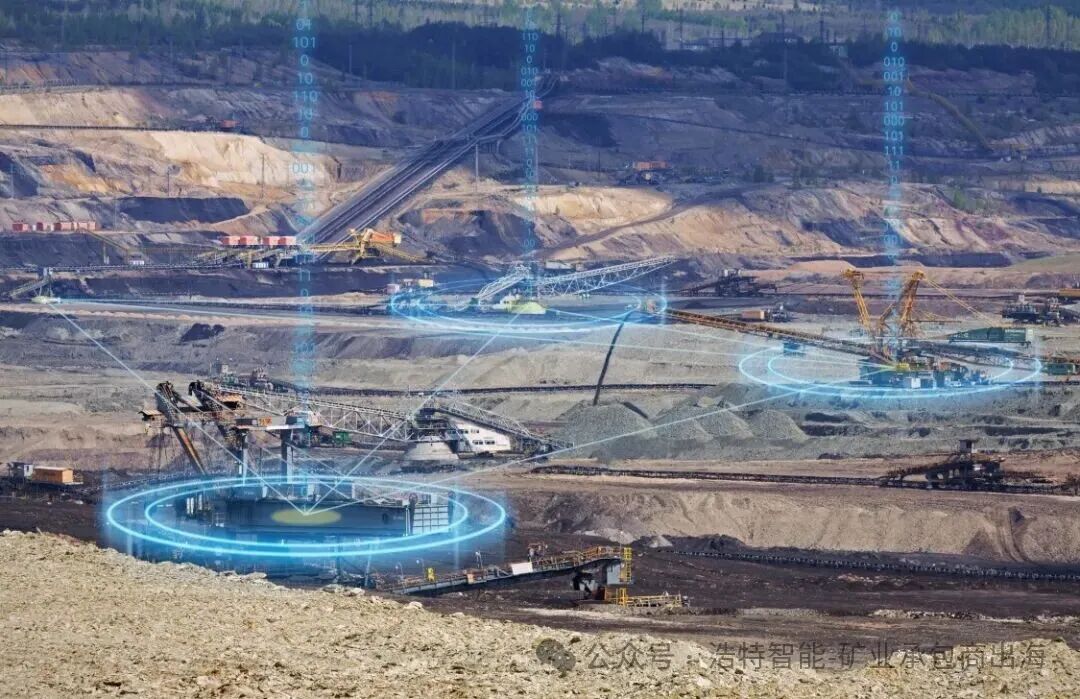
III. Our Path: Engineering → Equipment → Data → AI
What HOT has done over the past few years can be summarized in one simple path:
Step One: Enter the Mine Through Engineering
We provide concentrator plant design, mine development, EPC services, and operational services.
This is the hardest step, but also the only way to truly enter the field.
Step Two: Build Control Points Through Equipment
We develop XRT sorting, online analysis, and process control systems.
These are not simply “products”—they are data gateways.
Step Three: Use Data to Create a Closed Loop
Once equipment, workflows, and production data become connected, the mine becomes “observable.”
Step Four: Use AI to Optimize the System
Only at this stage does AI become truly meaningful.
AI moves beyond prediction and begins directly influencing production, cost, and recovery rates.
We are not building software.
What we are building is: an industrial system capable of operating in real mining environments.
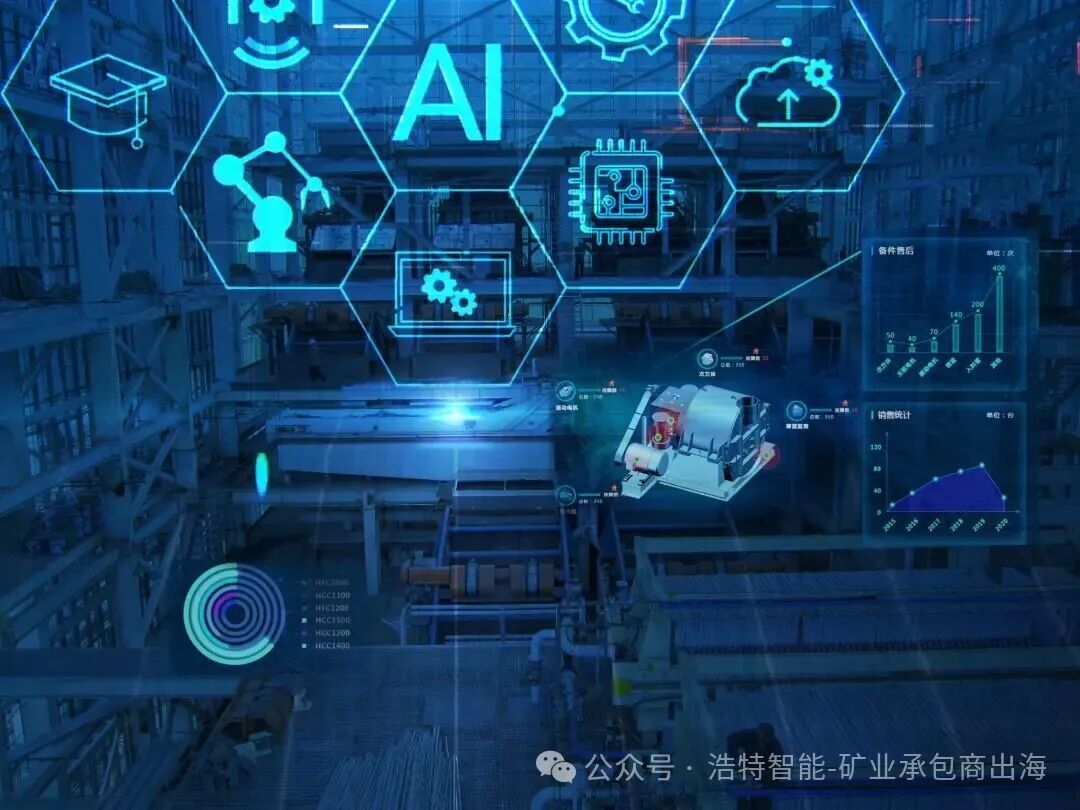
IV. Why Is This Worth Long-Term Commitment?
Some people ask: Is this difficult?
The answer is: extremely difficult.
But difficult things often create the strongest barriers to entry.
Mining will never become a winner-takes-all industry like the internet.
But it will produce companies that:
Have the strongest system capabilities
Can scale globally
Can truly transform technology into productivity
The kind of company we aspire to become is:
not a traditional engineering company,
nor a pure AI company,
but an industrial systems company more like Siemens or Schneider—except focused on the deeper and more challenging vertical of mining.
V. The Next Phase of Mining Is Not Just Resource Competition— It Is System Competition
The future of mining competition will undergo a major shift:
Success will no longer depend simply on who owns the mines, but on:
● Who operates at lower cost
● Who achieves higher recovery rates
● Whose systems are more stable
● Who can replicate globally at greater speed
At their core, these are not resource problems.
They are system capability problems.
VI. What We Are Building Is More Than Just a Company
Many people see HOT as a mining engineering company.
Others see us as an AI company.
Neither interpretation is entirely accurate.
What we truly want to do is:
transform mining from being “experience-driven” into being “system-driven.”
This is a slow process, but once established, it creates extraordinarily strong competitive barriers.
VII. Looking Ahead
Over the next few years, we will focus on three priorities:
Strengthening engineering and delivery capabilities (to ensure access to real operations)
Enhancing the scalability and standardization of equipment and systems (Advancing large-scale applications of data and AI (to build platform capabilities)
These priorities may not sound glamorous, but they are the only path that can truly make this vision work.
The Last Word
While many people are still debating whether AI can enter mining,
we are more focused on:
how to make AI deliver real-world results at mine sites.
If this vision succeeds,
mining will no longer be just a resource industry,
it will become a truly intelligent industrial system.