- sales@hot-mining.com +86 28 8331 1885 +86 15196677188
-

-
-


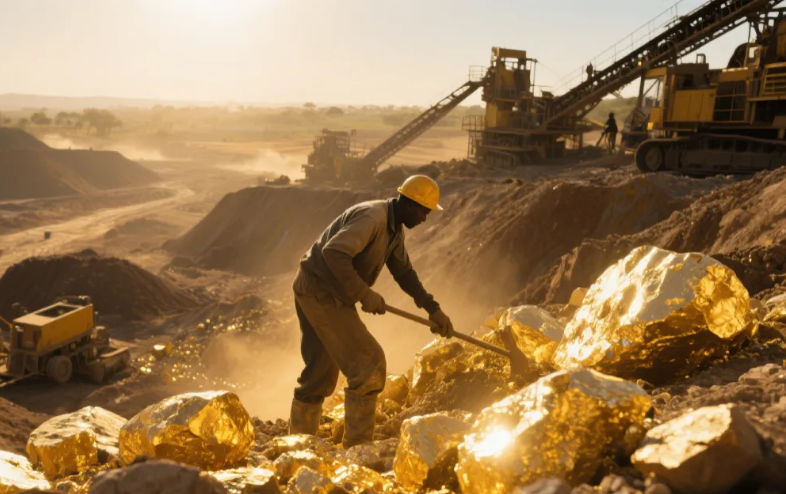
Zimbabwe is often described as Africa's mineral treasure house. Its geological diversity has endowed the country with a broad range of mineral resources, including gold, platinum-group metals (PGMs), lithium, chromium, nickel, diamonds, coal and industrial minerals.
The country's mineral wealth is closely linked to its ancient geological foundations. Its mineral deposits are distributed across several geological domains and formed through multiple episodes of tectonic activity, magmatism, metamorphism and hydrothermal alteration.
Gold has played a particularly important role in Zimbabwe's economy for centuries. Today, the country is also attracting international attention for its lithium, platinum-group metals and chromium resources, which are increasingly important to the global energy transition and advanced manufacturing industries.
Understanding Zimbabwe's geological setting, mineralisation patterns and major mining districts is essential for assessing its exploration and investment potential.
Zimbabwe is situated on the Zimbabwe Craton, one of the oldest and most stable continental blocks in southern Africa. Its geological evolution spans billions of years and includes multiple phases of crustal development, volcanic activity, deformation and magmatic intrusion.
The craton contains extensive Archaean greenstone belts, which host many of the country's important gold deposits. These belts comprise metamorphosed volcanic and sedimentary rocks, together with associated intrusive bodies and structural features.
One of Zimbabwe's most distinctive geological features is the Great Dyke, a large layered mafic-ultramafic intrusion extending for approximately 550 kilometres through the country. Formed around 2.575 billion years ago, it hosts major deposits of chromium and platinum-group metals.
Zimbabwe is also known for its rare-metal pegmatites, which contain lithium, tin, tantalum and other valuable elements. Deposits such as Bikita and Kamativi demonstrate the importance of pegmatite-related mineralisation in the country's mineral portfolio.
Together, these geological systems provide the foundation for Zimbabwe's diversified mining industry.
Zimbabwe produces a wide range of minerals, from precious metals to industrial and energy commodities. Their geological settings and development requirements vary considerably.
| Mineral category | Major commodities | Geological characteristics | Industry significance |
|---|---|---|---|
| Critical minerals | Lithium | Rare-metal pegmatites, including deposits at Bikita, Kamativi and Arcadia | Important for lithium-ion battery supply chains; domestic processing is an increasing policy priority |
| Ferrous and alloy minerals | Chromium | Layered chromitite seams associated with the Great Dyke | Important feedstock for ferrochrome and stainless-steel production |
| Base metals | Nickel, copper and cobalt | Magmatic sulphide systems and other intrusive-related mineralisation | Relevant to alloy production, batteries and industrial applications |
| Precious metals | Gold | Predominantly orogenic gold mineralisation associated with Archaean greenstone belts and structural zones | A major source of mining revenue and foreign exchange |
| Platinum-group metals | Platinum, palladium, rhodium and associated metals | Layered sulphide-bearing horizons within the Great Dyke | A strategically important source of PGMs for industrial and automotive applications |
| Energy minerals | Coal | Sedimentary coal deposits, particularly in the Hwange area | Supports power generation and industrial energy demand |
| Industrial minerals | Phosphate rock, kaolin, granite and other materials | Carbonatite-related, sedimentary and intrusive geological settings | Supports construction, agriculture and manufacturing |
Zimbabwe has become an important producer of hard-rock lithium. Major deposits and mining developments include Bikita, Kamativi and Arcadia.
These deposits are associated with rare-metal pegmatites, which can contain lithium-bearing minerals such as spodumene, petalite and lepidolite.
The development of domestic processing capacity is an important part of Zimbabwe's lithium strategy. Restrictions on the export of unprocessed lithium ore reflect the government's objective of encouraging mineral beneficiation and retaining more value within the country.
Chromium is closely associated with the Great Dyke, one of the world's major layered mafic-ultramafic intrusions.
Chromitite seams within the intrusion provide an important source of chromite ore, which is used primarily in ferrochrome production and stainless-steel manufacturing.
The development of local processing capacity is central to increasing the value generated by Zimbabwe's chromium resources.
Zimbabwe also hosts nickel deposits associated with magmatic sulphide mineralisation and other geological settings.
The Bindura area is an established centre for nickel mining and processing. Nickel is an important industrial metal, with applications in stainless steel, alloys and battery materials.
Copper and cobalt also occur in the country, although their production and development profiles differ from those of gold, lithium and platinum-group metals.
The Great Dyke is the geological foundation of Zimbabwe's platinum-group metal industry.
Its layered intrusive sequence contains economically important horizons enriched in platinum, palladium and other associated metals. Zimbabwe is a significant global PGM producer, ranking third in platinum production in 2024 according to the US Geological Survey.
The country's PGM industry is strategically important, although the availability of downstream processing and refining capacity remains a key consideration for further industrial development.
Gold is distributed across numerous geological belts and mining districts throughout Zimbabwe.
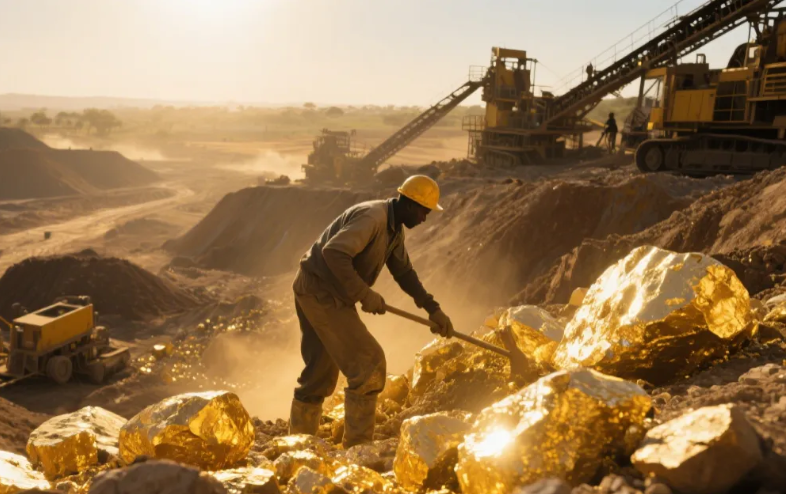
Most major deposits are associated with Archaean greenstone belts, although gold mineralisation also occurs in other geological domains. The country's long mining history has resulted in a combination of established large-scale operations, historic mining districts and extensive artisanal and small-scale mining activity.
Zimbabwe's mineral deposits reflect several major stages of geological evolution. Rather than being confined to three simple, separate mineralisation periods, the country's deposits formed through multiple geological processes over an extended period.
| Geological event | Approximate age | Main geological features | Associated mineralisation |
|---|---|---|---|
| Archaean greenstone belt development and deformation | Mainly around 2.7–2.6 billion years ago | Volcanic and sedimentary sequences, metamorphism and structural deformation | Orogenic gold, with associated base-metal mineralisation |
| Great Dyke emplacement | Approximately 2.575 billion years ago | Large layered mafic-ultramafic intrusion | Chromium and platinum-group metals |
| Late Archaean rare-metal pegmatite emplacement | Around 2.6 billion years ago in important Zimbabwean examples | Granitic magmatism and pegmatite formation | Lithium, tin and tantalum |
| Later tectonic and hydrothermal reactivation | Various periods | Reactivation of older structures and fluid circulation | Localised remobilisation and additional mineralisation |
Zimbabwe's gold deposits are predominantly associated with Archaean greenstone belts.
Gold mineralisation is commonly controlled by structural features such as shear zones, folds, faults and quartz veins. Hydrothermal fluids circulated through fractured and deformed rocks, depositing gold together with sulphide minerals.
Common host rocks include mafic volcanic rocks, banded iron formations and metasedimentary rocks. Gold may occur within sulphide-rich zones, quartz veins and structurally controlled mineralised systems.
The relationship between structural deformation, fluid circulation and host-rock composition is fundamental to understanding the distribution of gold deposits across the Zimbabwe Craton.
Zimbabwe hosts several types of gold deposits, including:
Greenstone-hosted orogenic gold deposits: Commonly associated with regional deformation, shear zones and hydrothermal fluid systems.
Quartz-vein-hosted deposits: Gold occurs in quartz veins, often accompanied by sulphide minerals.
Alluvial gold deposits: Gold is concentrated in river sediments and weathered materials through natural erosion and transportation processes.
These deposit types create opportunities for different exploration and mining approaches.
Many Zimbabwean gold deposits are associated with shear zones, folds and other structural features.
Understanding the geometry, continuity and orientation of these structures is important for geological modelling, resource estimation and mine planning.
In areas where historical exploration data are incomplete, further geological mapping, geochemical sampling and geophysical surveys may help identify additional exploration targets.
Gold mineralisation is commonly associated with sulphide minerals such as pyrite and arsenopyrite. Depending on the deposit, other minerals may include galena and base-metal sulphides.
These mineralogical characteristics can influence gold recovery, processing flowsheets and environmental management requirements.
Detailed mineralogical testing and metallurgical evaluation are therefore essential when assessing the economic potential of a gold deposit.
Zimbabwe has repeatedly identified mining as a major driver of economic growth, export earnings and industrial development.
The government's US$12 billion mining-industry target for 2023 was part of an earlier policy programme aimed at expanding production, attracting investment and increasing domestic mineral processing.
Although this was a historical target rather than a current performance indicator, the policy emphasis on beneficiation and value addition remains relevant to understanding the country's mining development priorities.

Zimbabwe's gold deposits are distributed across several important geological belts and mining districts. The following areas illustrate the diversity of the country's gold mineralisation.
Location: Central Zimbabwe, extending broadly through the country's central greenstone belt region.
Geological setting:
The Victoria Goldfield is associated with the Archaean greenstone belt system of the Zimbabwe Craton. Its geology includes metamorphosed volcanic and sedimentary rocks, together with intrusive bodies and structurally deformed zones.
Gold mineralisation is commonly associated with shear zones and quartz veins, with some deposits hosted by banded iron formations and other favourable lithologies.
Representative deposits:
Blanket Gold Mine: Operated by Caledonia Mining, Blanket is one of Zimbabwe's established underground gold mines. Its mineralisation is hosted mainly in Archaean greenstone rocks and includes structurally controlled quartz-vein and sulphide-bearing systems.
Freda Rebecca Gold Mine: Located in the Bindura area and operated within the Kuvimba Mining portfolio, it is one of Zimbabwe's significant gold-producing operations.
Location: Southwestern Zimbabwe, in the Matabeleland South region.
Geological setting:
The Gwanda area is characterised by complex structural deformation, including high-strain shear zones and quartz-carbonate vein systems.
Gold mineralisation is commonly associated with quartz veins and sulphide-bearing structures. Deposit geometries can vary, with mineralised bodies occurring as veins, lenses and structurally controlled zones.
Representative deposit:
Vubachikwe Gold Mine: A historically important gold operation in the Gwanda district, associated with high-grade quartz-vein mineralisation.
The Gwanda district is also relevant to the wider study of gold mineralisation along the southern margin of the Zimbabwe Craton.
Location: West-central Zimbabwe, southwest of Harare.
Geological setting:
The Kadoma–Chegutu district contains numerous historic and operating gold mines associated with greenstone belt geology.
Gold mineralisation is commonly controlled by structural deformation, including brittle-ductile shear zones and quartz-vein systems. Silicification, sericite alteration and sulphide mineralisation may occur around mineralised structures.
Representative deposits:
Dalny Mine: A historically important gold operation associated with the greenstone belt system.
Pickstone-Peerless: A significant gold mining and development area in the Kadoma region.
Cam & Motor: Another important gold operation within the broader Kadoma–Chegutu mining district.
The district's long mining history makes historical geological records and previous exploration data particularly relevant to future exploration assessments.
Location: Northeastern Zimbabwe.
Geological setting:
The Bindura–Shamva area contains Archaean volcanic and sedimentary sequences, including rocks of the Shamvaian Group.
Gold mineralisation occurs in structurally controlled settings and may be associated with quartz veins, sulphide-bearing zones and deformed host rocks.
The region is also important for other mineral commodities, including nickel.
Representative deposits:
Shamva Gold Mine: One of Zimbabwe's long-established gold mining operations, with mineralisation associated with structurally deformed greenstone belt rocks.
Freda Rebecca Gold Mine: Located in the Bindura area and an important component of Zimbabwe's gold industry.
In addition to the major districts described above, gold mineralisation occurs in several other parts of Zimbabwe.
Manicaland: The eastern region contains gold occurrences associated with greenstone belt geology and structurally controlled mineralised systems, including areas around Odzi and Mutare.
Midlands: The region contains several established and historic gold mining districts, with deposits hosted by different Archaean greenstone belt sequences.
Limpopo Belt: The Renco gold deposit is an example of gold mineralisation occurring outside the main Zimbabwe Craton greenstone belt setting.
These areas demonstrate that Zimbabwe's gold potential is not confined to a single geological corridor.
Zimbabwe's mining industry is positioned to benefit from continued global demand for gold, platinum-group metals, lithium and chromium.
The country's geological diversity, established mining history and strategic mineral endowment provide a foundation for further exploration and industrial development. However, the realisation of this potential will depend on investment conditions, infrastructure, technical capabilities and the development of reliable geological and resource information.
Many established mining districts contain opportunities for further exploration, including extensions of known mineralised zones and targets beneath areas of limited exposure.
At mature underground operations such as Blanket, mining at depth illustrates the importance of deeper exploration and geological modelling in extending the understanding of an orebody.
Future exploration programmes may benefit from integrating:
Geological mapping and structural interpretation;
Geochemical sampling and analysis;
Ground and airborne geophysical surveys;
Three-dimensional geological modelling;
Drilling and downhole data integration;
Mineralogical and metallurgical testing.
The combination of these methods can improve target definition and help reduce geological uncertainty.
Lithium, chromium and platinum-group metals are particularly important to Zimbabwe's future mining strategy.
As global demand for battery materials, advanced alloys and industrial metals evolves, opportunities may emerge not only in mining but also in mineral processing, beneficiation and downstream manufacturing.
For investors, the availability of processing infrastructure, energy supply, logistics and regulatory clarity will be important considerations when evaluating projects.
The integration of artificial intelligence (AI), geophysical exploration and advanced geological modelling could create new opportunities for mineral discovery in Zimbabwe.
AI-assisted mineral prospectivity mapping can help analyse large and fragmented datasets, including historical drilling records, geological maps, geochemical results and geophysical information.
By identifying patterns and highlighting areas of geological interest, these tools can support exploration teams in prioritising targets and allocating exploration resources.
However, AI predictions must be tested through geological interpretation, fieldwork and drilling. They are tools for improving exploration decisions, not substitutes for geological verification.
International cooperation will remain important to Zimbabwe's mining development.
Partnerships involving mining companies, equipment suppliers, engineering firms, technology providers and research institutions can support exploration, mine development, mineral processing and operational modernisation.
Cooperation between Zimbabwe and China, alongside engagement with other international partners, may contribute to investment, infrastructure development and the adoption of advanced mining technologies.
At the same time, long-term growth will depend on responsible mining practices, environmental management, worker safety, transparent governance and meaningful local economic benefits.
Zimbabwe's mineral wealth is underpinned by an exceptionally diverse geological history. Its Archaean greenstone belts host important gold deposits, while the Great Dyke provides a major source of chromium and platinum-group metals. Rare-metal pegmatites add further strategic value through lithium, tin and tantalum mineralisation.
For the international mining industry, Zimbabwe offers opportunities across the mineral value chain, from geological exploration and mine development to mineral processing and intelligent mining technologies.
Turning this geological potential into sustainable economic value will require more than resource endowment alone. Reliable geological data, sound project evaluation, investment in processing capacity and responsible operational management will all be essential.
As global demand for strategic minerals continues to evolve, Zimbabwe is well positioned to remain an important part of Africa's mining landscape.