- sales@hot-mining.com +86 28 8331 1885 +86 15196677188
-

-

-


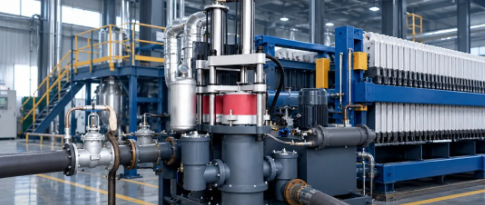
HOT PPL Series Hydraulic Ceramic Plunger Pumps
From Rapid Feeding to High-Pressure Squeezing—One Pump Handles the Entire Cycle
Summary
High flow at low pressure for rapid filling. Low flow at high pressure for sustained squeezing. Overflow-free operation throughout the cycle.
The HOT PPL Series Hydraulic Ceramic Plunger Pump is engineered specifically for filter press solid-liquid separation applications, turning the feeding stage into one of the most stable and efficient steps in the filtration process.
Why do some filter press installations achieve fast, stable feeding, while others constantly struggle with slow feed rates, wet filter cakes and frequent pump failures?
The problem often lies not in the filter press itself, but in its lifeline—the feed pump. As the first stage of solid-liquid separation, feed flow, pressure and stability directly determine the efficiency of the entire production line.
The HOT PPL Series Hydraulic Ceramic Plunger Pump is a new-generation intelligent feeding pump developed specifically to address these challenges.
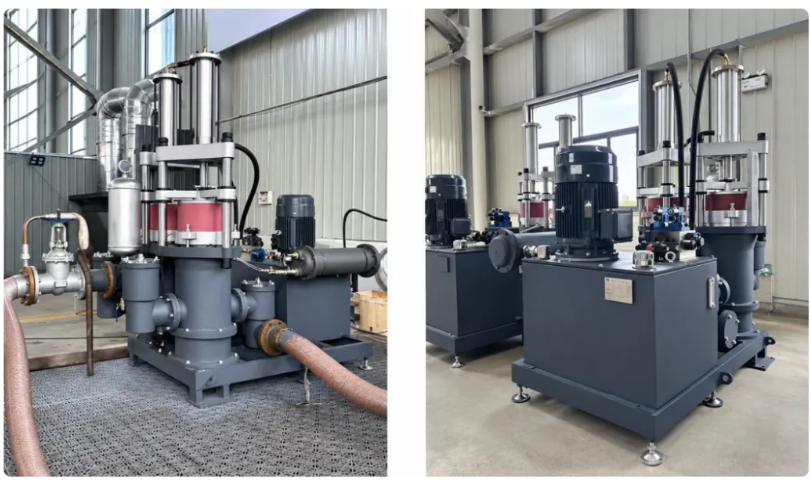
HOT PPL Series Hydraulic Ceramic Plunger Pump
01. Slow Feeding
Insufficient flow during the low-pressure stage means filter chambers take too long to fill. The filter press ends up waiting for slurry, stretching the duration of every filtration cycle.
02. Wet Filter Cakes
Insufficient pressure or unstable pressure output leads to incomplete squeezing and dewatering. Filter cake moisture remains high, increasing downstream handling and disposal costs.
03. Frequent Pump Failures
Highly abrasive slurries and strongly acidic or alkaline media accelerate wear on metallic wetted components. Impellers and screws are replaced again and again, while downtime for maintenance becomes routine.
Feeding performance determines the overall efficiency of the filter press. Choose the right pump, and every subsequent step becomes smoother.
The PPL series breaks away from conventional pump design by adopting staged pressure control, keeping flow and pressure aligned with the filter press's dewatering curve throughout the process.
During the initial feeding stage, high flow quickly fills the filter chambers, shortening the filtration cycle and getting the process off to a faster start.
As the filter cake forms and pressure increases, the pump automatically switches to high-pressure, low-flow squeezing for more effective dewatering, producing drier filter cakes.
Operating conditions are automatically adjusted according to changes in feed pressure. Combined with an overflow-free hydraulic system, this helps avoid unnecessary energy consumption and wasted operating time.
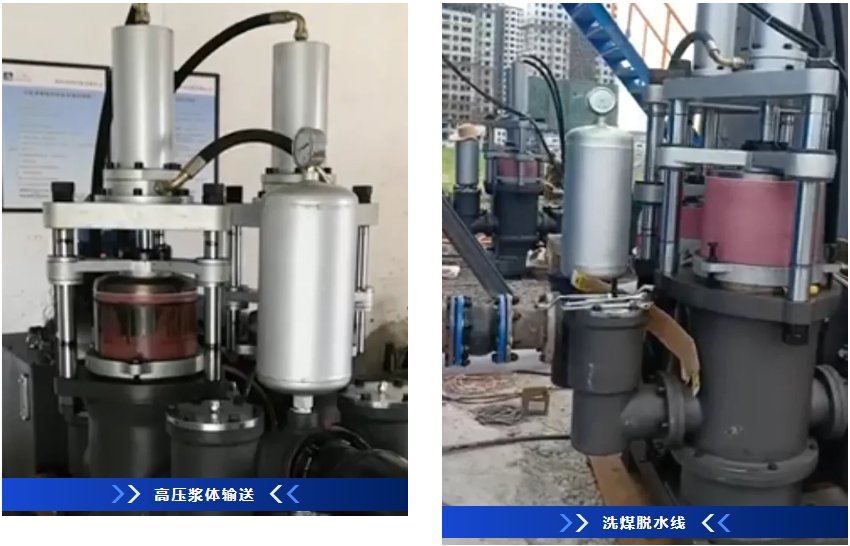
The drive system consists of a motor-powered hydraulic pump station. High- and low-pressure relief valves and directional control valves drive the ceramic plungers in reciprocating motion. A beam-column-carriage structure ensures smooth movement, while the pressure water ring and pressure stabilisation tank further absorb pulsation and stabilise pressure, enabling continuous, stable delivery of high-pressure slurry.
High-pressure alumina ceramic plungers + hydraulic drive. Overflow-free, pulsation-free operation, and efficient energy use throughout the process.
Remote intelligent control, unmanned operation, fault alarms and pretreatment reminders. Supports centralised monitoring of multiple pumps and data-platform integration, making it suitable for Industry 4.0 applications.
A new benchmark in energy efficiency, safety and environmental performance. Staged feeding control delivers significant energy savings compared with similar pumps operating under equivalent conditions.
A pressure-compensated variable pump specifically designed for filter press feeding. Outlet flow automatically adjusts with pressure according to a constant-power curve, reducing energy consumption throughout the cycle.
A large-bore, dual-cylinder hydraulic design with dual inlet and dual outlet configurations. High flow and high pressure capability enable a single pump to meet the maximum conveying demand.
The plungers are manufactured from high-purity sintered alumina ceramic and precision-ground to achieve high hardness and a smooth surface finish. With no shear motion between the ceramic plunger and the medium, wear is reduced.
According to long-term application statistics for core ceramic components, service life can reach 10–15 years.
Stable pressure with no pulsation across the full flow range. Designed to match the high-pressure feeding requirements of filter presses and long-distance pipeline transport.
An overflow-free hydraulic system combined with high volumetric efficiency delivers 30–50% energy savings compared with slurry pumps under equivalent operating conditions.
The resulting electricity cost savings can recover the equipment investment within a relatively short period.
Ceramic materials resist strong acids, alkalis and organic solvents, while offering excellent resistance to particle erosion. They eliminate the risk of metallic corrosion contaminating the medium.
The sealing design also helps reduce slurry leakage, keeping the operating environment cleaner.
Wear parts are limited to check valve plates and plunger seals, which can be replaced quickly and easily.
Annual maintenance costs are approximately one-fifth those of slurry pumps.
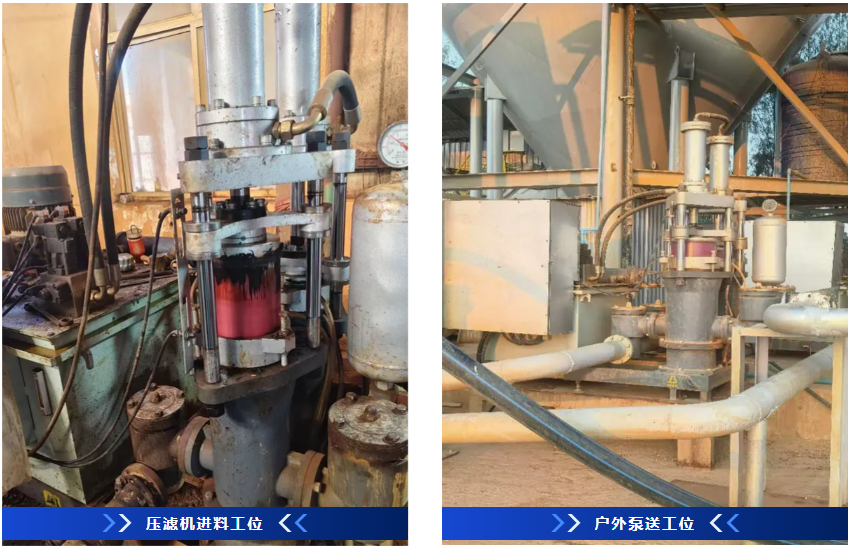
The pump features a compact footprint and can be installed in confined spaces. It can be integrated into existing filter presses and production-line equipment, making it suitable for on-site upgrades and retrofit projects.
HOT | Helping Every Filter Press Deliver the Performance It Was Designed For.