- sales@hot-mining.com +86 28 8331 1885 +86 15196677188
-

-

-


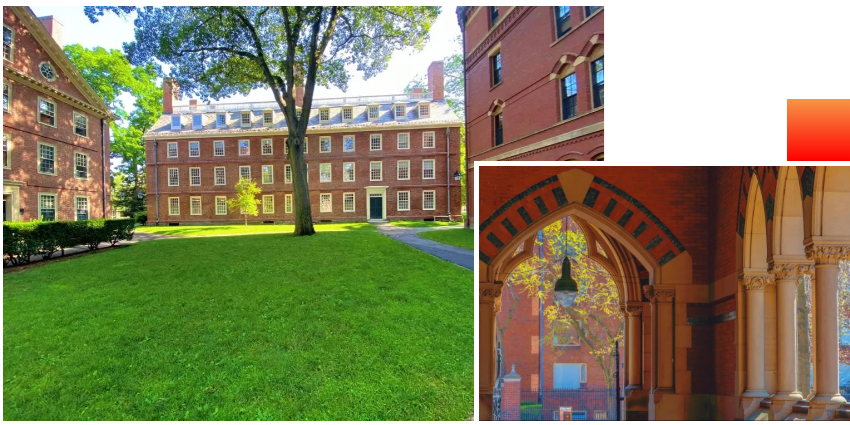
“Before the morning light breaks through Boston's mist, the hiss of the coffee machine has already shattered the silence. At exactly 6:00 a.m., I spring out of bed like a precision-engineered machine. Forty push-ups. With every repetition, my muscles tighten like drawn strings. The rhythm of my movements, together with the sound of freshly brewed coffee, becomes the soundtrack to the morning. A glass of ice-cold water is the final switch that brings my mind fully online.”
Harvard Business School (HBS), one of the world's most influential centres of business education, attracts ambitious professionals from across the globe. Known for its demanding academic environment and distinctive case method, it offers programmes designed for people at different stages of their professional journeys.
From the two-year MBA to executive education programmes such as the General Management Program (GMP), Advanced Management Program (AMP) and Owner/President Management (OPM), each programme presents its own challenges. For many participants, the experience is an intensive exercise in leadership, decision-making, discipline and time management.
This article follows one entrepreneur through a typical 24-hour period, exploring the demanding rhythm of studying at Harvard Business School while continuing to manage international business commitments. It is a day shaped by academic discussions, physical training, cross-border collaboration and professional networking.
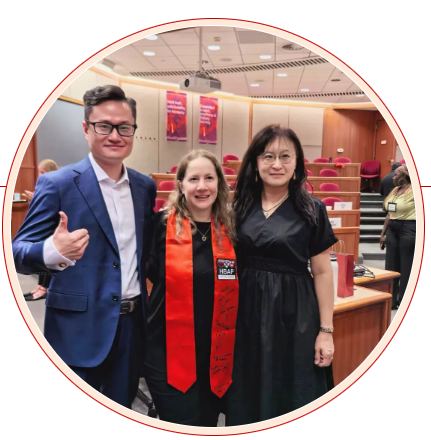
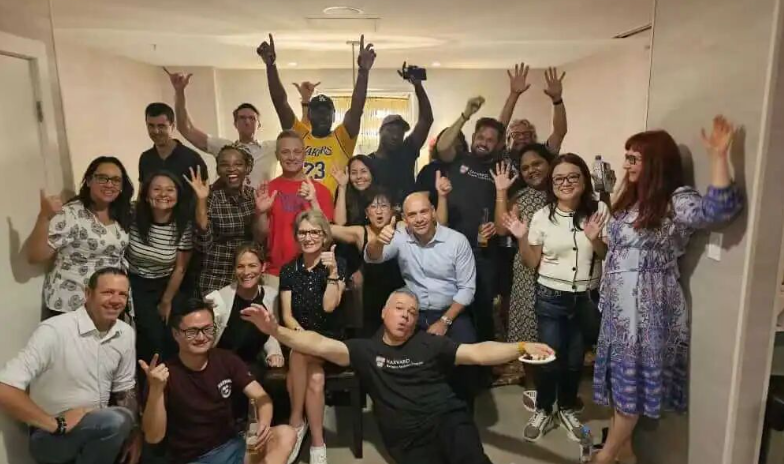
Huang Heng (far left)
I am currently involved in two programmes at Harvard Business School:
Harvard Business Analytics Program (HBAP): A programme exploring how artificial intelligence, data science and analytics can be applied to business decision-making. The daily schedule described below reflects my experience with this programme.
General Management Program (GMP): My next programme begins in August this year.
Harvard Business School offers several programmes designed for professionals with different levels of management and business experience.
| Programme | Typical Participants | Core Focus |
|---|---|---|
| MBA | Early- to mid-career professionals seeking a comprehensive business education | Leadership, strategic thinking and practical management skills |
| GMP | Senior executives and entrepreneurs with substantial management experience | Cross-functional leadership and general management |
| AMP | Experienced senior executives and business leaders | Global strategy and executive leadership |
| OPM | Business owners and presidents | Business growth, organisational leadership and long-term value creation |
A note on executive education: Harvard Business School also offers programmes such as the Program for Leadership Development (PLD). These programmes serve different professional needs and should not be treated as interchangeable versions of an EMBA.

The morning starts with a workout and a carefully prepared cup of coffee.
Forty push-ups are more than a physical warm-up. They represent a commitment to consistency: a reminder that discipline is built through repeated actions rather than occasional bursts of motivation.
In a schedule filled with academic work, business decisions and international meetings, physical activity provides an important opportunity to reset both body and mind.
Dark coffee swirls inside my favourite mug. My fingers move across the keyboard as I organise the day ahead.
Today's to-do list includes:
Completing a financial model for the acquisition of a gold mining project in Indonesia and refining the related farm-in investment agreement.
Preparing an exclusive investment negotiation framework for a gold mining project in Zimbabwe.
Attending a conference call with an Australian mineral processing business partner at 7:30 p.m.
An entrepreneur's to-do list rarely stays within one time zone. Every task carries its own commercial considerations, deadlines and potential consequences.

The blue light of the screen illuminates the room.
While my team in China is approaching the end of its working day, we connect for a short but focused discussion. A cross-border meeting that might otherwise take an hour is condensed into a 15-minute briefing.
“Adjust the conversion price and include the tariff variable.”
My voice travels through the connection, accompanied by the distant sounds of dinner conversations in China.
Time-zone differences can be challenging, but they also create opportunities for continuous collaboration. When managed effectively, they allow teams in different regions to keep projects moving around the clock.
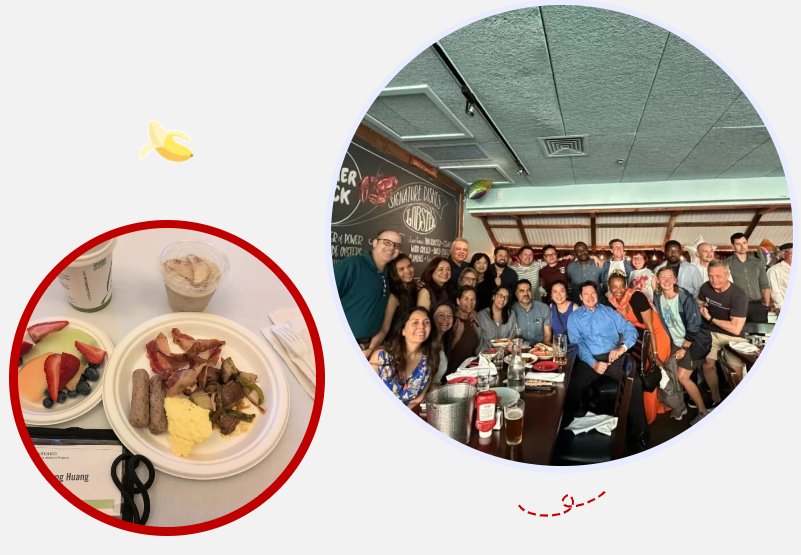
Breakfast at Harvard Business School is rarely just breakfast.
Small groups gather around dining tables. Alongside avocado salads and coffee cups are case materials examining major business controversies.
Today's discussion focuses on the global consequences of improper data collection by a major technology company. The case explores how consumer purchasing patterns and other personal data can be used to infer highly sensitive information, including whether someone may be pregnant or planning a pregnancy.
The discussion quickly moves beyond the company's commercial decisions to questions of privacy, corporate responsibility and regulation.
“If companies can infer so much from our digital footprints, perhaps we should think much more carefully about the information we share online.”
A Brazilian classmate makes a point with a fork, while condensation from a milkshake leaves a dark mark on the tablecloth.
Students from different countries and professional backgrounds bring contrasting perspectives to the discussion. English is the common language, but the conversation reflects a much wider range of cultural and business experiences.
At HBS, breakfast discussions can be an integral part of the learning experience, often taking place in small groups over 60 to 90 minutes.
Before the formal session begins, I have an opportunity to raise questions with the professor.
One question concerns a technical application in mining: why can a logistic regression model, even after regularisation and hyperparameter tuning, still produce substantial discrepancies when predicting ore grade?
The issue is a reminder that improving a model's mathematical performance does not automatically solve the underlying geological problem.
Data quality, geological complexity, sampling methods and the assumptions built into the model can all influence predictive accuracy.
The professor considers the question and begins sketching out a possible way to approach the problem.
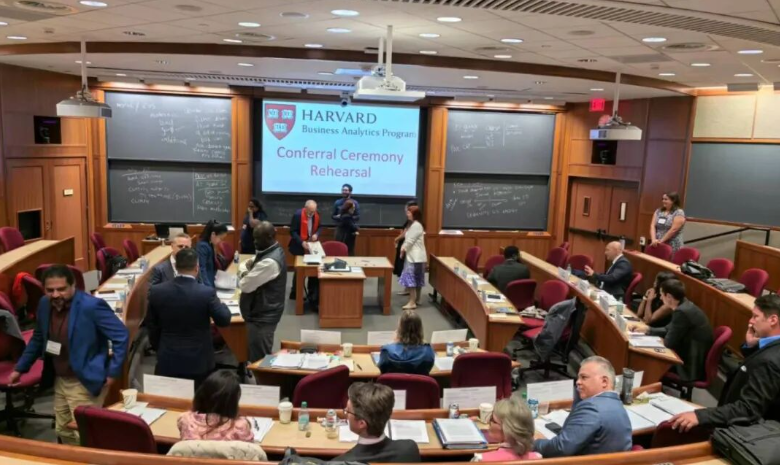
Today's discussion moves into the practical application of large language models, particularly retrieval-augmented generation (RAG) and model fine-tuning.
For many businesses, these technologies remain unfamiliar territory. The challenge is not simply understanding how they work, but deciding where they can create measurable business value.
Then comes an unexpected question.
The professor turns towards me:
“As CEO, how would you approach this challenge?”
This is part of the well-known HBS Cold Call culture, in which professors may call on students to respond to questions without advance notice.
There is little time to prepare a perfect answer. You have to organise your thoughts, draw on your experience and make a defensible argument in front of the class.
Some HBS sessions also feature guests connected to the cases being discussed, either in person or remotely. On this occasion, Brice, identified in the session as an AI project leader associated with Moderna, joins the discussion.
The experience brings an additional dimension to the classroom: business decisions are no longer abstract examples when the people involved can explain their reasoning directly.
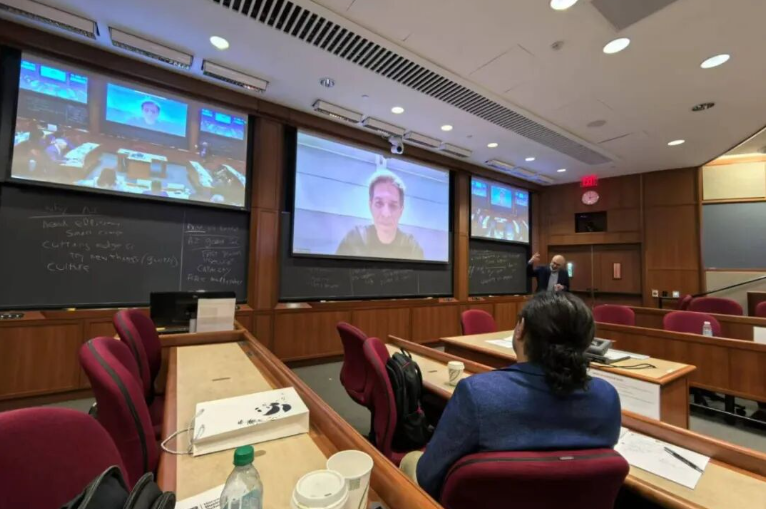
Digital transformation is often discussed as a technological challenge. In reality, its success depends just as much on leadership, organisational culture and the ability to change established ways of working.
The case examines DBS Bank in Singapore, whose digital transformation journey began in 2014.
The bank faced the challenges common to large financial institutions: complex legacy systems, strict regulatory requirements, established organisational structures and the need to maintain customer trust.
The discussion explores how DBS approached digital transformation, built organisational capabilities and gradually developed a foundation for more advanced digital services.
A particularly interesting question emerges:
How can a highly regulated financial institution become more agile without compromising the controls and reliability required of a bank?
The case demonstrates that successful transformation is not achieved by simply introducing new technology. It requires sustained investment in people, processes, data and organisational capabilities.
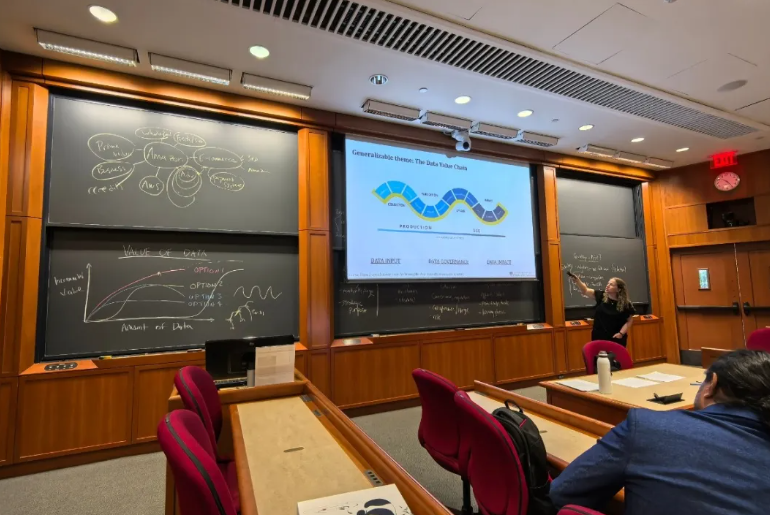
Lunch provides another opportunity for informal learning.
As we sit down with sandwiches, a classmate from Mexico presents a framework for ethical decision-making in medical AI.
The conversation moves from technical capability to questions of responsibility, transparency and the consequences of automated decisions.
The most valuable discussions often happen outside the formal classroom. Different professional backgrounds create new ways of looking at familiar problems.
The afternoon session turns to VINCI, one of the world's major infrastructure and construction groups.
The central question is fascinating:
How can a large organisation maintain the agility and entrepreneurial spirit usually associated with start-ups?
The case examines VINCI's decentralised operating model, in which substantial responsibility is delegated to local business units.
The discussion explores how a large engineering and infrastructure group can combine operational independence with strategic coordination.
Another question concerns artificial intelligence.
How can a company in a traditional, asset-intensive industry adopt AI successfully?
One example discussed is the application of large language models and automated engineering systems to infrastructure design. The objective is to reduce the time required for certain engineering design tasks from months to hours.
The deeper issue, however, is not the technology itself. It is the organisational culture that allows new ideas to move from experimentation into everyday operations.

The transition from classroom to business can happen in an instant.
As I move through the corridor, my phone is already against my ear.
“Please recalculate the third page of the valuation model for the Indonesian bauxite joint-development project.”
Outside the glass windows, Harvard's rowing teams cut through the water. The scene provides a brief contrast to the fast-moving world of investment models, commercial negotiations and project deadlines.
For an entrepreneur studying abroad, the classroom and the business world are not separate environments. Each constantly informs the other.
A pair of running shoes marks the beginning of a short route along the Charles River, from Harvard towards MIT and back.
The river breeze provides a welcome break after hours of intensive discussion and screen time.
Physical exercise is an important part of maintaining a sustainable routine. It creates space to think, helps relieve accumulated stress and provides a clear transition between academic and professional responsibilities.
The numbers on the running watch continue to move, but the real objective is consistency rather than chasing a particular performance target.
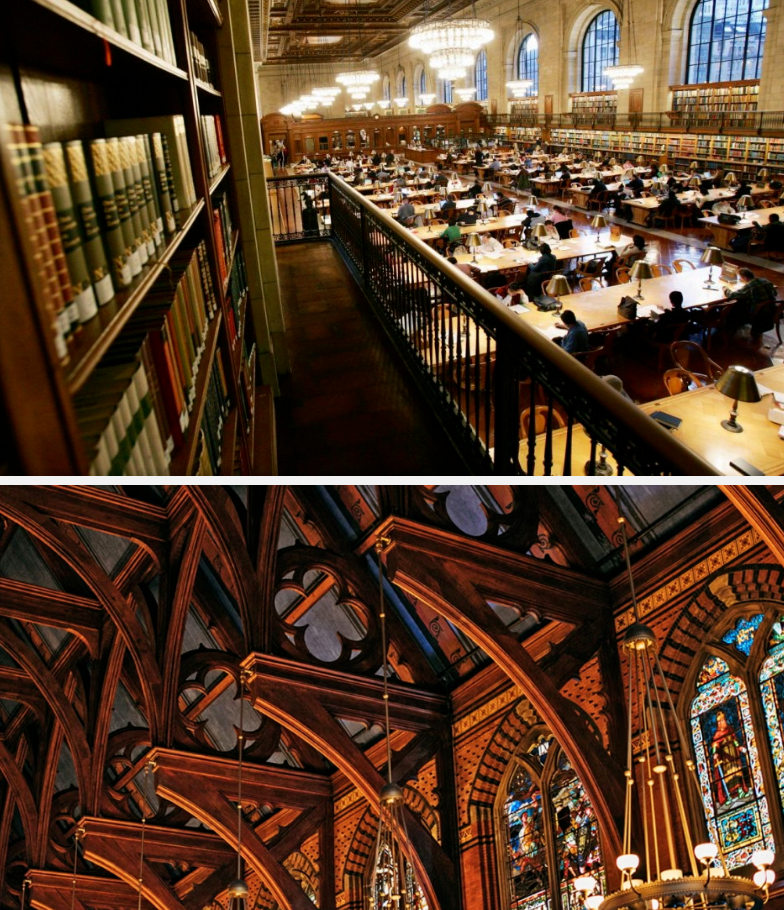
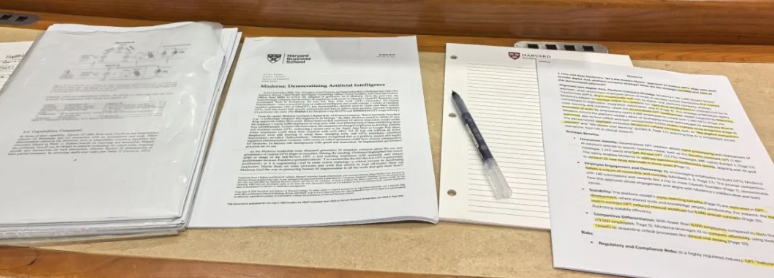
Under the library's high ceilings, case materials begin to accumulate across the desk.
There are reports to read, arguments to evaluate and questions to anticipate.
Alongside traditional reading and handwritten notes, AI tools help extract key information and organise large volumes of material.
But technology does not replace preparation. It makes it possible to spend more time evaluating evidence, challenging assumptions and developing a coherent position.
At HBS, preparation is not simply about knowing the facts of a case. It is about being ready to defend a decision.
Dinner brings another opportunity to exchange ideas.
Around the table is a doctoral researcher from MIT working in quantum computing. A conversation about algorithms quickly develops into a discussion about computational efficiency and the challenges of validating complex models.
A restaurant napkin becomes an impromptu sketchpad.
“Perhaps a more sophisticated algorithm could solve the validation bottleneck while using fewer computational resources.”
Ideas move between disciplines, and a casual conversation may reveal the beginnings of a future collaboration.
This is one of the distinctive features of an international academic environment: the opportunity to connect with people whose expertise lies far beyond one's own industry.
For an entrepreneur, these conversations can be as valuable as formal networking events.
Noise-cancelling headphones shut out the surrounding world.
Research papers, case notes and technical materials fill the screen. The task is to complete the remaining reading and refine the arguments for tomorrow's discussions.
AI tools can accelerate information retrieval and summarisation, but the final responsibility for interpretation and judgement remains with the reader.
The aim is not simply to process more information. It is to understand which information matters.
A video conference window glows in the dark.
Colleagues in Beijing and Chengdu are beginning their next working day, while Boston is approaching midnight.
The discussion turns to project progress, business priorities and the next steps for the team.
The faces on the screen are a reminder that studying at Harvard does not mean stepping away from the responsibilities of running a business.
Instead, the challenge is to create a workable rhythm between learning, leadership and execution.
The final task is to wind down and prepare for sleep.
The Charles River is barely visible beyond the curtains. The day's notes are complete, and the next morning's priorities have already been outlined.
The schedule has been demanding, but the objective is not to treat sleep deprivation as an achievement. Long-term performance depends on recovery as much as effort.
A productive day should leave enough room for the next one.
A day at Harvard Business School can be an intensive exercise in learning, discipline and personal development.
The experience is not defined solely by the number of classes attended or the amount of work completed. It is shaped by the ability to connect ideas, challenge assumptions, learn from people with different experiences and apply new knowledge to real business problems.
For an entrepreneur, the challenge is even more complex. Academic commitments must coexist with investment decisions, international partnerships, team management and the demands of daily operations.
The real lesson is not that every minute must be filled. It is that time should be used with intention.
At Harvard, the case method sharpens judgement, diverse perspectives challenge established thinking, and professional relationships create opportunities for collaboration.
There is no need to romanticise an imagined life of endless late-night studying. Sustainable performance comes from combining ambition with discipline, learning with action, and hard work with recovery.
As morning light returns to the Charles River, the coffee machine begins to hiss again.
A new day, and a new time battlefield, awaits.