- sales@hot-mining.com +86 28 8331 1885 +86 15196677188
-
-
-
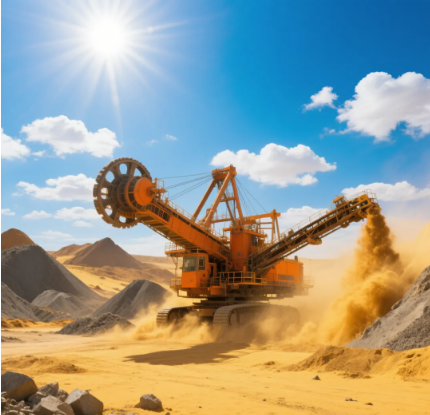
Côte d'Ivoire has long been recognised internationally for its cocoa industry. Today, however, the West African country is gaining increasing attention for another source of economic potential: gold.
With new mines entering production, existing operations expanding and international mining companies increasing their involvement, Côte d'Ivoire is becoming one of West Africa's increasingly important gold-producing countries.
The country's appeal rests on several factors: favourable geology, a growing industrial mining sector, established transport infrastructure and a regulatory framework designed to attract investment.
Official figures show that national gold production rose from 23.54 tonnes in 2015 to approximately 59.12 tonnes in 2024. This represents an increase of more than 150% in less than a decade.
This article examines the geological foundations of Côte d'Ivoire's gold industry, its major mining regions and producing operations, the role of international investors, and the opportunities and challenges that will shape its future development.
Côte d'Ivoire has a diverse mineral endowment. In addition to gold, the country produces or has potential for minerals such as manganese, nickel, bauxite, diamonds and iron ore. Oil and natural gas are also important components of its wider extractive industries.
The country's geological potential extends across several mineral commodities, although their levels of exploration, resource definition and commercial development vary considerably.
| Mineral | Resource Potential and Development | Main Areas |
|---|---|---|
| Gold | Established industrial mining sector, with substantial exploration potential | Northern, central, western and south-eastern regions |
| Manganese | Active mining and export industry | Bondoukou, Kaniasso, Lagnonkaha and Lauzoua |
| Nickel | Established lateritic nickel mining and further exploration potential | Western Côte d'Ivoire, including the Biankouma area |
| Diamonds | Known occurrences and historical production, with a comparatively limited industrial sector | Northern and north-central areas |
| Iron ore | Significant geological potential, with projects at different exploration and development stages | Western and south-western regions |
| Bauxite | Mineral occurrence and production history, with development dependent on project economics | Selected areas across the country |
| Oil and natural gas | Offshore exploration and production activities | Offshore sedimentary basins |
The table provides a broad overview rather than a statement of proven reserves. Resource estimates and project development status should be assessed using individual company technical reports and official geological data.
Côte d'Ivoire's mineral potential is closely linked to the geology of the West African Craton, an ancient geological region that hosts numerous important mineral deposits.
Much of the country is underlain by Paleoproterozoic Birimian rocks, which form part of the wider Birimian geological domain extending across several West African countries.
These rocks include granitoid complexes and volcano-sedimentary greenstone belts that have undergone extensive deformation and metamorphism. They host many of the region's recognised gold deposits.
The western part of Côte d'Ivoire also contains older Archaean geological terranes associated with the Man-Leo Shield.
This geological diversity provides a favourable setting for several types of mineralisation.
Gold: Gold deposits occur across northern, central and western Côte d'Ivoire, commonly associated with Birimian volcano-sedimentary sequences and regional structures.
Manganese: Manganese deposits support an established mining and export industry, with operations distributed across several parts of the country.
Nickel and iron ore: Western Côte d'Ivoire contains important geological settings for nickel and iron mineralisation, although individual projects differ significantly in their exploration maturity and development prospects.
Other minerals: Diamonds, bauxite and other commodities contribute to the country's broader mineral potential.
If cocoa represents one of Côte d'Ivoire's most recognisable agricultural assets, its mineral endowment offers another potential source of long-term economic growth.
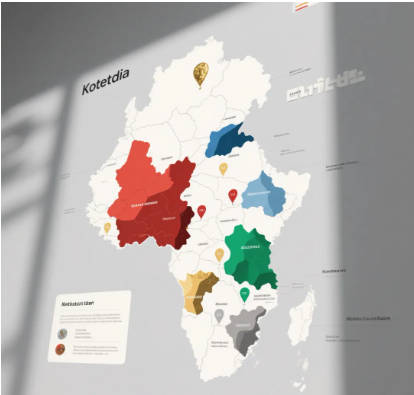
Côte d'Ivoire occupies a favourable position within the West African gold-producing region. Its geological setting, access to coastal infrastructure and expanding mining industry have helped strengthen its appeal to international mining companies.
The country's position within the Birimian geological domain provides a strong foundation for gold exploration.
Mineralised greenstone belts, regional shear zones and favourable host-rock sequences create geological conditions associated with a number of important West African gold deposits.
Gold projects are distributed across several regions, including the north, centre and west. This broad distribution provides opportunities for both greenfield exploration and the expansion of existing mining districts.
Unlike landlocked mining jurisdictions such as Mali and Burkina Faso, Côte d'Ivoire has direct access to the Atlantic coast.
The country benefits from established road networks, rail connections and major ports, including Abidjan and San Pedro.
These facilities can support the movement of mining equipment, consumables and other supplies, as well as the export of mineral products.
However, the quality and capacity of transport infrastructure vary by location. The logistics requirements of an individual mine still depend on its distance from ports, road conditions, available services and the scale of its operations.
Côte d'Ivoire has developed a substantial industrial mining sector, supported by investment in infrastructure and a broader programme of economic development.
Its electricity generation and transmission systems are important advantages for energy-intensive mining operations, although power reliability, connection costs and site-specific infrastructure requirements still need to be assessed during project development.
For investors, the combination of an established mining industry, coastal access and a growing supplier base can provide a more developed operating environment than some less-established exploration jurisdictions.
Côte d'Ivoire adopted a new Mining Code in 2014, establishing a framework for mining rights, investment conditions, taxation, environmental obligations and the participation of the state in the mining sector.
The code also provides certain fiscal and customs incentives for qualifying mining operations.
For example, Article 165 provides for customs-duty and VAT exemptions on specified imported equipment and materials included in approved investment programmes during the initial investment phase and certain mine-expansion projects. Other provisions address tax treatment, temporary admission and operational imports.
These incentives are subject to eligibility requirements, approved programmes and applicable time limits. They should not be interpreted as a blanket exemption from corporate income tax for the first three years of every mining project.
For international investors, understanding the relationship between mining permits, fiscal provisions, local participation requirements and environmental obligations is essential before committing capital.
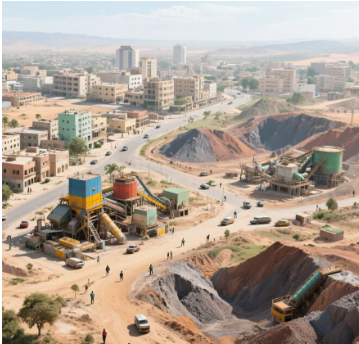
Côte d'Ivoire's gold sector has attracted companies from Canada, Australia, the United Kingdom and other international mining jurisdictions.
Several established mining companies operate producing assets or are developing projects in the country.
Endeavour Mining
Endeavour Mining is one of the country's major gold producers, with operations including Ity and Lafigué. Its activities have contributed significantly to the expansion of Côte d'Ivoire's industrial gold production.
Perseus Mining
Perseus Mining operates the Yaouré and Sissingué gold mines. The company has established a significant operating presence in the country and continues to assess opportunities to optimise its assets and extend mine life.
Barrick and the Tongon Mine
Tongon is one of Côte d'Ivoire's established gold operations. Barrick's former ownership and operation of the mine formed an important part of the country's mining history. The asset's ownership and operating arrangements have subsequently changed, so current operator information should be checked before publication.
Montage Gold
Montage Gold is advancing the Koné Gold Project in northern Côte d'Ivoire. The project is an important part of the country's future production pipeline and could strengthen its position as a major regional gold producer.
Other Exploration and Development Companies
Companies including Resolute Mining, Fortuna Mining, Allied Gold, Turaco Gold and Aurum Resources have also been associated with gold assets, exploration programmes or development opportunities in Côte d'Ivoire.
The presence of these companies reflects growing international interest in the country's gold sector. Their individual projects, however, are at different stages, ranging from established production to exploration and development.
The government's mining strategy aims to increase mineral production, attract international investment and strengthen the domestic economic contribution of the sector.
Key priorities include:
Encouraging responsible exploration and industrial mine development.
Improving the transparency and administration of mining rights.
Strengthening environmental management and regulatory oversight.
Promoting local employment, training and participation in the mining supply chain.
Supporting the development of domestic mineral processing and refining capacity.
These measures are intended to ensure that mining contributes not only to export earnings but also to broader industrial development.
The growth of Côte d'Ivoire's gold industry is reflected in its national production figures.
According to data published by the country's economic information portal and attributed to the Ministry of Mines, Petroleum and Energy, gold production increased substantially between 2015 and 2024.
| Year | Gold Production |
|---|---|
| 2015 | 23.54 tonnes |
| 2016 | 25.05 tonnes |
| 2017 | 25.40 tonnes |
| 2018 | 24.49 tonnes |
| 2019 | 32.48 tonnes |
| 2020 | 38.52 tonnes |
| 2021 | 41.86 tonnes |
| 2022 | 48.32 tonnes |
| 2023 | 51.31 tonnes |
| 2024 | 59.12 tonnes |
Source: Côte d'Ivoire's Ministry of Mines, Petroleum and Energy, as reported by the national economic information portal.
Production increased by approximately 151% between 2015 and 2024.
This growth has been supported by several factors:
New mines entering production: New projects have expanded the country's industrial production base.
Higher output from existing operations: Established mines have increased or optimised production as operations have matured.
Continued exploration and investment: International mining companies have continued to invest in exploration, development and mine expansion.
Favourable market conditions: Strong international gold prices have improved the economic attractiveness of many projects.
By the end of 2024, the country had 13 producing gold mines, according to the 2024 Extractive Industries Transparency Initiative (EITI) report.
The national economic information portal has published production projections of approximately 61 tonnes in 2025, 63 tonnes in 2026 and 65 tonnes in 2027, based on operating mines and advanced development projects.
These figures are projections rather than confirmed production results.
Projects such as Montage Gold's Koné development and the continued expansion of existing operations are expected to contribute to future growth.
The Doropo project, announced by Resolute Mining in 2025, has also attracted attention because of its reported scale and development potential.
The pace at which these projects progress will depend on financing, permitting, construction, infrastructure and operating conditions.
Côte d'Ivoire's gold sector has entered a period of significant expansion. The next stage of development will depend not only on increasing mine output but also on strengthening the wider mining value chain.
Several opportunities stand out.
The country's growing portfolio of operating mines and advanced projects provides a foundation for further production growth.
Continued investment in exploration and mine development could support the discovery of additional deposits and extend the operating life of existing assets.
At present, much of the country's gold production is exported in relatively unprocessed form.
Developing domestic refining capacity could help retain more value within the national economy, strengthen technical capabilities and create opportunities for downstream industries.
The government has identified local processing as an important development priority, including plans for a gold refinery involving SODEMI.
Although gold remains the dominant contributor to Côte d'Ivoire's mining production, the country also has potential in manganese, nickel, bauxite and other mineral commodities.
Developing these resources could diversify mineral exports and support the growth of related industrial activities.
However, the commercial prospects of each commodity will depend on resource quality, infrastructure, market conditions and project economics.
International mining companies bring capital, technical expertise, exploration experience and access to global supply chains.
Continued cooperation with investors and technical partners from countries including Canada, Australia, China and France could support exploration, mine development, equipment supply and local industrial capacity.
For Côte d'Ivoire, the challenge will be to translate international investment into sustainable economic benefits, including employment, skills development, local procurement and responsible environmental management.
Côte d'Ivoire is increasingly establishing itself as an important gold-producing country in West Africa.
Its favourable geological setting, expanding industrial mining sector, coastal infrastructure and growing international investment base have created a strong foundation for further development.
The increase in gold production from 23.54 tonnes in 2015 to approximately 59.12 tonnes in 2024 demonstrates the scale of the industry's transformation.
Looking ahead, the country's success will depend on more than the discovery of new deposits. Effective project development, reliable infrastructure, responsible mining practices, local processing and a stable regulatory environment will all be essential.
As the global mining industry continues to seek new sources of gold and critical minerals, Côte d'Ivoire is well positioned to attract further attention from international investors and technical partners.
Its emerging gold industry could become an increasingly important driver of economic growth and industrial development across West Africa.