- sales@hot-mining.com +86 28 8331 1885 +86 15196677188
-
-

-

A Stress Test So Extreme It Left Mining Veterans Speechless
Let's start with something counterintuitive.
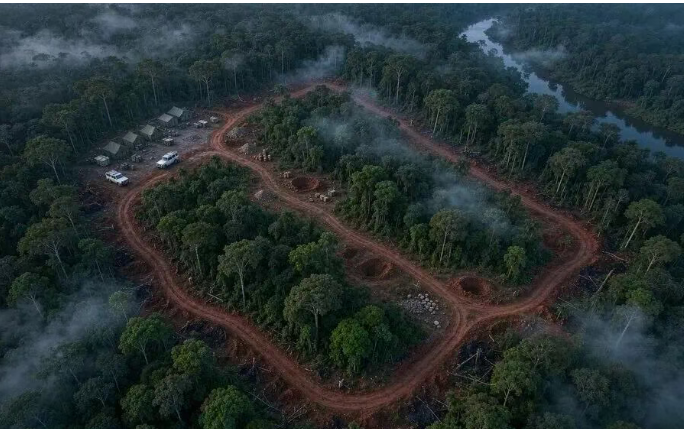
You have a nearly 200 km² greenfield concession. There have been no geochemical surveys, no geophysical surveys, no drilling, and no detailed geological mapping. The report makes this perfectly clear: all conclusions are based on regional extrapolation and indirect remote-sensing indicators.
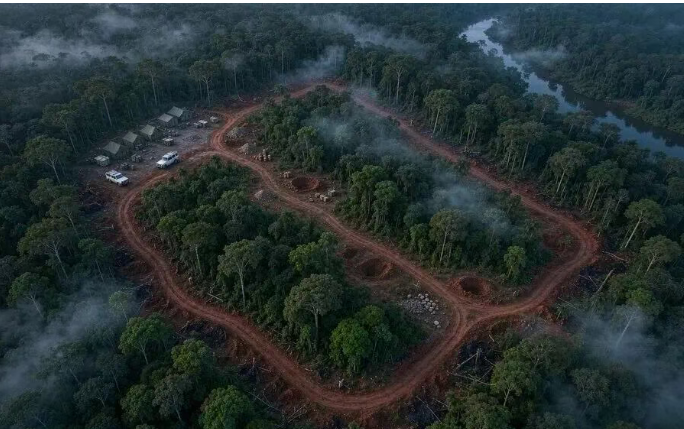
There are historical mines in the surrounding area. The metallogenic framework for carbonate-hosted Cu-Pb-Zn mineralisation in the NXY Basin is supported by published literature. But on this particular ground, no geological hammer has yet struck a mineralised horizon.
Then another document lands on the desk.
It does not discuss copper, lead or zinc. It does not talk about MVT-like mineralisation. Instead, it jumps straight to a different dimension: assuming that arsenopyrite and pyrrhotite are encountered at depth, assuming pressure oxidation (POX) is required, and then running the numbers.
The conclusion is stark: a P50 expected value of –US$14.3 million, an 88.4% probability of failure, and a breakeven grade of 2.24 g/t. Meanwhile, the average grade of global gold mines had reportedly fallen to around 0.9 g/t by 2025.[1]
A greenfield project that has yet to answer the most fundamental question—whether there is any deposit at all—is already being subjected to a financial death scenario based on one of the most expensive processing routes in the industry.
It sounds absurd. But this is precisely where the brutal reality of mining M&A lies: if you do not calculate the worst-case scenario in advance, the seller will price the asset using the best-case story.
Many junior exploration companies feature oxide-zone recovery rates in their investor presentations. At depths of 30 or 40 metres below surface, gold may be free-milling, with cyanide leach recoveries exceeding 95%. Everything looks straightforward.
But once the ore enters the primary zone, arsenopyrite and pyrrhotite may become dominant. Add sodium cyanide, and the gold still refuses to dissolve.
The numbers speak for themselves. Gold encapsulated in arsenopyrite may achieve only 20–45% recovery under direct whole-ore cyanidation. Even at conventional fine-grinding sizes, cyanide recovery from arsenic-bearing sulphide ores may remain in the 30–40% range, and in extreme cases, fall to single digits.
POX can push recovery back above 90%. By oxidising the sulphide matrix, it exposes the gold, making subsequent cyanidation viable. But recovering the gold and recovering it profitably are two entirely different things.[2]
POX capital expenditure is substantial anywhere in the world.
Polymetal's POX-2 project in Russia had pre-production capital expenditure estimated at US$431 million in its 2019 feasibility study. The project processed concentrate, not run-of-mine ore, and was an expansion at the existing Amursk facility with established infrastructure.
Against this benchmark, the report's estimate of US$380–450 million in CAPEX for a 2 Mtpa run-of-mine POX operation in Congo-Brazzaville is not necessarily exaggerated. It may actually represent a relatively conservative estimate.
The operating costs are even more insidious.
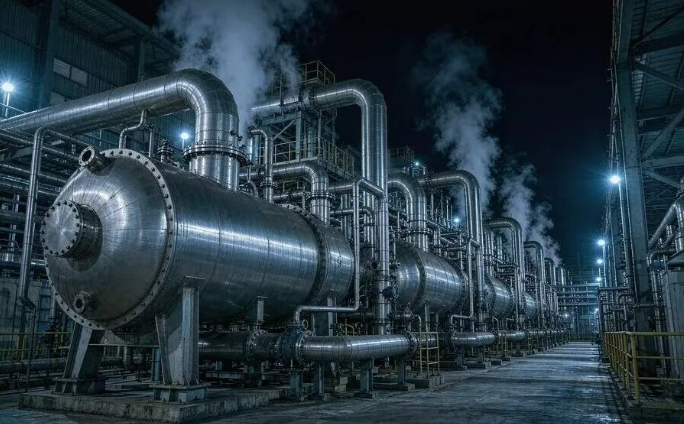
POX requires a cryogenic oxygen plant, a stable power supply where interruptions could potentially jeopardise the integrity of the reactor system, and limestone to neutralise the sulphuric acid generated during oxidation.
If there is no suitable limestone within 100–200 km of the mine, the logistics costs alone could push processing costs significantly higher.
Conventional CIL processing typically costs US$15–20 per tonne. POX jumps directly to US$45–60/t. Add mining costs and general and administrative expenses, and total operating costs on an AISC basis are estimated at US$85–110/t.
This is not a premium for upgrading the processing technology. It is a transformation of the entire cost structure into a completely different economic category.
Run the report's Monte Carlo parameters, and the central breakeven grade comes out at 2.24 g/t.
Put simply: in an inland POX operation in Congo-Brazzaville, if average head grade consistently falls below 2.24 g/t, every tonne of ore processed is effectively pouring money into the reactor.
So what is the average grade of operating gold mines worldwide?
It was 1.4 g/t in 2010. By 2025, it had reportedly fallen to 0.9 g/t.
In other words, the grades of most operating gold mines would not even clear the breakeven threshold under this POX scenario.
POX is not a process that makes low-grade ore economically viable simply by improving recovery. It requires a high-grade vein system, or a consistent source of high-grade concentrate, capable of absorbing the fixed costs of a reactor worth hundreds of millions of dollars.
Now look at the percentile outcomes.
Under the conventional CIL scenario, the P50 expected value is positive US$18.52 million, with a 22.5% probability of failure.
Once POX is confirmed, the P50 flips to negative US$14.30 million. Even the P10 blue-sky scenario—assuming a gold price of US$3,200/oz and grade reaching the sweet spot of 2.5 g/t—leaves only US$3.8 million in residual value. The probability of failure jumps to 88.4%.
In other words, POX restores recovery, but destroys expected value.
Along 88.4% of the simulated paths, the question is no longer how much profit the project might generate. It is whether the investor can recover the principal at all.
That is why the report's opening statement is so blunt: POX projects with grades below 2.5 g/t have completely lost their commercial mining value.
The equity held by existing shareholders is no longer a potential cash-generating asset. It has become a liability in the eyes of a new investor.
The transaction logic must therefore shift from a premium acquisition to a distressed restructuring.
If you have made it this far and remember only that POX is expensive, you have missed the real value of this stress test.
Its primary purpose is not to tell you that the project should not be acquired. It is to tell you at what price, under what structure, and at what pace it should be acquired.
Faced with a technical diagnosis at the POX level, the valuation narrative previously built by existing shareholders around oxide-zone recovery rates has had its foundation pulled away.
For the first time, the buyer has a bargaining tool backed by mineralogical evidence—one precise enough to put the seller's assumptions under a microscope.
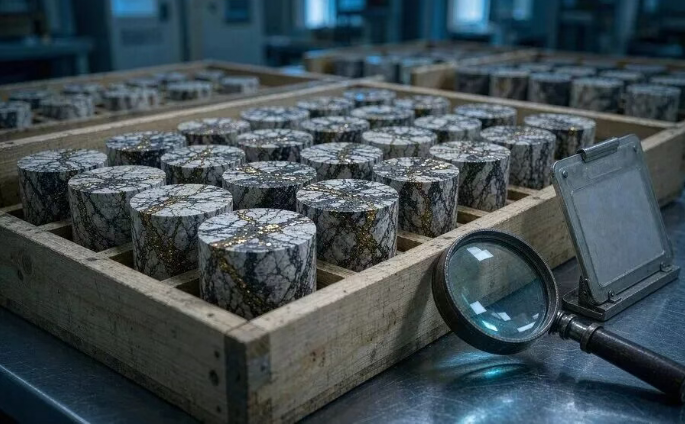
Scan 50 representative drill-core samples using QEMSCAN or AMICS. Determine whether gold occurs as free gold or is encapsulated at the nanoscale within arsenopyrite crystal lattices. Quantify the volumetric proportion of pyrrhotite.
Once those data are available, the negotiation is no longer about "what you think" versus "what I think."
It becomes: "Your gold is locked inside the sulphide lattice. Here is the bill for the reactor. Let's negotiate against these numbers."
The transaction terms proposed in the report are exceptionally uncompromising:
Zero upfront payment: At the outset, pay only the minimum administrative fees required to maintain the mining rights.
Phase 1: Invest US$3 million in infill drilling and metallurgical testing in exchange for a 65% equity stake.
Phase 2: The buyer funds the BFS and takes sole responsibility for raising US$400 million in financing. If existing shareholders cannot participate, their equity is diluted to 10%.
NSR reduction: Reduce the Net Smelter Return (NSR) royalty from 2% to 0.5–1%.
Call option: The buyer retains a call option to acquire the final 10% for US$2 million.
The underlying logic of this structure is simple:
I, the buyer, am one of the few players in the market capable of delivering a POX operation in the African hinterland.
If you disagree, the project can remain stranded in the ground.
The pricing power of vulture capital has never come from being the loudest voice in the room. It comes from being irreplaceable—the only party capable of making that reactor run.
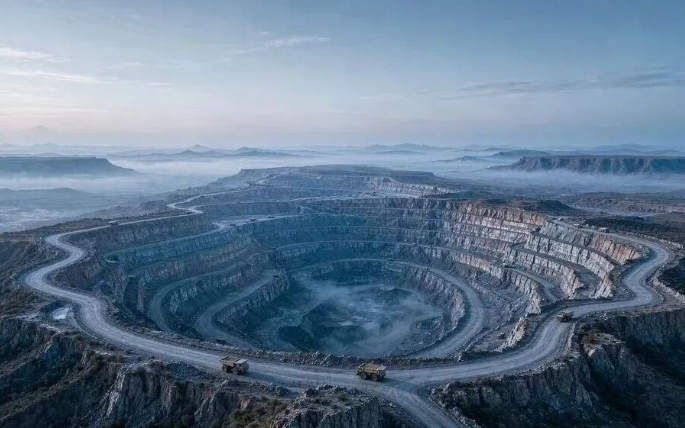
After telling the POX horror story, we need to bring the camera back to the reality of the NXY greenfield.
The Monte Carlo model assumes 20 million tonnes of resources at 1.8 g/t, with a 15% probability of successful resource validation.
None of these figures comes from drilling or systematic sampling on the concession itself.
The report explicitly states that there are no direct measurements from within the area. All targets and potential scenarios are based on regional extrapolation and indirect remote-sensing indicators. They must not be treated as mineral resources.
The ownership red lines, R1 through R4, remain unresolved. There is no verified mining title name, licence number, holder or decree. A blank area on a GIS layer does not mean the ground is legally unencumbered.
So the correct interpretation is not:
"NXY has POX risk, so stay away."
The correct interpretation is:
"NXY does not yet have physical evidence to determine whether POX risk exists at all. Any valuation discussion based on a POX scenario can currently serve only to design the transaction structure—not to justify a payment decision."
Phase 0 involves actions that are extremely low-cost but offer exceptional information value: obtain the 1:200,000 geological sheets, official gazettes, conduct a definitive title verification through the relevant geological and mining authorities, and review regional geological maps from BRGM.
At a minimum, these steps can answer two questions: Who legally owns the ground? And is the Schisto-Calcaire Formation present beneath it?
Phase 1 geochemical work and outcrop verification should begin only after title is clear and sampling is legally permitted.
Until geochemical surveys reveal a Cu-Pb-Zn anomaly, or outcrop mapping confirms that the N50–60°E structure is an actual fractured zone, drilling and buyout should not even appear on the list of options.
The real purpose of the POX stress test is that, after Phase 0 and Phase 1—and only if the project reaches a point where the metallurgical hypothesis needs to be validated—the buyer will already have a complete cost framework and transaction playbook in hand.
It is not designed to scare the buyer away. It is designed to ensure that, at the right time and under the right terms, the buyer can take control of risk pricing from the seller.
The most expensive lesson in mining investment has never been that you paid too much.
It is that, at the moment of greatest information asymmetry, you allowed someone else's story to determine the price you paid.
The NXY greenfield today is a project worth taking a look at for very little money—not one worth paying a premium for based on a hypothetical metallurgical scenario.
The value of the POX report lies in laying out the bill for the worst-case pathway in advance:
US$400 million in CAPEX. US$95/t in OPEX. A 2.24 g/t breakeven threshold. An 88.4% probability of failure.
Once you have seen that bill, if you still decide to move forward, you know exactly what you are paying for at every step.
If existing shareholders are still selling the story based on 95% oxide-zone recovery, put the QEMSCAN data and the breakeven grade on the table.
In the face of arsenopyrite in Congo-Brazzaville, capital has no mercy. It only calculates.