- sales@hot-mining.com +86 28 8331 1885 +86 15196677188
-

-

-


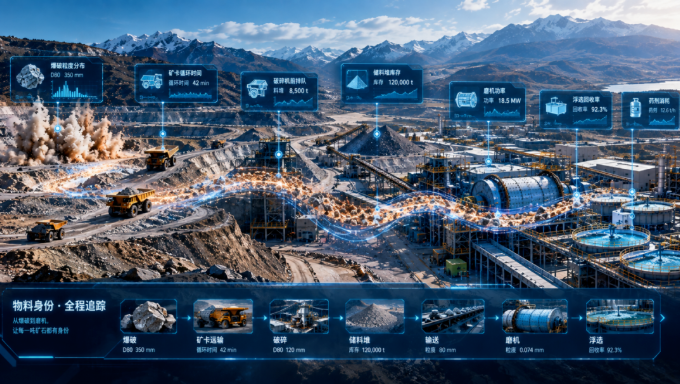
As demand for batteries continues to grow, researchers are turning to artificial intelligence to explore more efficient and sustainable solutions.
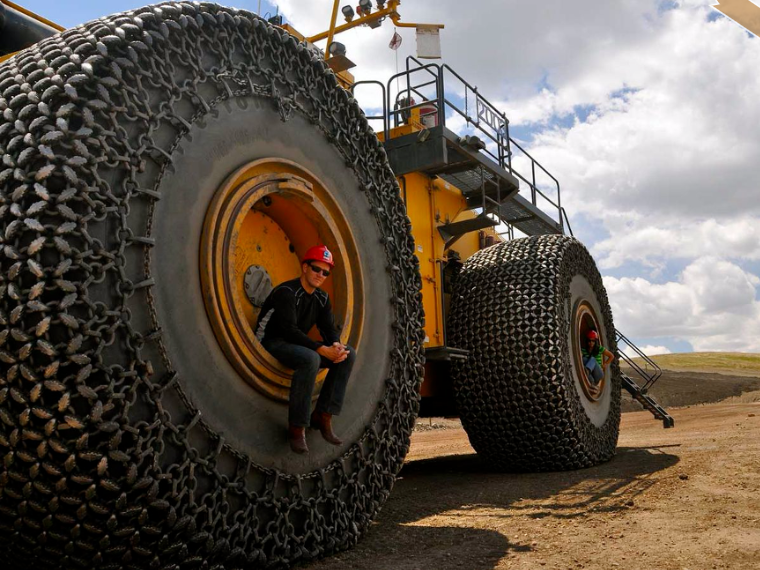
KoBold Metals Co-Founder and CEO Kurt House visits a project site. (Image source: KoBold Metals)
As cars, buses and ships around the world increasingly shift towards electric power, demand for the metals required to manufacture batteries is expected to rise substantially.
This emerging wave of mineral demand has raised concerns about environmental damage and labour rights. At the same time, it is accelerating efforts to find greener and more efficient ways to produce the materials needed for batteries and advanced electronic devices.
Artificial intelligence (AI) is opening up new possibilities for addressing this challenge. It could help optimise how battery metals are explored and extracted, while also supporting the development of entirely new materials that may serve as alternatives to existing battery components.
The start-up KoBold Metals is developing an AI-powered system to identify promising mineral deposits, with the aim of prioritising exploration opportunities in areas where social and environmental risks can be better managed.
Meanwhile, researchers at IBM Research are using AI to search for alternative materials and investigate new battery chemistries.
KoBold says its technology can reduce the need for expensive and time-consuming geological exploration. Traditionally, mineral exploration has required repeated field investigations to locate scarce, high-grade deposits.
KoBold Metals Co-Founder and CEO Kurt House has highlighted the challenge facing the industry:
"Most of the minerals exposed at the Earth's surface have already been discovered. But we need to transform our energy system on a massive scale, and that requires a lot of new mineral resources."
To address this challenge, KoBold has worked with Stanford University's Center for Earth Resources Forecasting to develop AI systems that provide exploration teams with decision-making support.
The company's primary exploration targets include copper, cobalt, nickel and lithium. These metals are essential not only to electric vehicle batteries, but also to solar panels, smartphones and a wide range of other electronic products.
Jef Caers, a professor of geological sciences at Stanford University, has emphasised the technology's potential to accelerate exploration decisions and enable teams to assess multiple prospective sites simultaneously.
He compares the approach to a self-driving car: the system continuously gathers and analyses information about its surroundings before taking action, such as adjusting its route or speed.
"We cannot afford to wait another 10 or 20 years for new discoveries," Caers said.
"If we are serious about addressing climate change and moving away from fossil fuels, we need breakthroughs within the next few years."
A study published in Nature in December 2020 highlighted the substantial mineral requirements associated with the electrification of light-duty vehicles.
According to the projections cited in the study, the global number of electric vehicles could increase from 7.5 million in 2019 to 2 billion by 2050.
Supporting this fleet would require approximately 12 terawatt-hours (TWh) of battery capacity annually—equivalent to around ten times the United States' current total electricity generation, according to the source material.
Meeting this level of demand would require a major expansion of the mineral supply chain.
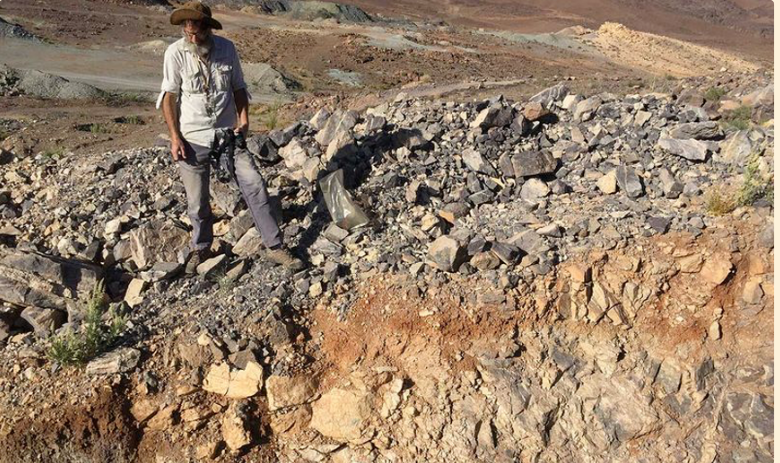
Patrick Redmond of KoBold Metals surveys a cobalt-copper exploration site in Zambia. (Image source: KoBold Metals)
However, the supply of these metals presents significant challenges:
Cobalt: Cobalt has historically been an important component of many lithium-ion battery chemistries. The Democratic Republic of the Congo (DRC) is a major global source of mined cobalt, but parts of its mining sector have faced serious concerns over hazardous working conditions and child labour.
Copper: Copper production can require substantial quantities of water, creating additional challenges in water-stressed mining regions, including parts of Chile's Atacama Desert.
The challenge for mining companies is therefore not simply to increase production, but to expand supply while avoiding new environmental and social problems in the name of sustainable transport.
KoBold's AI-powered exploration workflow begins with its data platform, which brings together available information from a target region. This may include soil samples, satellite hyperspectral imagery and historical drilling reports, including handwritten records dating back a century.
Machine learning models then analyse the data to predict where unusually high-grade mineralisation may occur beneath the surface.
In collaboration with Stanford, KoBold has also been refining sequential decision-making algorithms to determine what exploration teams should do next.
Should they conduct an aerial survey, collect drilling samples or move on from an area with limited exploration potential?
Traditionally, these activities have been time-consuming and expensive. Companies have therefore needed to proceed cautiously to avoid unnecessary expenditure.
AI systems offer the potential to accelerate these decisions. KoBold has reported that its approach could make exploration decision-making up to 20 times faster than conventional human-led processes, while significantly reducing false positives.
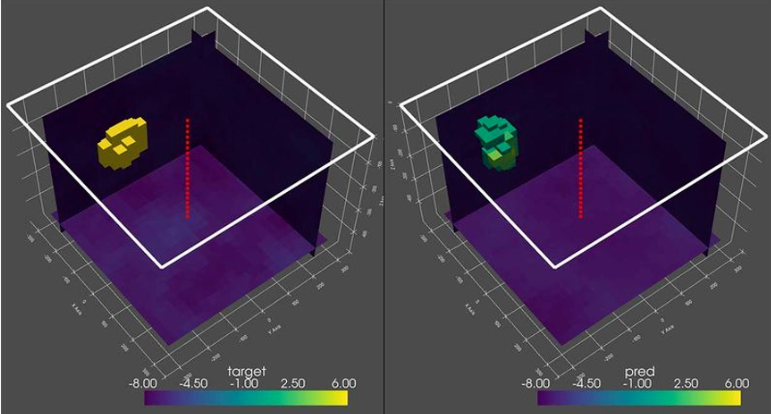
KoBold Metals' AI visualisation: The image on the left shows measured data from a borehole electromagnetic model, while the image on the right presents the corresponding prediction. (Image source: KoBold Metals)
With backing from Bill Gates-led Breakthrough Energy Ventures, KoBold has launched three exploration projects across Australia, North America and sub-Saharan Africa, according to the source material.
Field data collected during the year would provide an opportunity to test the company's predictive models against real-world exploration results.
While KoBold is focused on finding new sources of critical minerals, IBM researchers are pursuing another approach: developing safer and higher-performing materials that could reduce dependence on cobalt and lithium.
The research team has been using AI to screen commercially available solvents in search of potential alternatives to electrolytes used in conventional lithium-ion batteries.
At the same time, another research direction focuses on designing and synthesising entirely new molecules.
The approach uses generative models trained on the molecular structures and physicochemical properties of known materials, including viscosity, melting point and electrical conductivity.
As IBM researchers Seiji Takeda and Young-hye Na explain:
"For example, if we want to design a new electrolyte material—including a solvent or a monomer that can form an ion-conducting polymer—we need to train AI using data from existing electrolyte materials."
"Once the model has been trained, we can simply provide an instruction such as 'design a molecular electrolyte with properties X, Y and Z'. The model can then generate candidate molecules based on the relationships between molecular structures and material properties."
This approach has also helped IBM develop new molecules known as photoacid generators, which may have applications in making computing devices more environmentally friendly.
The research team has also designed a new polymer membrane with significantly improved carbon dioxide absorption performance compared with existing materials used in carbon capture technologies.
"Developing more sustainable batteries is the next major challenge we face," Takeda and Na said.
The growing demand for electric vehicles and energy storage is placing increasing pressure on the global supply of critical minerals. Meeting this demand will require not only more efficient exploration and mining, but also continued innovation in battery materials.
KoBold Metals demonstrates how AI can help exploration teams interpret complex geological data, prioritise promising targets and make more informed decisions about where to explore next.
IBM's research highlights a complementary opportunity: using AI to discover alternative materials and develop new battery chemistries that may reduce dependence on certain critical metals.
Together, these approaches represent two important directions for innovation. One seeks to find and develop mineral resources more efficiently; the other explores ways to make future batteries less dependent on existing material supply chains.
AI alone cannot resolve every environmental or supply-chain challenge. However, by combining geological intelligence, data-driven exploration and materials science, it could become an important tool in building a more efficient and sustainable battery industry.